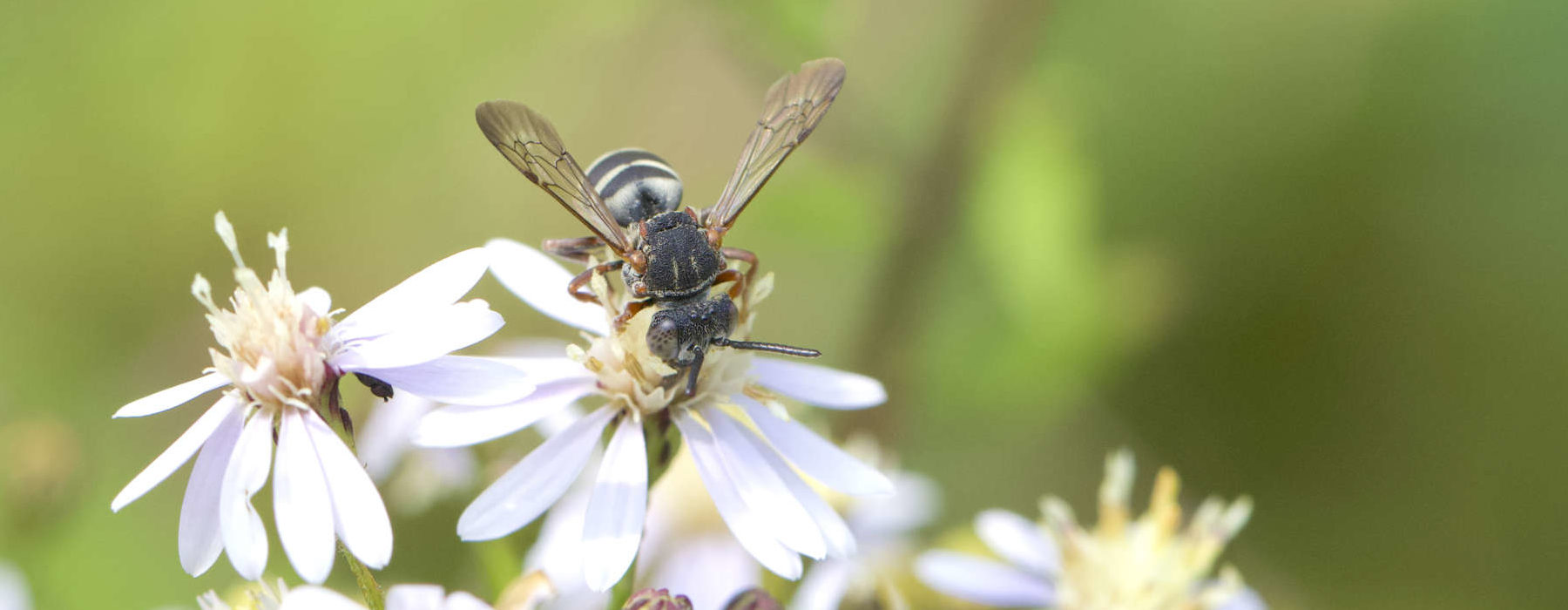
We all know bees need flowers, yet not all flowers are created equal. And there are more habitat considerations—bees also need nesting habitat, which ranges from dead flower stalks to bare, sandy soils. Below are a number of resources that can help you turn your property into a spectacular pollinator haven, but in a sentence: keep it native and keep it messy.
 A simple bee hotel made with firewood and a drill
 An even simpler nesting habitat - a rotten stump
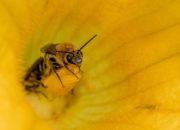 The Pruinose Squash Bee - another reason to grow Zuchinni
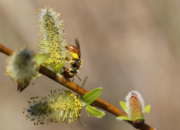 Willows - the easiest wildflower to grow
Plant Status and Identification
Go Botany – Native Plant Trust
Plant Selection Guides
For gardeners who wish to support native Vermont bees, the 2025 Checklist of Bees of Vermont includes a detailed supplement that lists the plant species each species was observed visiting.
Vermont-specific planting recommendations – VCE
Keystone Plants by Ecoregion – National Wildlife Federation
VT (and regional) nurseries carrying native plants – VCE and UVM
Planning a Pollinator Garden
Creating a Pollinator Garden – Cornell University
Pollinator Conservation Resource Center – Xerces Society
Building Nesting Habitat
Nesting and Overwintering Habitat – Xerces Society
Nests for Native Bees – Xerces Society
Bee Hotels – VCE
Bees on Farms
The Integrated Crop Pollination Project
Wild Pollinators of Eastern Apple Orchards and How to Conserve Them – Xerces Society
Farming for Bees: Guidelines for Providing Native Bee Habitat on Farms – Xerces Society