Skip to content

Scarlet Tanager (Piranga olivacea)
Summary
- Natural history: Unlike many Vermont songbirds that favor forest edges, the Scarlet Tanager nests deep in the interior of large, mature deciduous forest tracts, sometimes 50 feet or higher in the canopy, which is part of why it was considered scarce when nineteenth-century Vermont was still largely cleared for farms, and why it became far more common as those forests regenerated through the twentieth century. Returning migrants can arrive from their wintering grounds straight into a late cold snap, and because these relatively large, insect-eating birds need bigger prey that grows scarce in cold, wet weather, unseasonable spring weather has caused documented die-offs in Vermont and elsewhere in the Northeast. A small fraction of males are born with orange plumage instead of the typical brilliant red, a rare variant of which observers spotted only a single example during the entire Second Atlas.
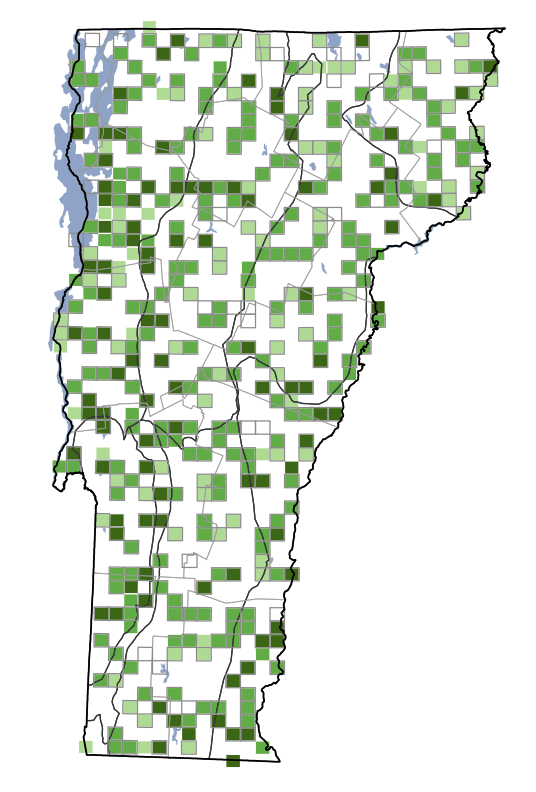
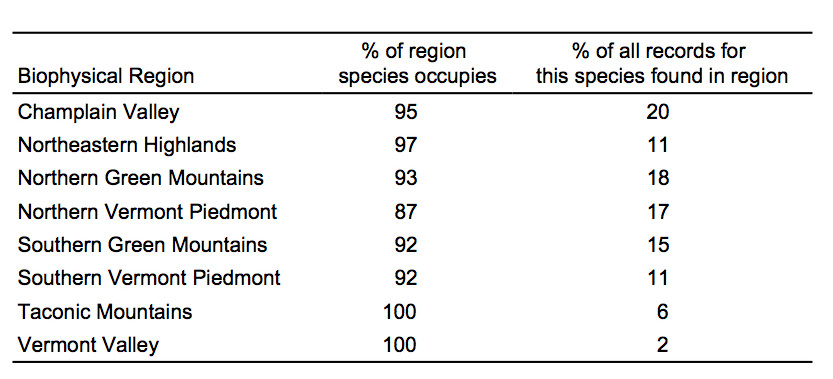
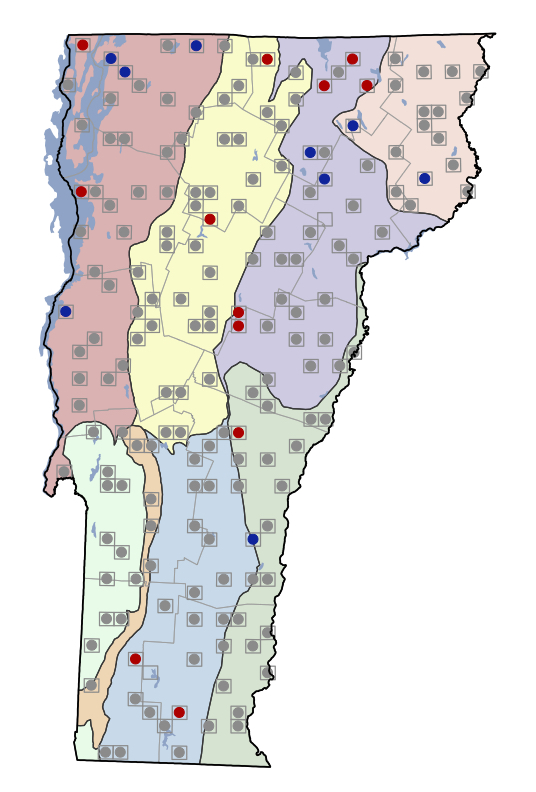
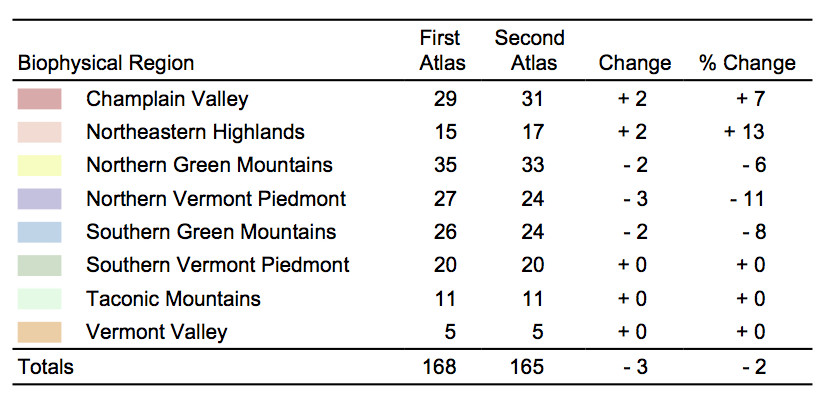
- Status in VT: Overall, decreased by 2% (168 to 165 blocks). Greatest increase in Northeastern Highlands.
- Data from other research: No additional data for VT.
- Conservation status: State rank S5B
- Other atlases: MD: slight decrease; ON: slight increase; NY and PA: no notable change
- VT’s role in North American range: VT is within the core of the range.
- Causes of change since first Atlas: Minimal change.
- Management/Monitoring recommendations: Maintain large tracts of mature forest.
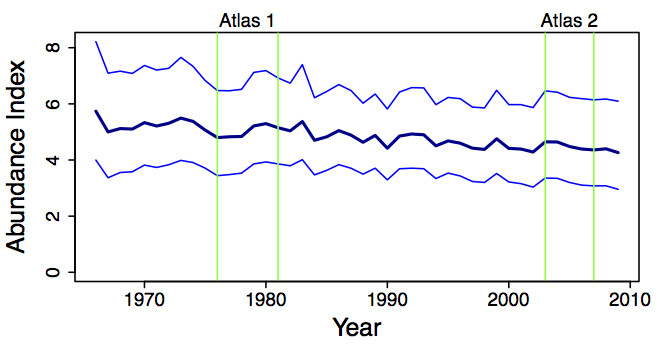
Population Trends
First Vermont Breeding Bird Atlas (1976-1981)
Species Account
Second Vermont Breeding Bird Atlas (2003 – 2007)
Species Account

Change in Distribution

Links
Vermont eBird
Encyclopedia of Life
All About Birds