Skip to content
Olive-sided Flycatcher (Contopus cooperi)
Summary
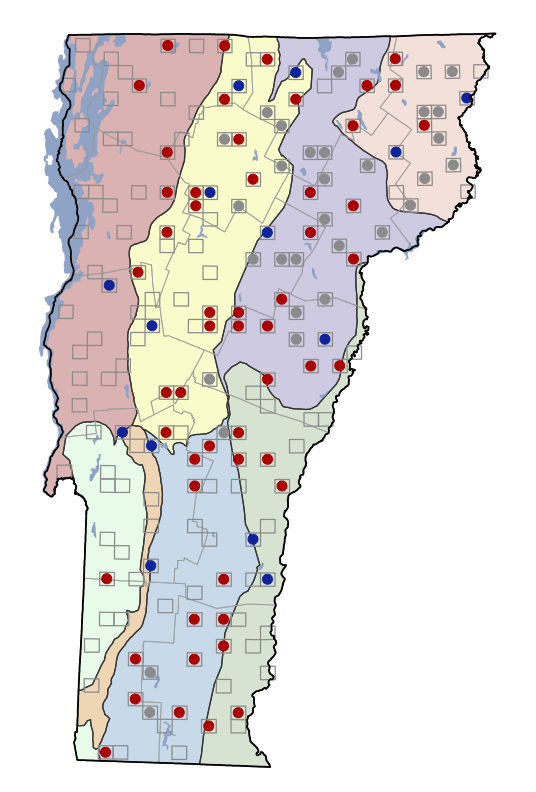
- Status in VT: Decreased by 47% (86 to 46 blocks). Decreases everywhere but Vermont Valley.
- Data from other research: No additional data for VT.
- Conservation status: State rank S4B; SSC; SGCN-M
- Other atlases: NY: -34%; PA: -33% ON: sig. declines in Lake Simcoe-Rideau (-44%) and Southern Shield (-35%).
- VT’s role in North American range: VT is in the southeastern corner of the eastern breeding range.
- Causes of change since first Atlas: Loss of habitat due to changes in forest management practices and fire suppression (?); decreased abundance of preferred prey such asHymenoptera species (?); increase in nest predation in managed forest stands compared to naturally burned stands (?). Possible reduced overwinter survivorship due to loss of habitat on wintering grounds (?).
- Management/Monitoring recommendations: Retain snags in appropriate habitat; prevent conversion of coniferous forest to other land uses; maintain or mimic natural forest disturbance patterns that create suitable forest openings.
Population Trends
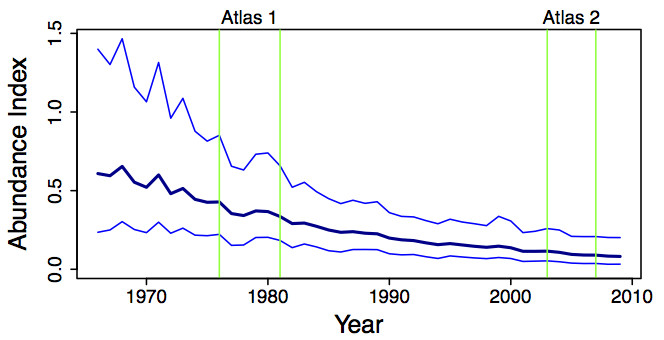
First Vermont Breeding Bird Atlas (1976-1981)
Species Account
Second Vermont Breeding Bird Atlas (2003 – 2007)
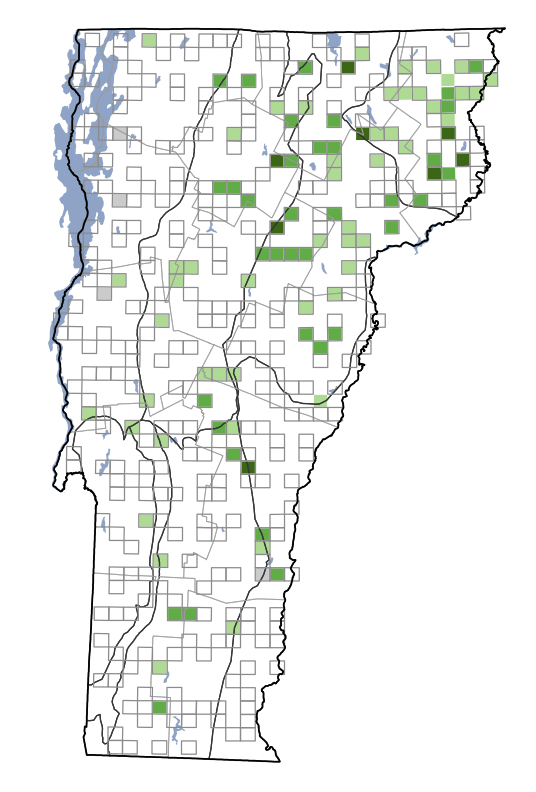
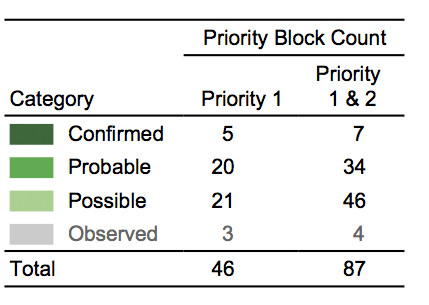
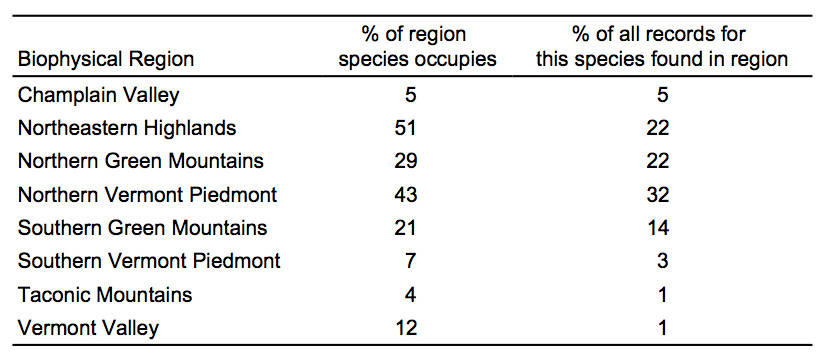
Change in Distribution


Links
Vermont eBird
Encyclopedia of Life
All About Birds