Summary
- Natural history: Vermont’s smallest dabbling duck nests on the ground in thick cover near ponds, often relying on beaver ponds and other wooded wetlands, and most of its range lies in boreal habitat far enough north to have largely escaped the agricultural pressures that affect other prairie ducks. Puzzlingly, its Vermont breeding population all but vanished between the two Atlases even as the continental population climbed, a pattern also seen in New York but not in Ontario, hinting that some regional or latitude-linked factor, rather than an overall decline, may be pushing the birds out of the southern edge of their range.
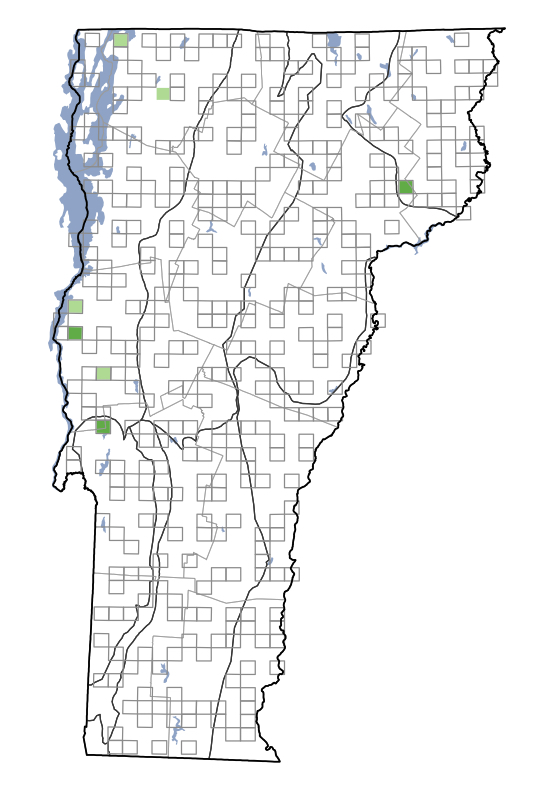
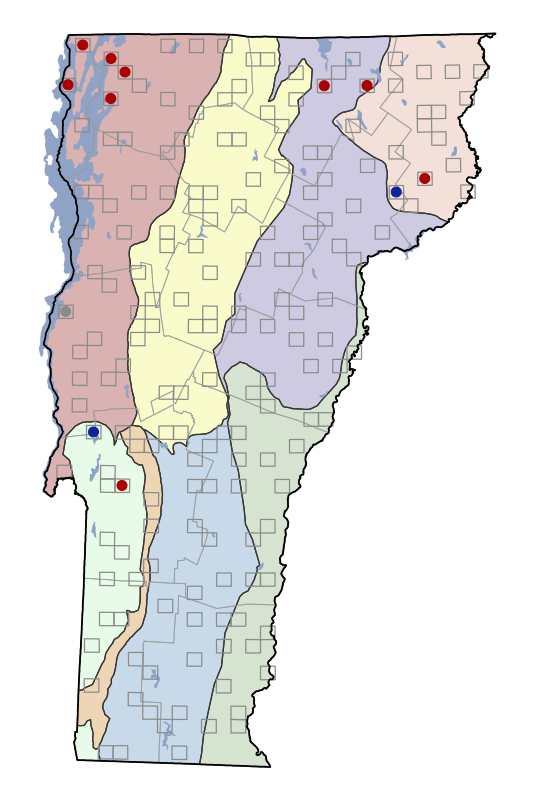
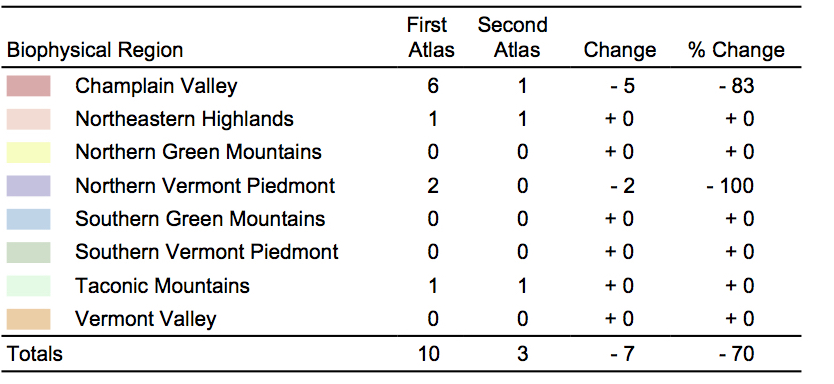
- Status in VT: Decreased by 70% (10 to 3 blocks). Decreases occurred in Champlain Valley and Northern Vermont Piedmont.
- Data from other research: No additional data for VT.
- Conservation status: State rank S1B; SSC
- Other atlases: NY: -45%; ON: non-significant increase in all regions
- VT’s role in North American range: VT is at the southern edge of the range.
- Causes of change since first Atlas: Increase in row crops such as corn or soy beans; early mowing of hayfields.
- Management/Monitoring recommendations: Targeted surveys to clarify status.
First Vermont Breeding Bird Atlas (1976-1981)
Second Vermont Breeding Bird Atlas (2003 – 2007)

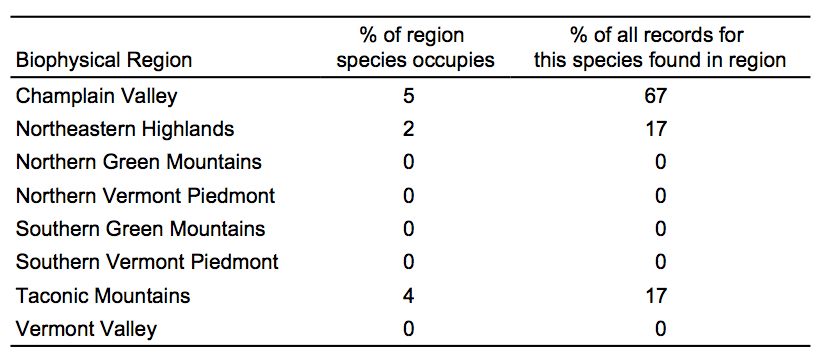
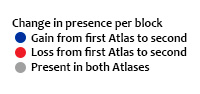
Change in Distribution
Links