Summary
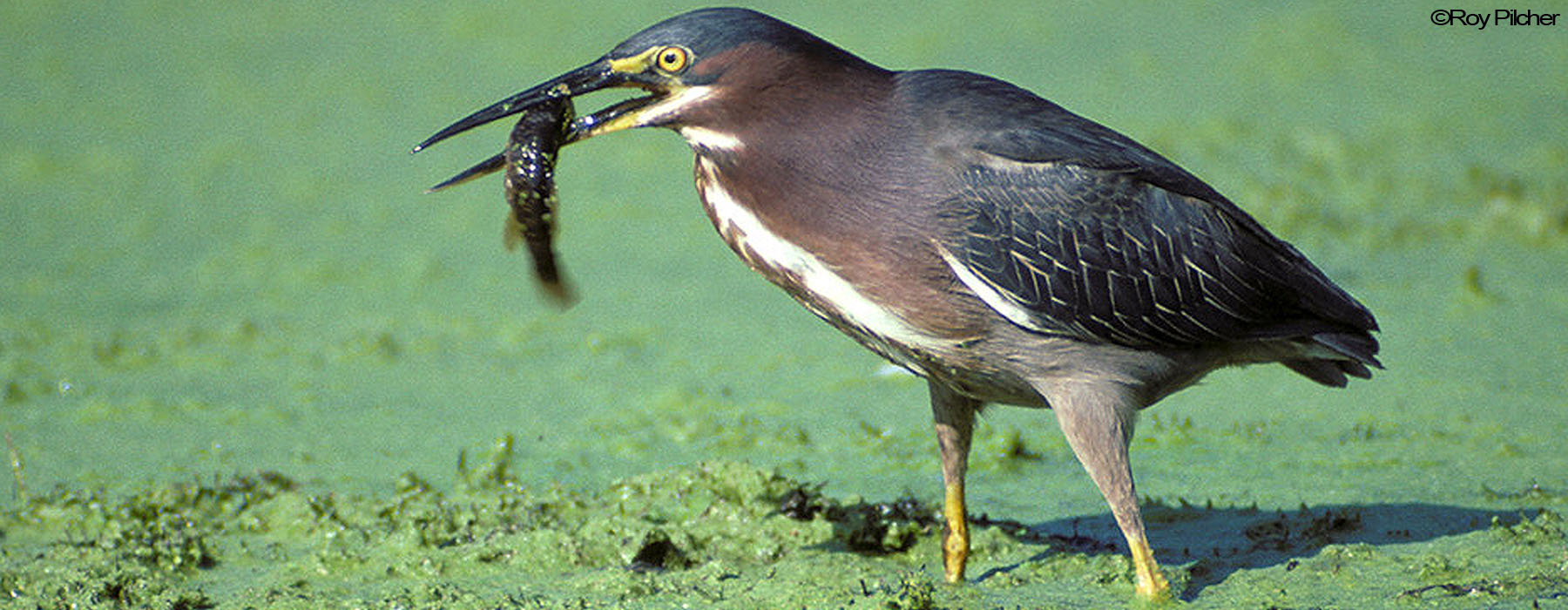
- Natural history: Green Herons are one of the few North American birds known to use tools, dropping bits of twig, feather, or worm onto the water’s surface to draw small fish close enough to strike. Unlike their bittern relatives, they rarely hide in open marshes, preferring instead to hunt quietly along the brushy edges of beaver ponds and streams, and they flush noisily rather than freeze when startled. Despite a clear decline across the Northeast in recent decades, the species has not been added to any conservation watch list in Vermont, New York, or New England, and the causes behind its disappearance from the Green Mountains and northeastern Vermont remain something of a mystery.
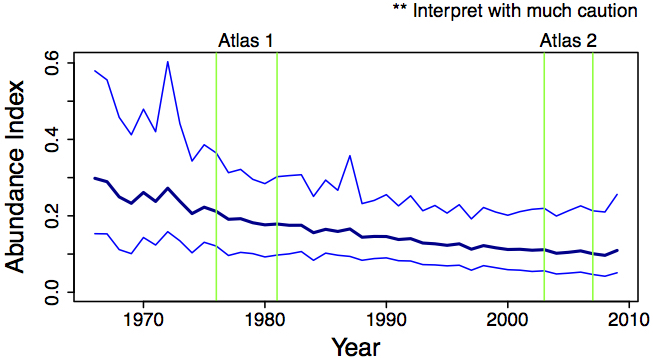
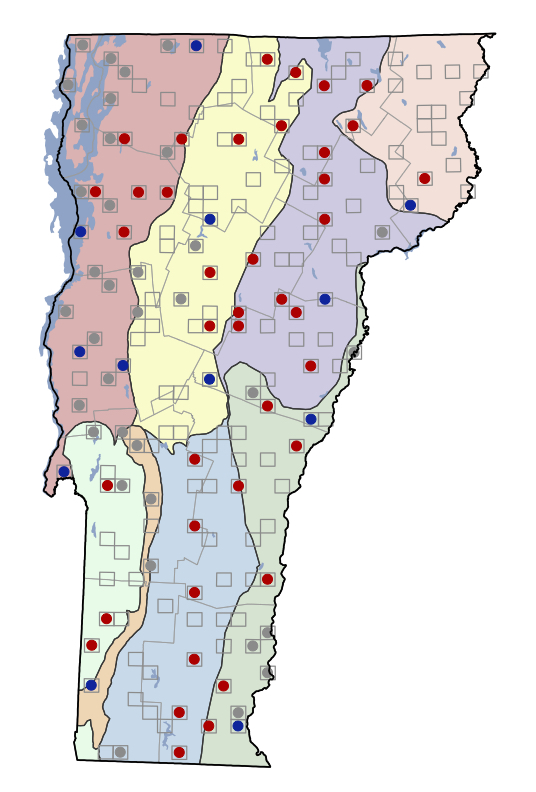
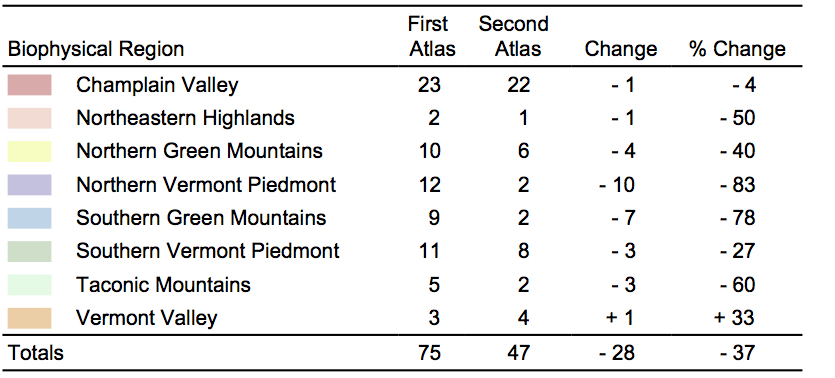
- Status in VT: Decreased by 37% (75 to 47 blocks). Greatest decrease in Northern Vermont Piedmont and Southern Green Mountains.
- Data from other research: No additional data for VT.
- Conservation status: State rank S4B
- Other atlases: NY: -13%; PA: -9%; ON: -29%
- VT’s role in North American range: VT is in the northeastern corner of the range.
- Causes of change since first Atlas: Causes unknown.
- Management/Monitoring recommendations: No current recommendations.
Population Trends
First Vermont Breeding Bird Atlas (1976-1981)
Second Vermont Breeding Bird Atlas (2003 – 2007)
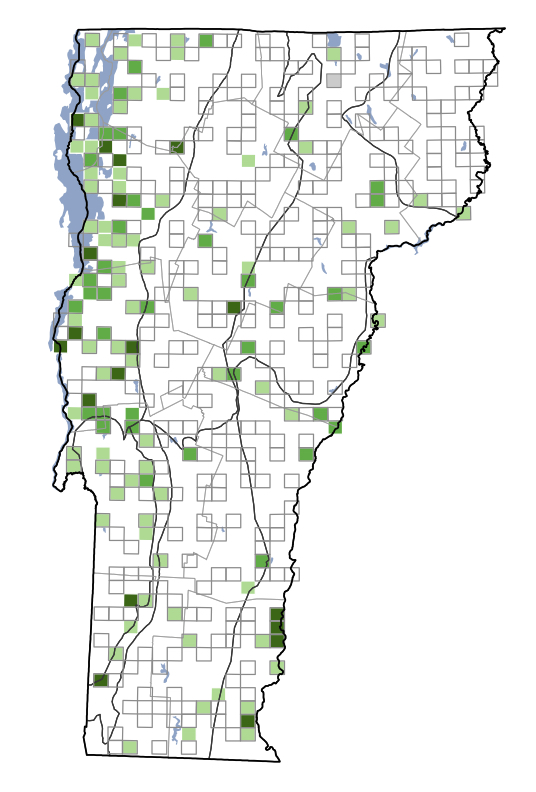

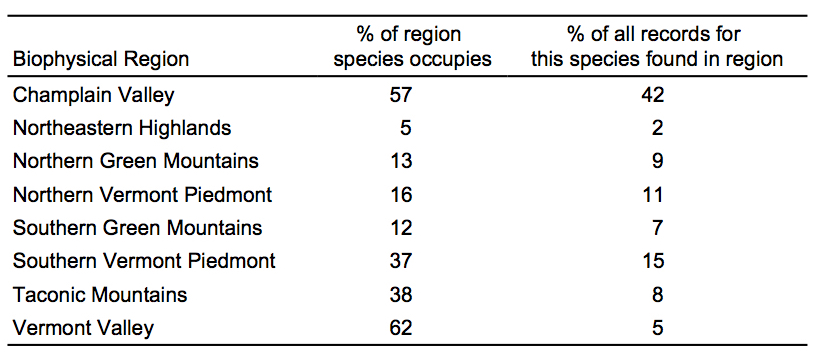
Change in Distribution
Links