Summary
- Natural history: The Gray Catbird is one of only a handful of North American birds able to recognize and toss out eggs that Brown-headed Cowbirds sneak into their nests, a rare defense against this brood parasite. Oddly, the trick sometimes misfires, with a catbird occasionally confusing and discarding one of its own eggs instead. Beyond its skill as a vocal mimic related to the Northern Mockingbird, the catbird is a committed fruit eater, with cherries, raspberries, and other berries making up well over half its diet by late summer, a taste that lets it thrive equally well in overgrown farmland and suburban backyards.
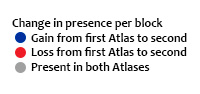
- Status in VT: Decreased by 7% (177 to 165 blocks). Greatest decline in Northeastern Highlands.
- Data from other research: No additional data for VT.
- Conservation status: State rank S5B
- Other atlases: NY: -4%; NY (Adirondacks): -24%; PA: 2%; ON: no sig. change
- VT’s role in North American range: VT is within the core of the range.
- Causes of change since first Atlas: Succession of shrubby fields to forest.
- Management/Monitoring recommendations:No current recommendations.
Population Trends

First Vermont Breeding Bird Atlas (1976-1981)
Second Vermont Breeding Bird Atlas (2003 – 2007)


Change in Distribution