Summary
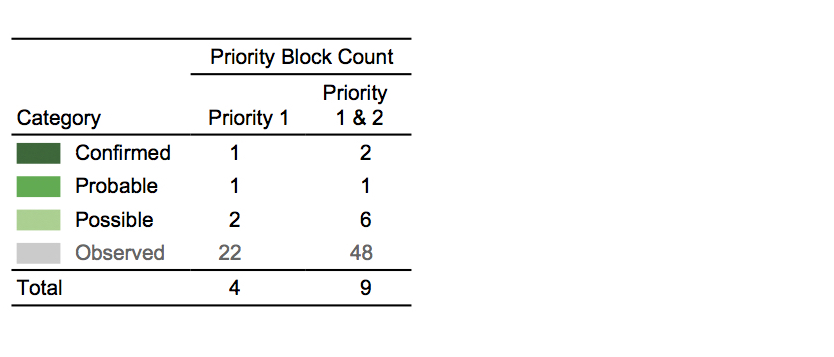
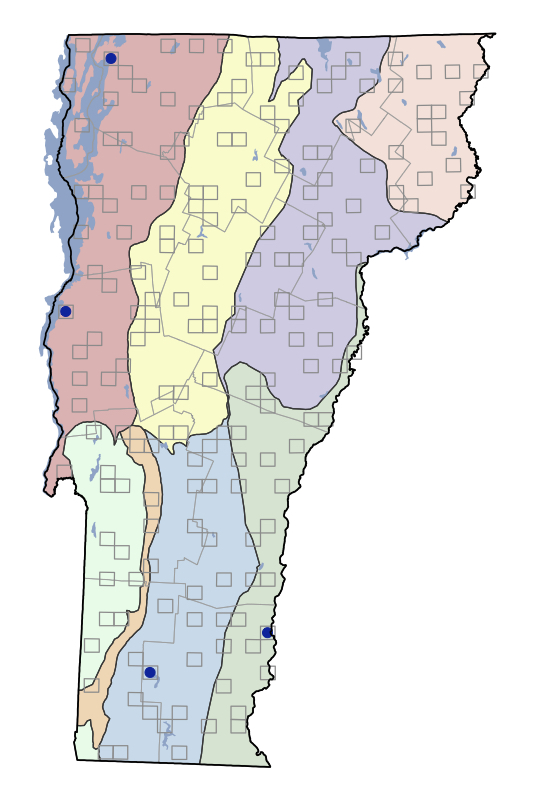
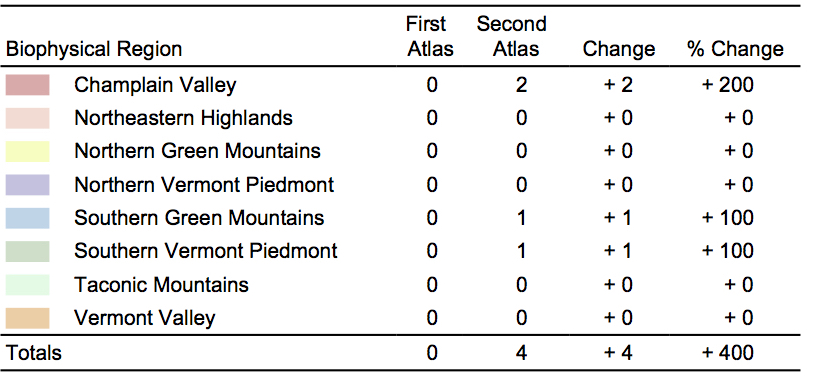
- Status in VT: Increased by 400% (0 to 4 blocks). Greatest increase in Champlain Valley. Population rose from a single nest during first Atlas to over 4,000 nesting pairs at beginning of second Atlas.
- Data from other research: No additional data for VT.
- Conservation status: State rank S2B
- Other atlases: NY: 714%; PA: 2133%
- VT’s role in North American range: VT is within the core of the range.
- Causes of change since first Atlas:Immigration from populations in core of range that have presumably recovered from past human persecution and pesticide exposure. Increases in prey availability and overwinter survival may have also contributed.
- Management/Monitoring recommendations: Continue population control measures on Young Island in Lake Champlain including; egg oiling, shooting cormorants attempting to nest.
First Vermont Breeding Bird Atlas (1976-1981)
Second Vermont Breeding Bird Atlas (2003 – 2007)
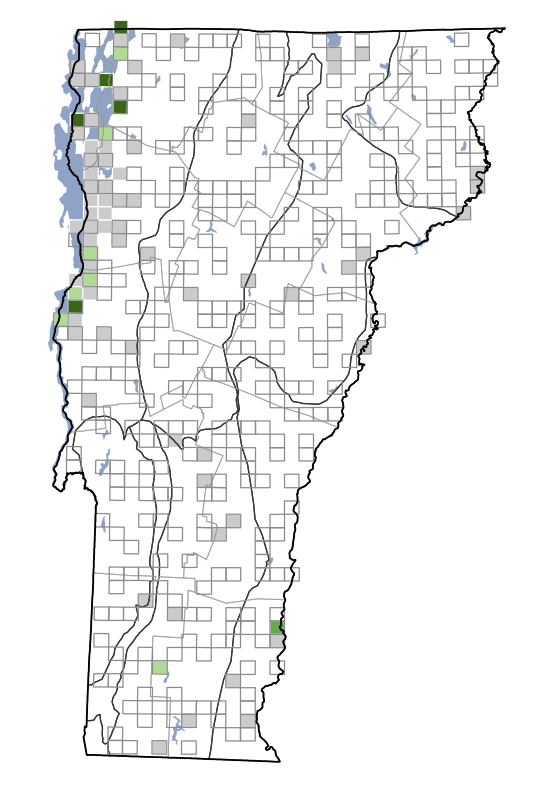
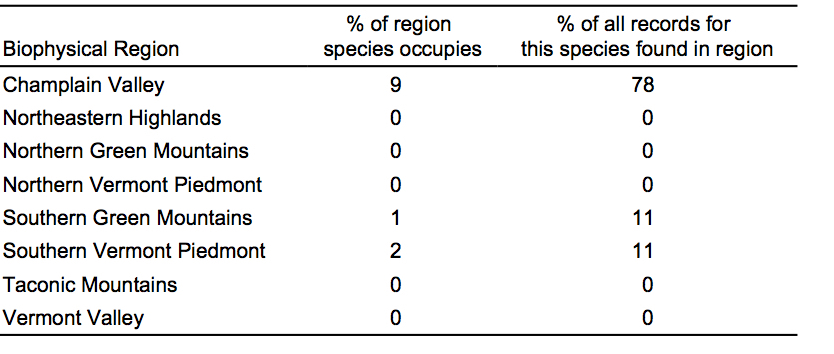
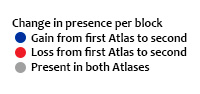
Change in Distribution
Links