Summary
- Natural history: Double-crested Cormorants were rare enough during Vermont’s First Atlas to go largely unnoted, but the colony that began with a single successful nest on Young Island in 1981 grew to more than 4,000 pairs on Lake Champlain by the time the Second Atlas got underway. Their colonies can be destructive, as birds strip twigs to build nests over a foot tall and their droppings kill the very trees they nest in, and by the 1990s cormorants had killed nearly every standing tree on Young Island. Wildlife managers responded starting in 1999 by oiling eggs to prevent hatching and later by shooting nesting birds, but this mainly pushed the colony to other islands, such as Four Brothers, where cormorants now compete with herons and egrets for the dwindling nesting habitat.
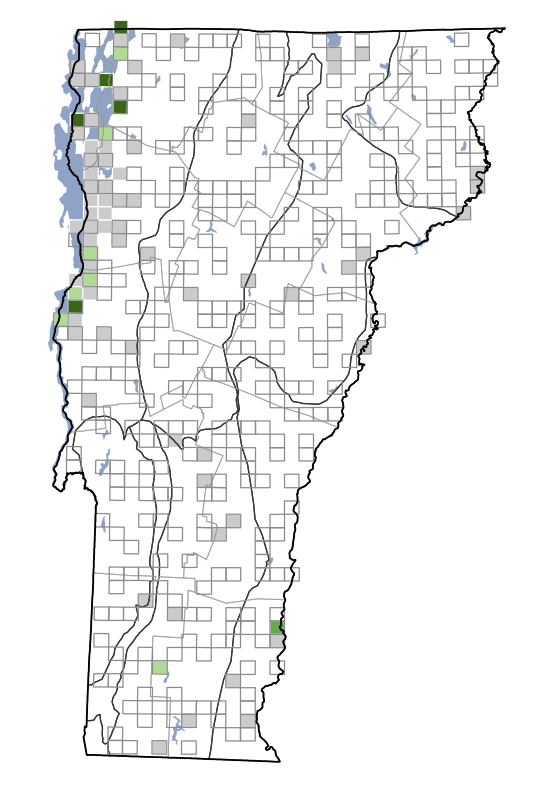
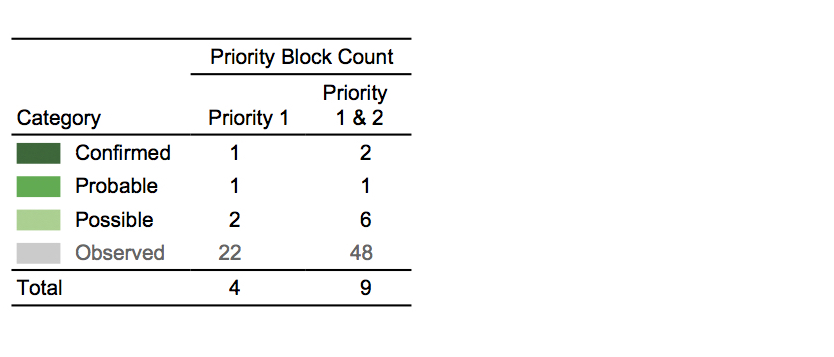
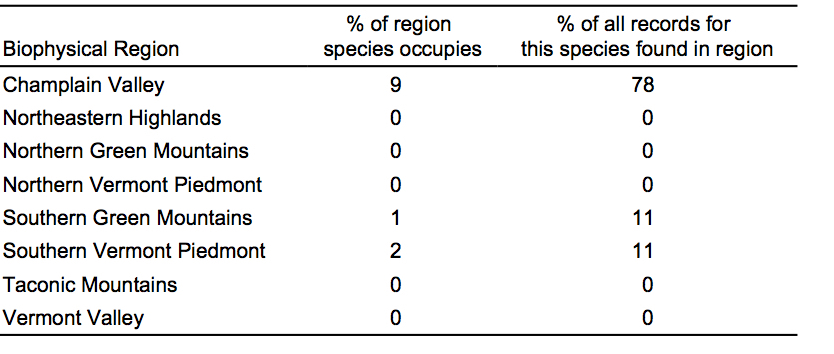
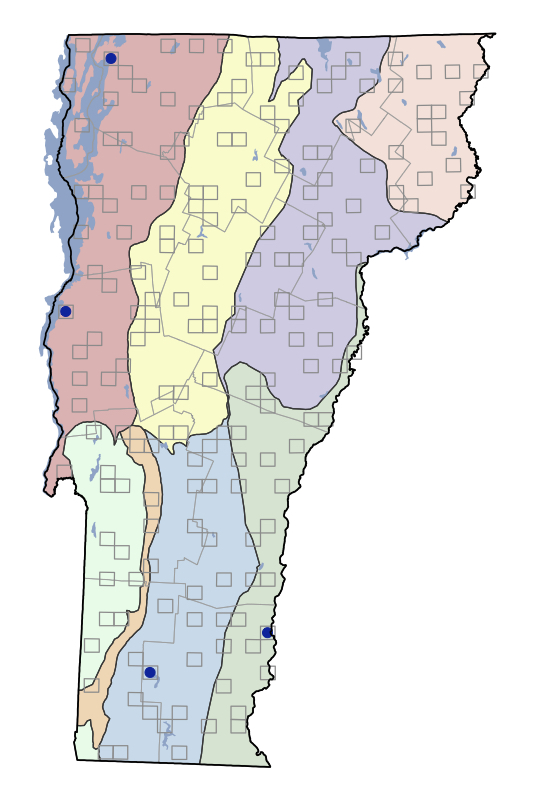
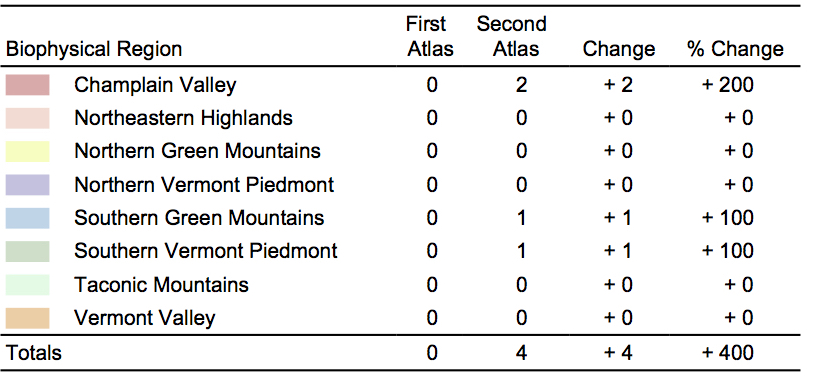
- Status in VT: Increased by 400% (0 to 4 blocks). Greatest increase in Champlain Valley. Population rose from a single nest during first Atlas to over 4,000 nesting pairs at beginning of second Atlas.
- Data from other research: No additional data for VT.
- Conservation status: State rank S2B
- Other atlases: NY: 714%; PA: 2133%
- VT’s role in North American range: VT is within the core of the range.
- Causes of change since first Atlas:Immigration from populations in core of range that have presumably recovered from past human persecution and pesticide exposure. Increases in prey availability and overwinter survival may have also contributed.
- Management/Monitoring recommendations: Continue population control measures on Young Island in Lake Champlain including; egg oiling, shooting cormorants attempting to nest.
First Vermont Breeding Bird Atlas (1976-1981)
Second Vermont Breeding Bird Atlas (2003 – 2007)
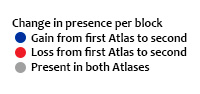
Change in Distribution
Links