Summary
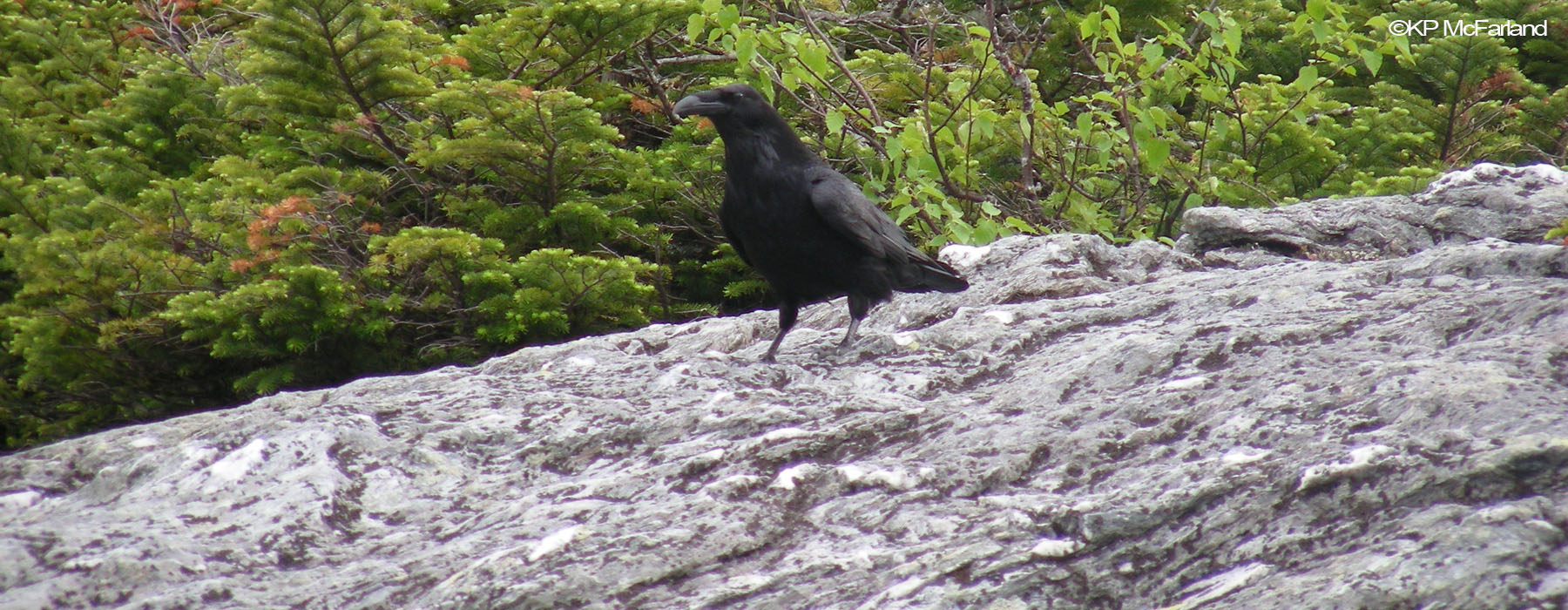
- Natural history: Common Ravens were once common across New England, but as farming and Vermont’s sheep-raising boom spread across the landscape, accusations of lamb-killing led to their being killed off entirely in Vermont by the mid-1800s, part of a broader regional collapse that left the species confined to a few corners of Maine and the Adirondacks. As farms reverted to forest and deer herds rebounded through the twentieth century, ravens recolonized Vermont beginning in the mid-1960s, and by the Second Atlas they had spread from remote mountain strongholds into lower-elevation valleys statewide, a comeback often credited to the species’ intelligence and adaptability.
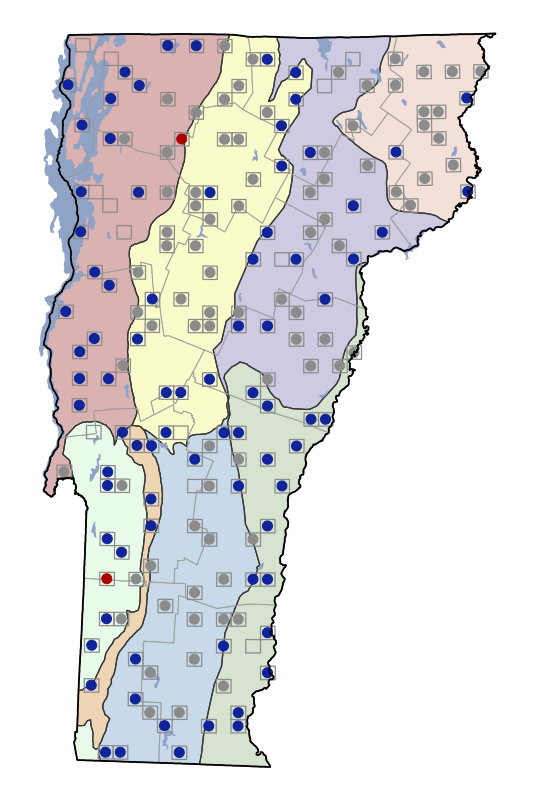
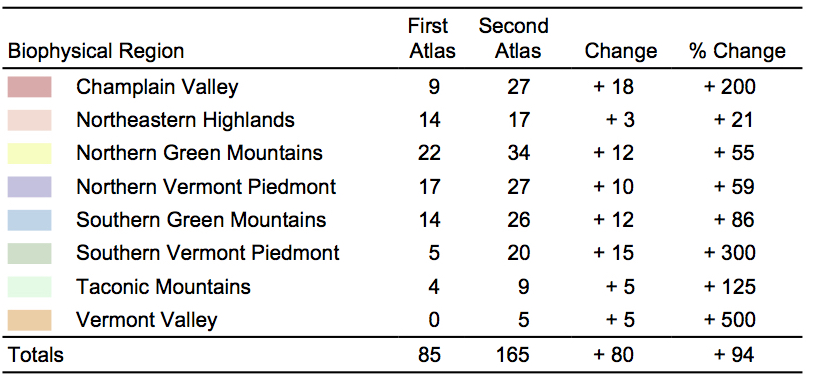
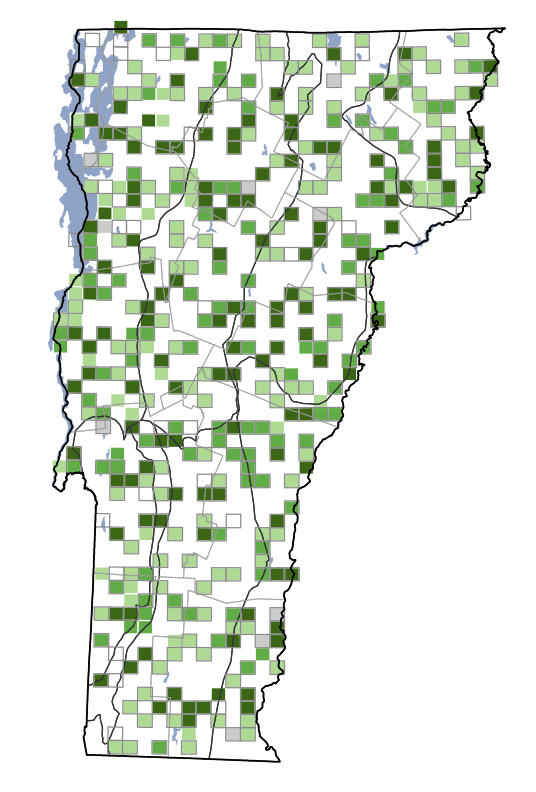
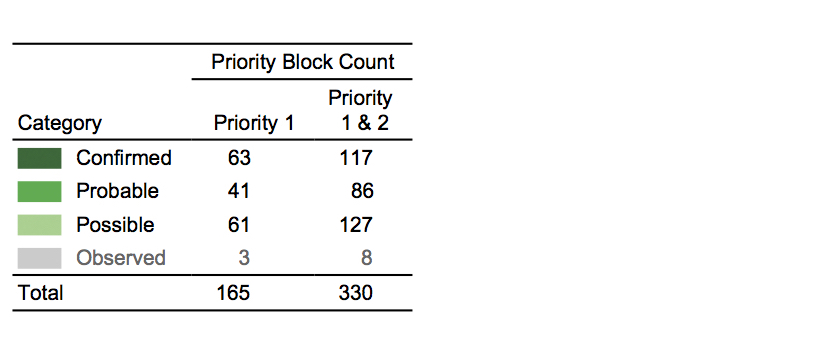
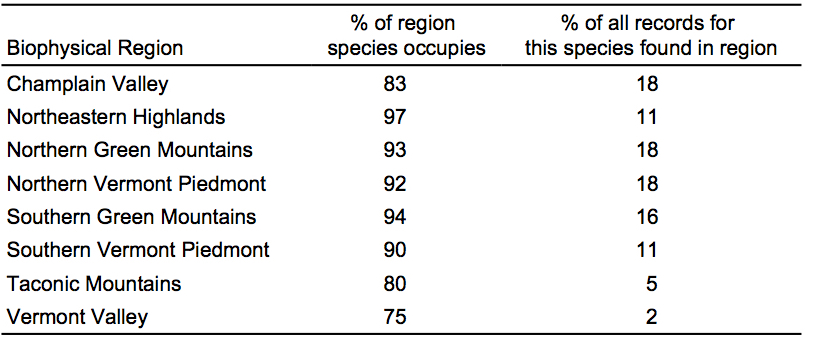
- Status in VT: Increased by 94% (85 to 165 blocks). Greatest increases in Vermont Valley, Southern Vermont Piedmont, and Champlain Valley.
- Data from other research: No additional data for VT.
- Conservation status: State rank S3
- Other atlases: NY and ON: expanded distribution
- VT’s role in North American range: VT is near the southeastern edge of the range.
- Causes of change since first Atlas:Continuation of trend due to protection against persecution; forest re-growth; healthy deer population (food source).
- Management/Monitoring recommendations: No specific recommendations.
Population Trends

First Vermont Breeding Bird Atlas (1976-1981)
Second Vermont Breeding Bird Atlas (2003 – 2007)
Change in Distribution