Summary
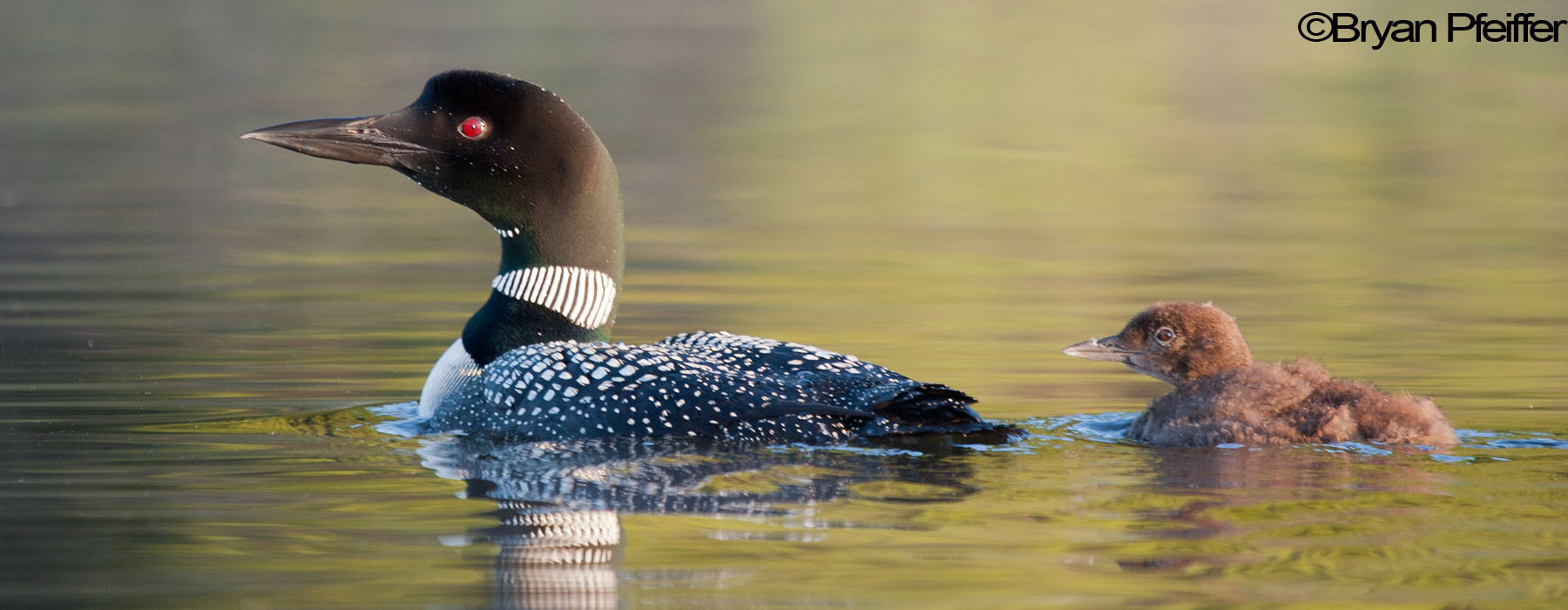
- Natural history: Vermont’s loon population crashed from 19 nesting pairs in 1982 to just 7 the following year for reasons that remain unclear, before the Vermont Loon Recovery Project’s habitat-protection and landowner-outreach efforts helped it climb to 66 nesting pairs by 2009. Ingested lead fishing gear remains the leading cause of adult loon mortality in New England.
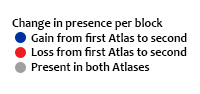
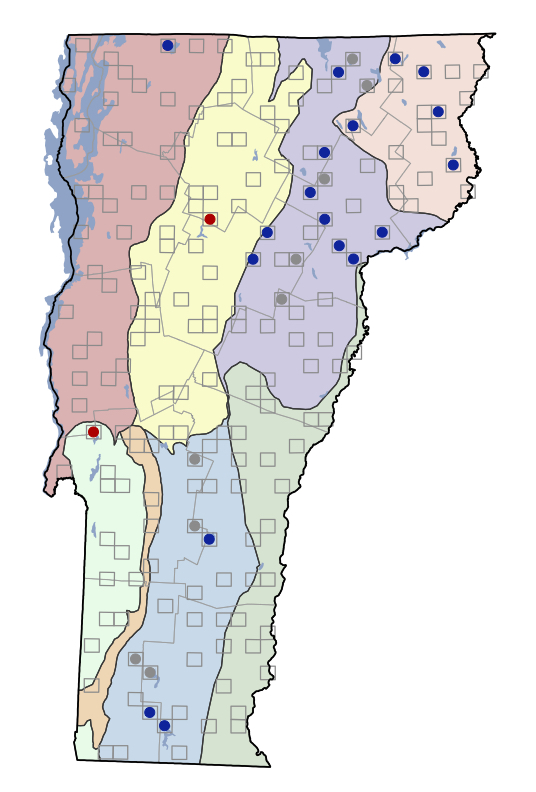
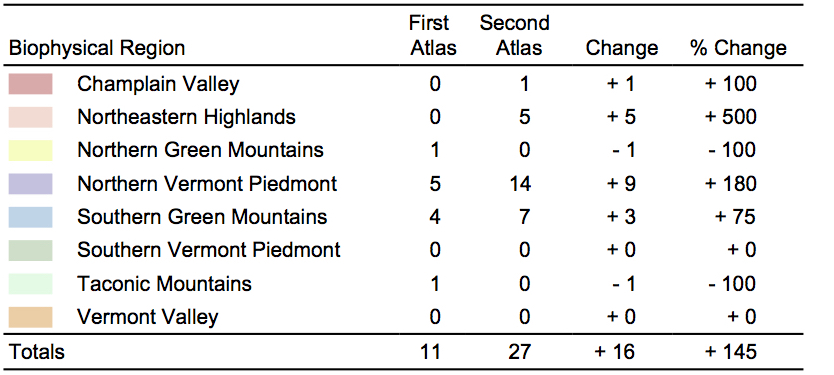
- Status in VT: Increased by 145% (11 to 27 blocks). Greatest increase in Northeastern Highlands, their stronghold in Vermont.
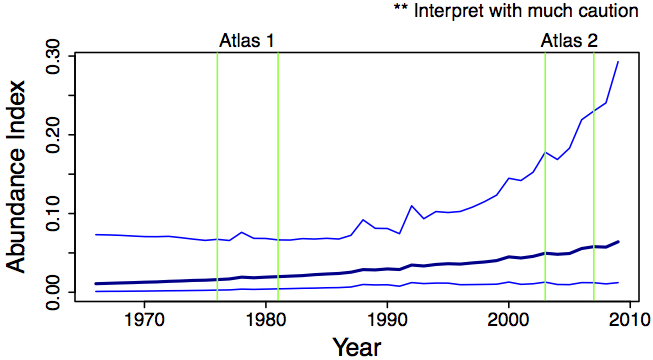
- Data from other research: VLRP: Increased over last 15 years to 66 nesting and 90 pairs in 2009.
- Conservation status: State rank S3B; SGCN-H
- Other atlases: NY: 43%; ON: slight increase
- VT’s role in North American range: VT is at the southern edge of the range.
- Causes of change since first Atlas: Recovery efforts including public outreach, working with landowners, stabilization of water levels; posting of nest warning signs and buoys to reduce human disturbance; providing artificial nesting rafts.
- Management/Monitoring recommendations: Continue monitoring, management, and public education via Vermont’s citizen scientists following the pending state Recovery Plan.
Population Trends
First Vermont Breeding Bird Atlas (1976-1981)
Second Vermont Breeding Bird Atlas (2003 – 2007)
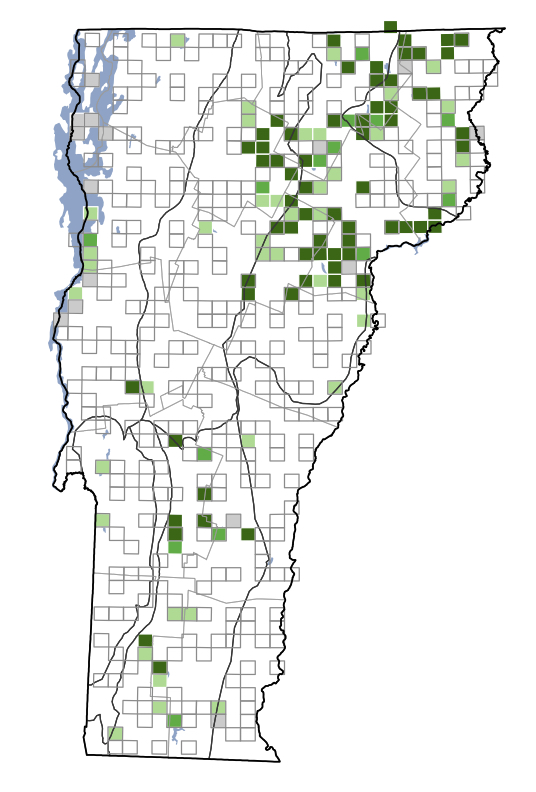
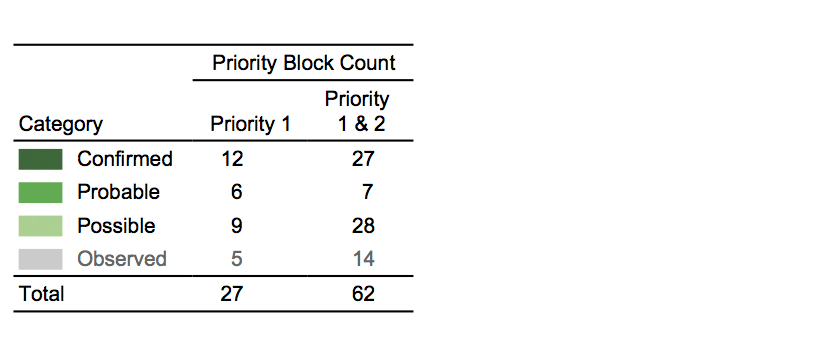

Change in Distribution
Links