Summary
- Natural history: Bobolinks are prairie birds by ancestry, and the species only reached Vermont’s hayfields after eighteenth-century land clearing created substitute grassland habitat, where Bobolinks now thrive at up to three times the density found in the remaining native prairie grasslands. A multiyear Vermont study that banded hundreds of adults found that hay-cutting timing makes a huge difference for chicks. Fields mowed in early June produced almost no surviving young, while waiting until late July or August raised nest output to nearly three fledglings per pair, research now being used to guide farmer-friendly haying schedules that protect the birds.
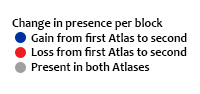
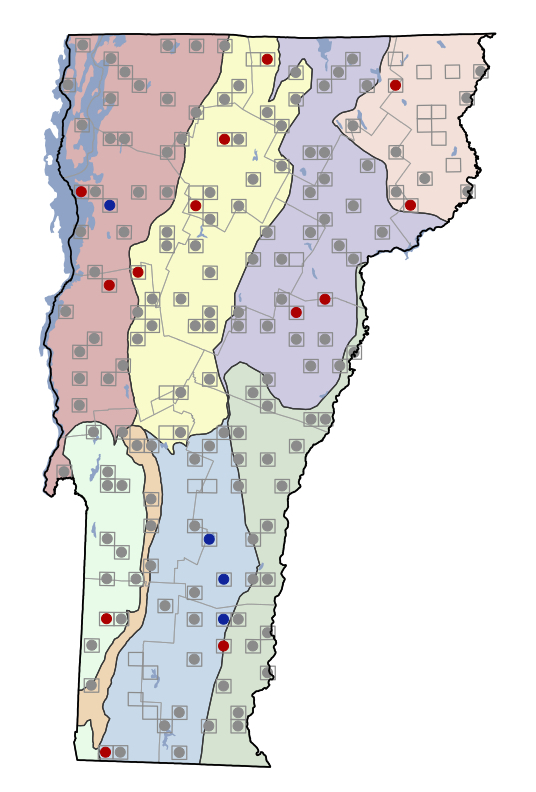
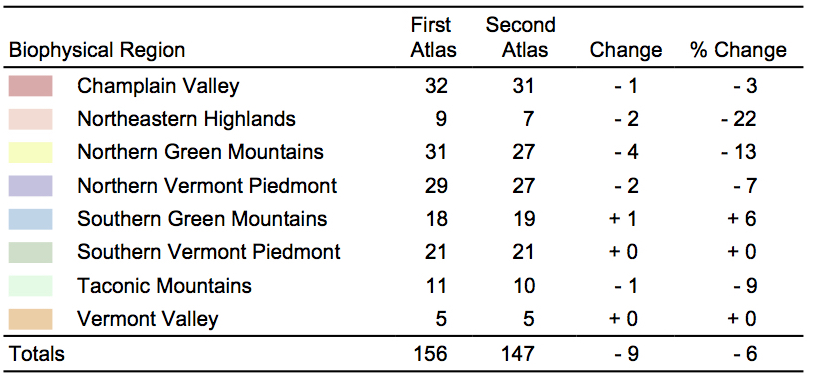
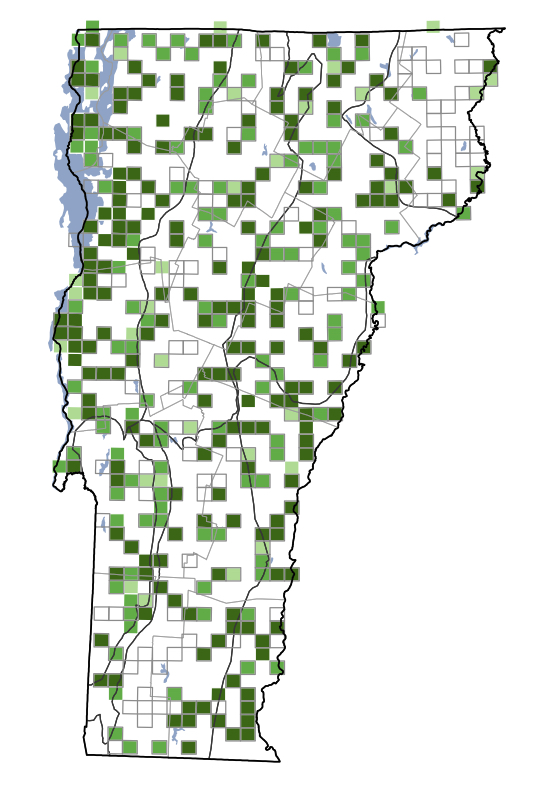
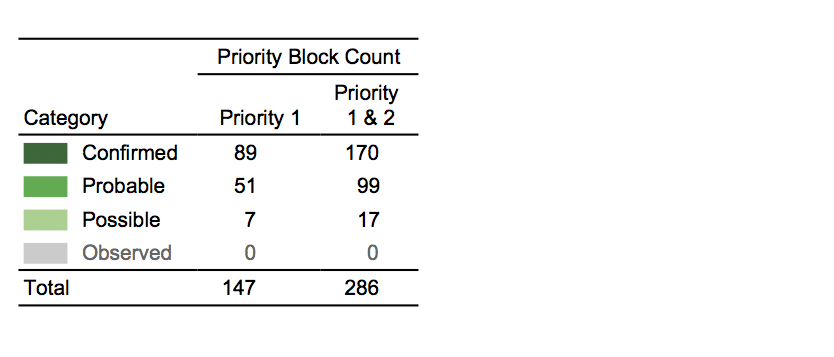
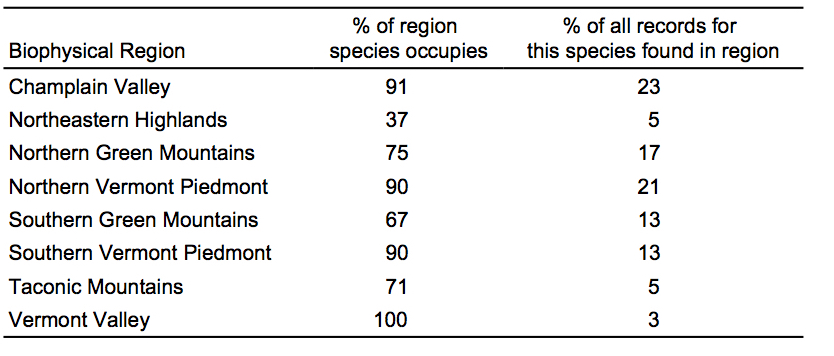
- Status in VT: Decreased by 6% (156 to 147 survey blocks). Greatest decreases in Northeastern Highlands and Northern Green Mountains.
- Data from other research: No additional data in VT.
- Conservation status: State rank S5B; SGCN-M
- Other atlases: PA: 14%
- VT’s role in North American range: VT is within the core of the range.
- Causes of change since first Atlas: Habitat loss resulting from development or reforestation; early and more frequent harvesting of hay during breeding season.
- Management/Monitoring recommendations: Maintain grassland habitat; delay cutting until at least 7 July (ideally 15 July to 1 August), or limit first cutting of hayfields to dates earlier than 1 June, and second cutting to no earlier than 65 days after first cutting; establish a minimum of one large grassland reserve in the Champlain Valley (1,000 ha) specifically for Bobolink and other grassland birds.
Population Trends
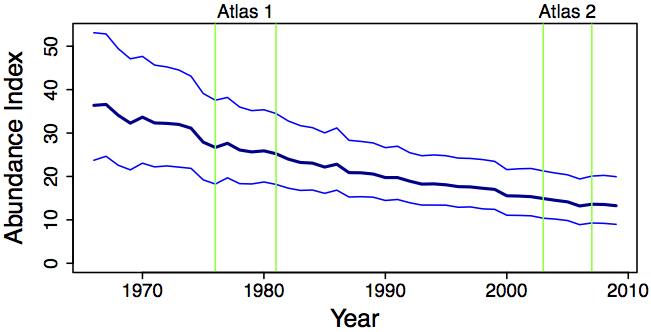
First Vermont Breeding Bird Atlas (1976-1981)
Second Vermont Breeding Bird Atlas (2003 – 2007)
Change in Distribution