Summary
- Natural history: The Blackpoll Warbler nests near treeline on Vermont’s highest peaks, tucked into dense balsam fir just below the harsh alpine zone, then undertakes one of the most extraordinary migrations of any songbird each fall, flying nonstop over open ocean from the New England coast to northern South America. That marathon journey and its exposed mountaintop nurseries both carry outsized risks, and at the lower elevations of Nova Scotia and New Brunswick, where the species is easier to survey, its numbers have been dropping sharply for decades. Because its breeding and wintering grounds are so remote and difficult to manage directly, the bird’s long-term future in Vermont may hinge largely on efforts to slow climate change.
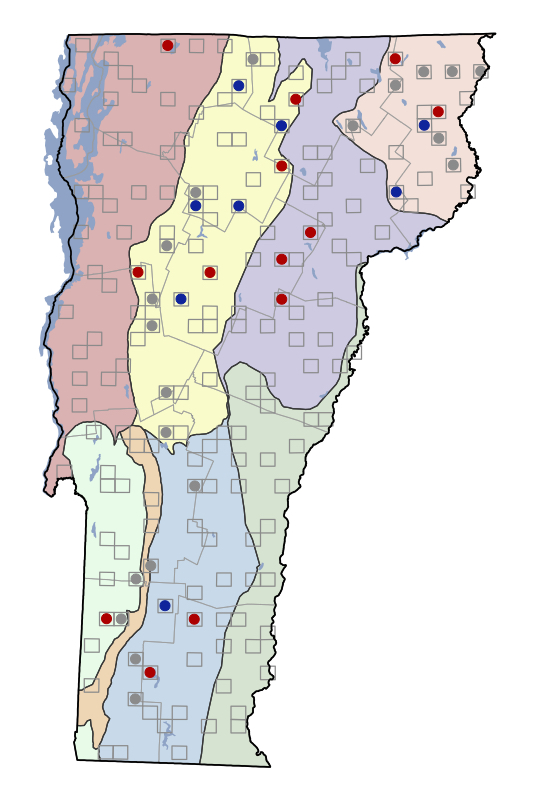
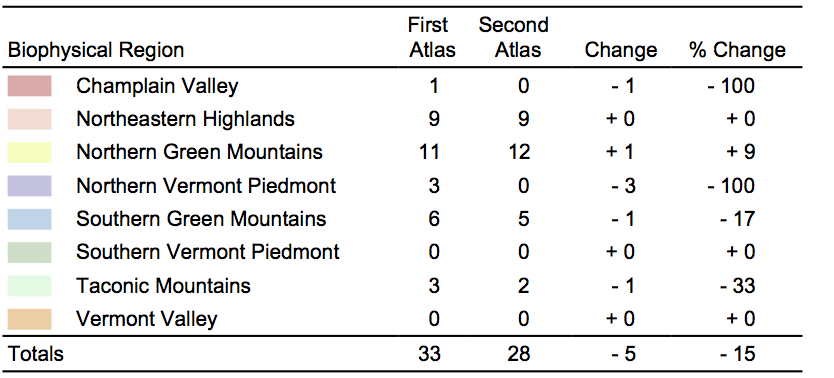
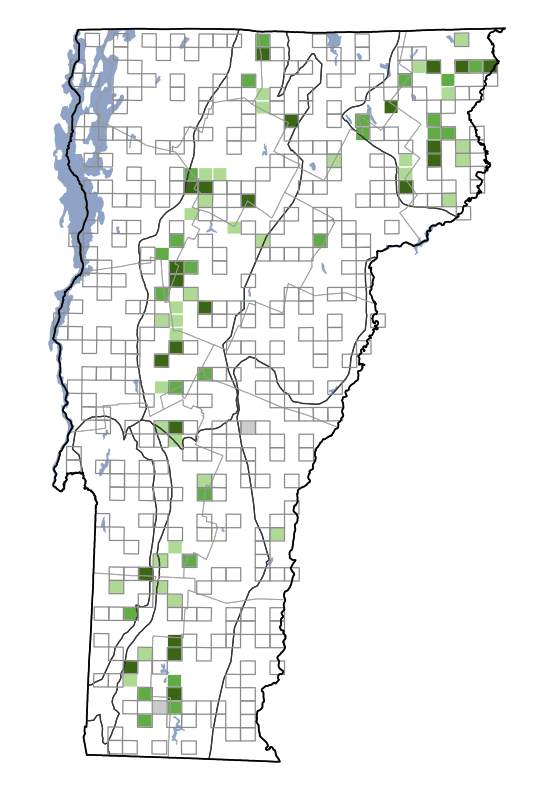
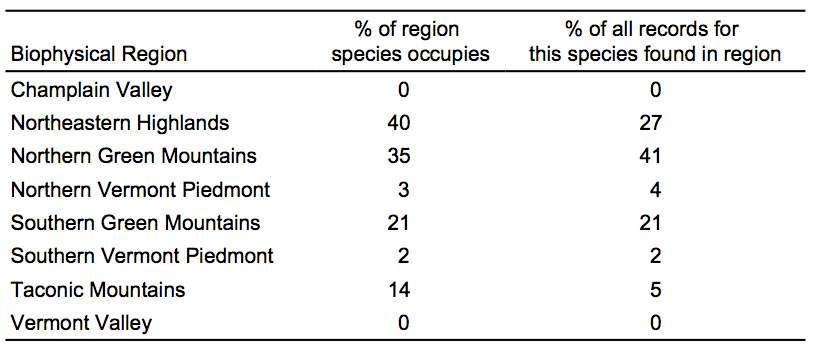
- Status in VT: Decreased by 15% (33 to 28 blocks). Greatest decrease in Northern Vermont Piedmont.
- Data from other research: MBW 2001-2009: non-significant 1.1% annual decline.
- Conservation status: State rank S4B; SSC; SGCN-M
- Other atlases: NY: 46%; PA: 100%; ON: 44%
- VT’s role in North American range: VT is within the southeastern edge of the range.
- Causes of change since first Atlas: Unknown. Potential threats: climate warming; acidic precipitation; mercury bioaccumulation; development of montane forest habitat.
- Management/Monitoring recommendations:Undertake effort to combat climate change.
First Vermont Breeding Bird Atlas (1976-1981)
Second Vermont Breeding Bird Atlas (2003 – 2007)

Change in Distribution