Summary
- Natural history: Black-capped Chickadees excavate their own nest cavities by chiseling out the soft, rotten wood of dead birch and aspen stubs, a labor-intensive habit that ties them to already-decaying trees, though they will also accept a nest box stuffed with wood shavings they can remove themselves. Where its range overlaps the Boreal Chickadee’s in the state’s northeastern spruce bogs, the two species divide up habitat by forest type, and the Black-capped Chickadee’s easy acceptance of bird feeders has been shown elsewhere to boost winter survival and encourage earlier, more successful nesting.
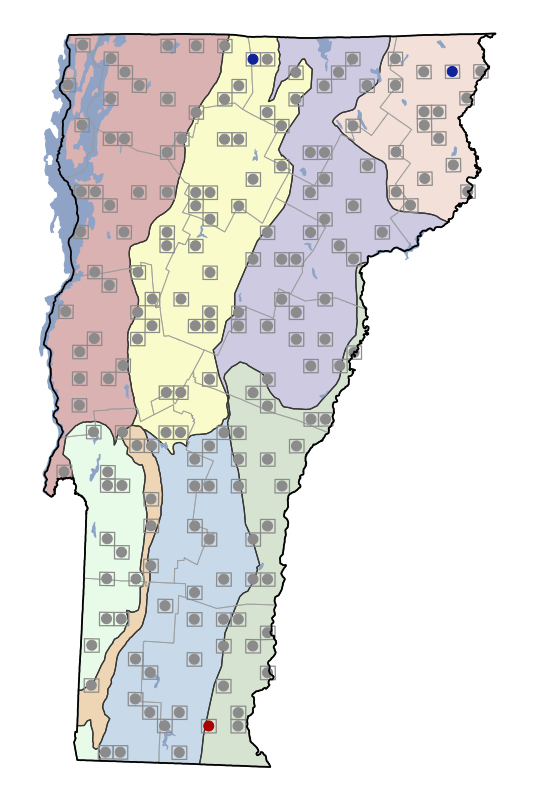
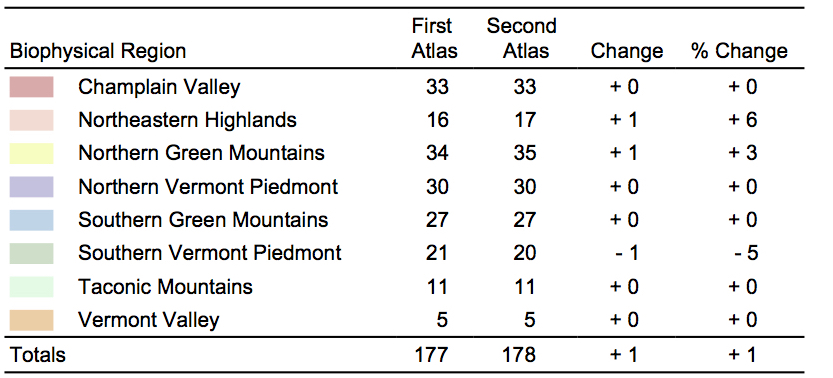
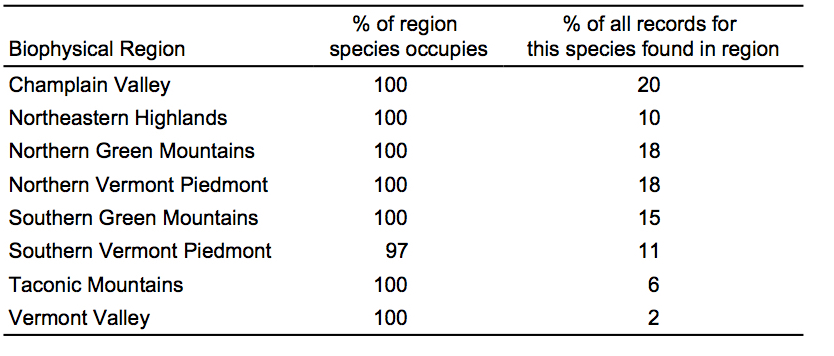
- Status in VT: Minimal change. Common and abundant during both atlases.
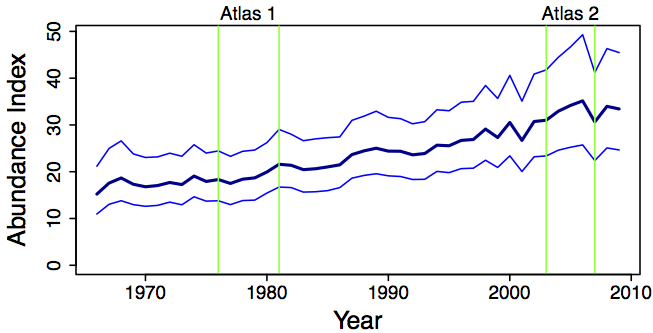
- Data from other research: FBMP: no sig. trend.
- Conservation status: State rank S5
- Other atlases: NY: 1%; PA: -1%; ON: increase throughout province.
- VT’s role in North American range: VT is within the core of the range.
- Causes of change since first Atlas: Continued success due to: ability to co-exist with humans; enhanced winter survival and larger clutch sizes associated with food provided by bird feeders.
- Management/Monitoring recommendations:No current recommendations.
Population Trends
First Vermont Breeding Bird Atlas (1976-1981)
Second Vermont Breeding Bird Atlas (2003 – 2007)
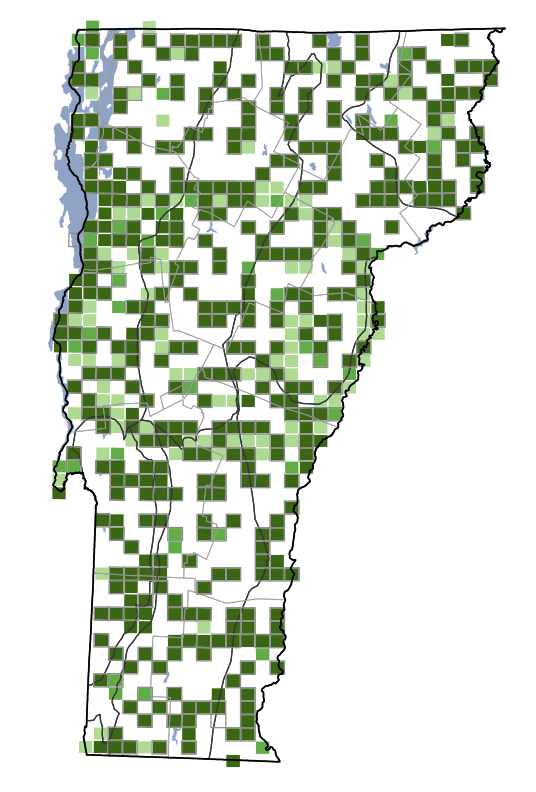

Change in Distribution