Skip to content

American Black Duck (Anas rubripes)
Summary
- Natural history: American Black Ducks share more than 99 percent of their genetic makeup with Mallards, close enough that the two species readily interbreed, a genetic blurring that conservationists see as a growing concern layered on top of the species’ long decline from habitat loss on both its breeding and wintering grounds. A radio-tracking study of Black Ducks in Vermont and Quebec found hunting behind roughly four out of five recorded deaths, and because females so closely resemble female Mallards in plumage, the species can be easy to overlook entirely in the field.
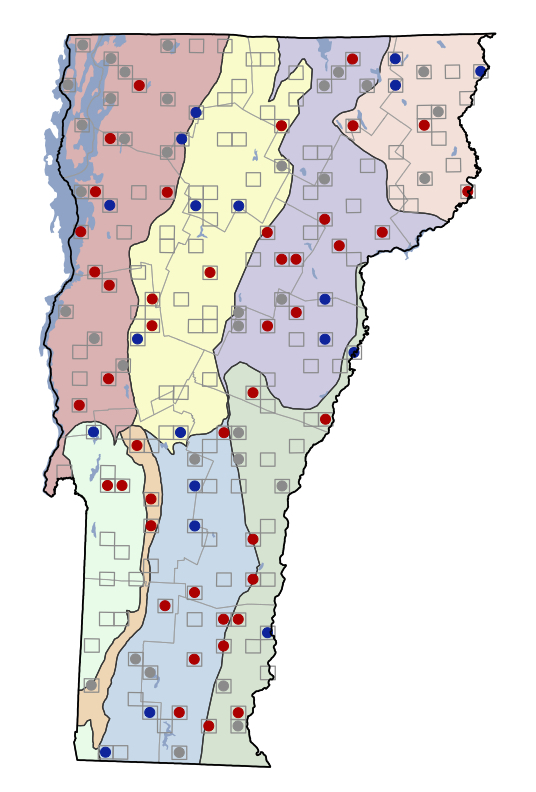
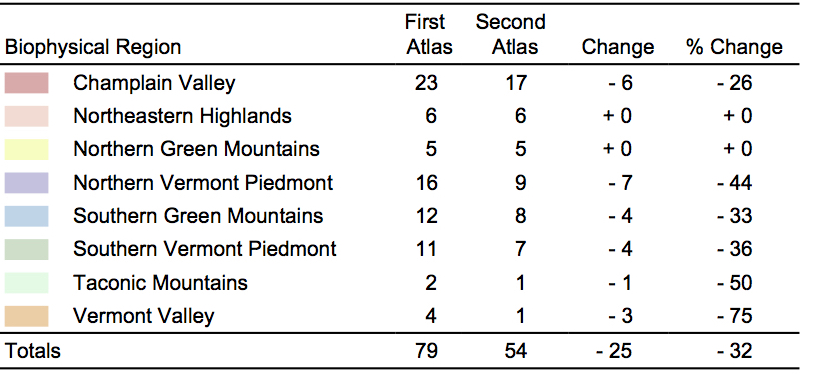
- Status in VT: Decreased by 32% (79 to 54 blocks). Greatest decrease in Vermont Valley.
- Data from other research: No additional data for VT.
- Conservation status: State rank S3B; S5N; SGCN-H; SSC
- Other atlases: MD: -31%; NY: -34%; ON: -22%; PA: -65%
- VT’s role in North American range: VT is within the core of the range.
- Causes of change since first Atlas: Habitat loss and increased disturbance levels from shoreline development; coastal erosion; filling of wetlands; hunting; possible competition with Mallards.
- Management/Monitoring recommendations:Close monitoring of annual harvest; year-round population monitoring.
First Vermont Breeding Bird Atlas (1976-1981)
Species Account
Second Vermont Breeding Bird Atlas (2003 – 2007)
Species Account
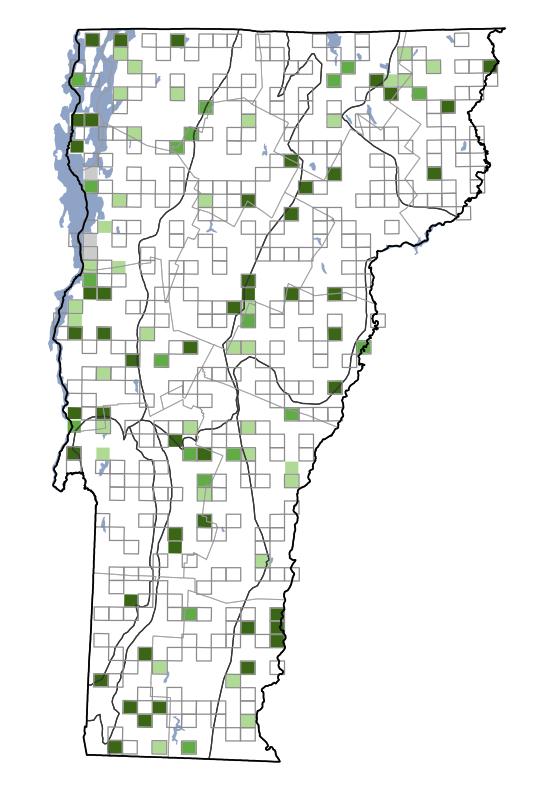

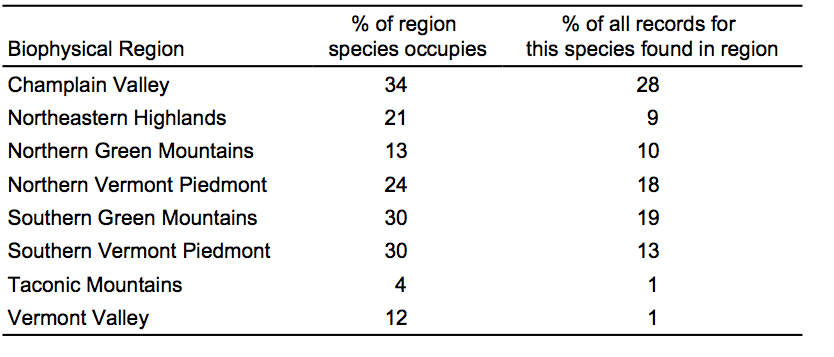
Change in Distribution
Links
Vermont eBird
Encyclopedia of Life
All About Birds