Summary
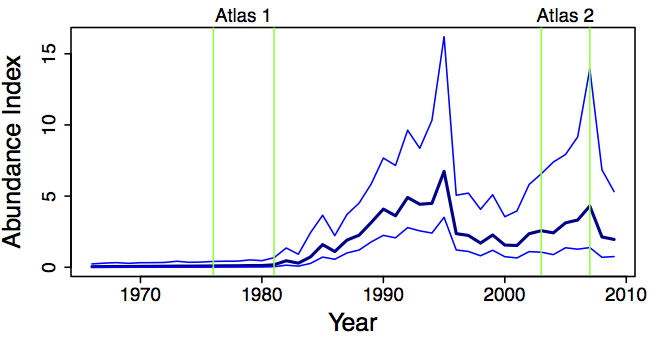
- Natural history: The entire eastern population of House Finch, including Vermont’s, descends from a small number of birds introduced on Long Island in 1940, and that narrow genetic founding is thought to be one reason the species proved so vulnerable when a bacterial disease swept through the East beginning in 1996. Vermont’s numbers had been climbing exponentially for over a decade before the outbreak, and by the time the Second Atlas wrapped up, the population still had not recovered to its mid-1990s peak.
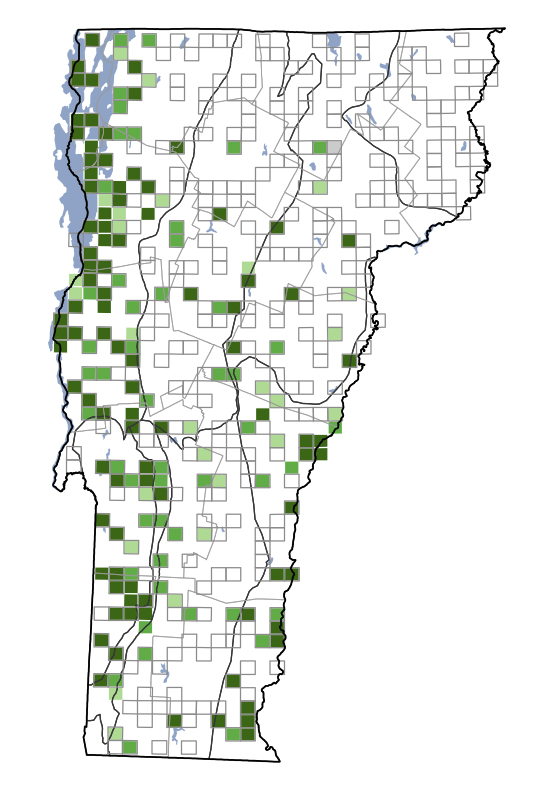
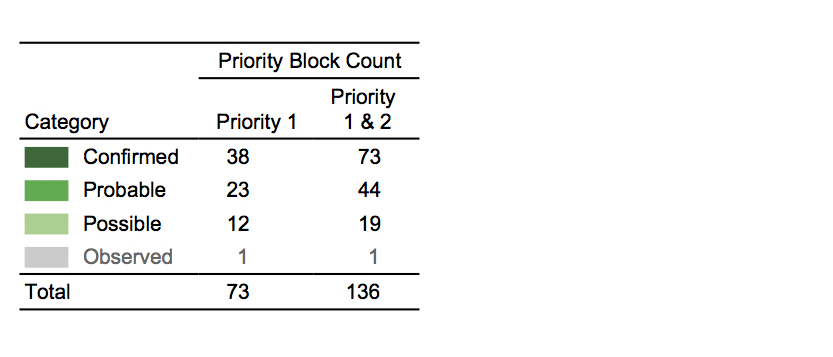
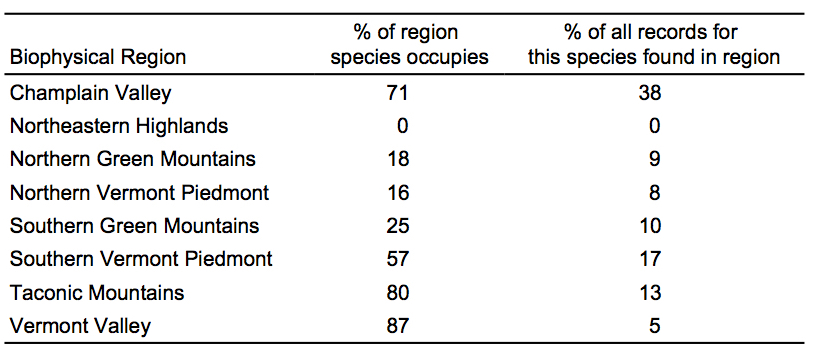
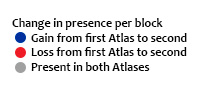
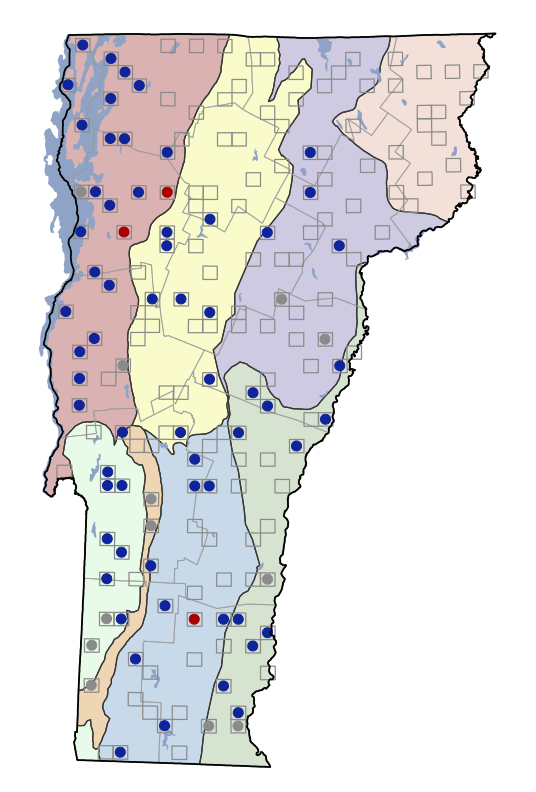
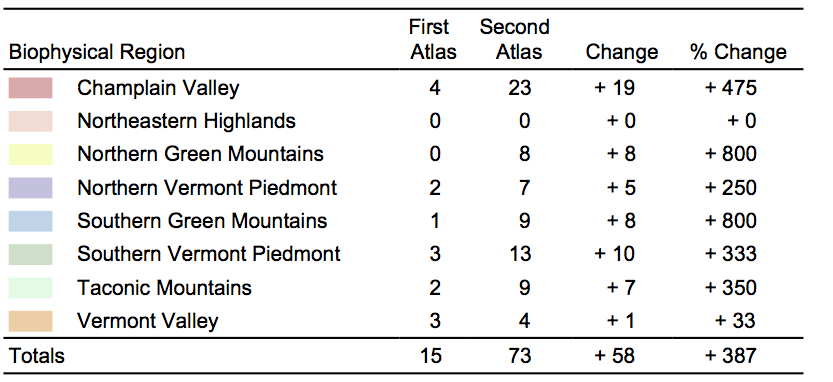
- Status in VT: Increased by 387% (15 to 73 blocks). Greatest increases in Northern Green Mountains and Southern Green Mountains.
- Data from other research: No additional data for VT.
- Conservation status: State rank SNA
- Other atlases: NY: 19%; PA: 3%; MD: 28%; ON: 60%
- VT’s role in North American range: VT is within the core of the range.
- Causes of change since first Atlas: Habitat generalist with high reproductive potential that has successfully utilized an underexploited niche.
- Management/Monitoring recommendations: No specific recommendations.
Population Trends
First Vermont Breeding Bird Atlas (1976-1981)
Second Vermont Breeding Bird Atlas (2003 – 2007)
Change in Distribution
Links