Summary
- Natural history: Golden-winged Warblers expanded into Vermont over the past century and a half by colonizing shrubby fields left behind as hillside farms were abandoned, then began declining again as many of those same fields matured into full-grown forest. A more insidious modern threat is the closely related Blue-winged Warbler, which interbreeds with Golden-winged Warblers so readily that the two species are gradually blending together where their ranges overlap, producing hybrids known as Brewster’s and Lawrence’s Warblers. The two parent species can even sing each other’s songs, so confirming a Golden-winged Warbler in the field requires seeing its yellow-and-gray plumage rather than trusting its voice alone.
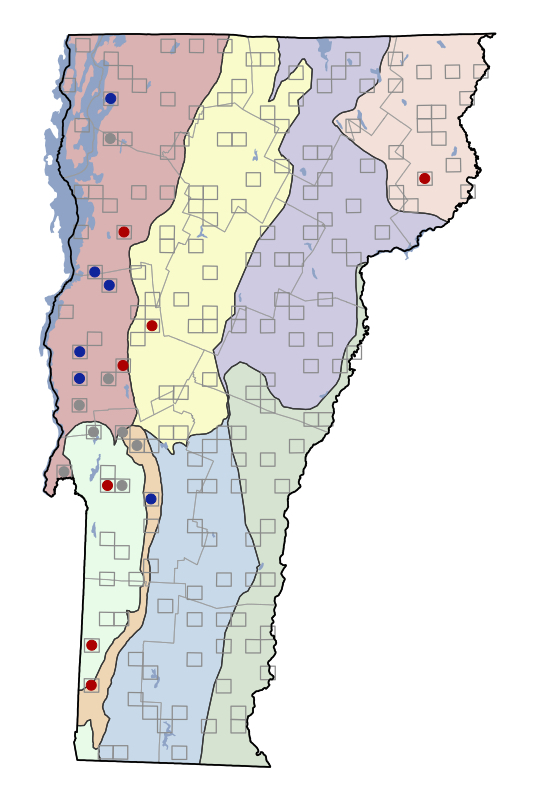
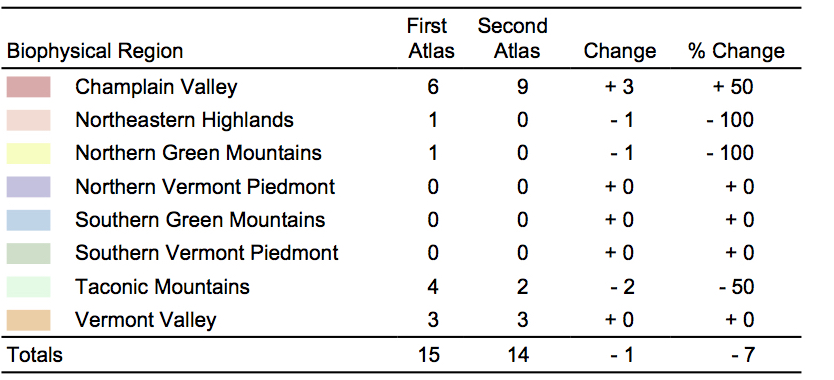
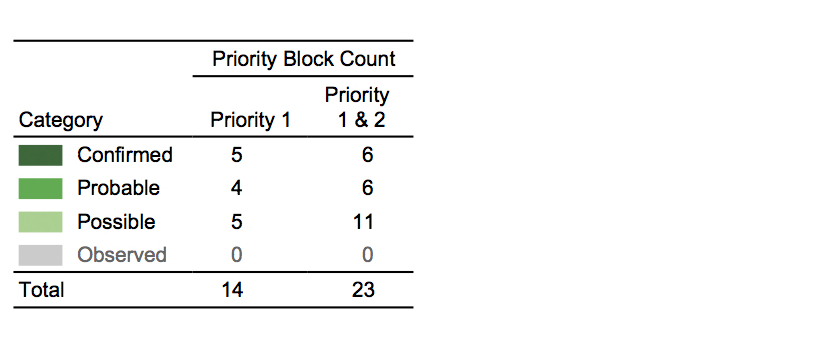
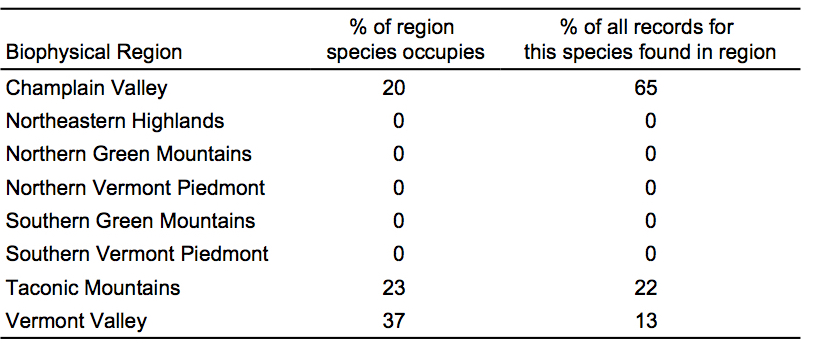
- Status in VT: Decreased by 7% (15 to 14 blocks). Greatest decreases in Northeastern Highlands and Northern Green Mountains.
- Data from other research: No additional data for VT.
- Conservation status: State rank S3B; SSC; SGCN-H
- Other atlases: NY: -53%; PA: -61%; MD:-65%; ON: -65%
- VT’s role in North American range: VT is within the core of the range.
- Causes of change since first Atlas: Forest maturation; parasitism by Brown-headed Cowbird (?); genetic swamping by Blue-winged Warbler (?).
- Management/Monitoring recommendations: Mechanical treatments to set back woody succession; habitat restoration; population monitoring.
First Vermont Breeding Bird Atlas (1976-1981)
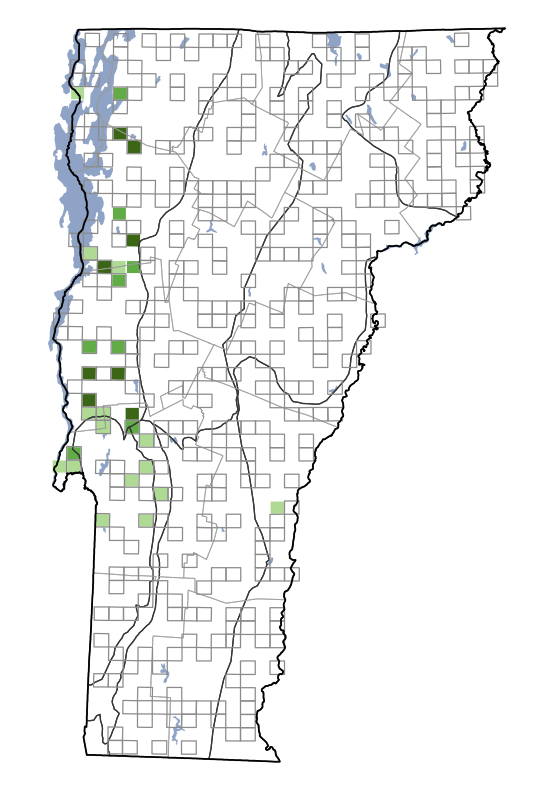
Second Vermont Breeding Bird Atlas (2003 – 2007)
Change in Distribution