Summary
- Natural history: The Blue-winged Warbler originally bred only in a small area of the Ozarks and nearby Appalachian savannas, and it spread north and east only after European settlers cleared the eastern forests and then abandoned much of that farmland to shrubby regrowth. It reached central New York by the mid-1900s and pushed into western Vermont within about two decades after that, having been little more than a rare vagrant here before then. Where its range now overlaps that of the closely related Golden-winged Warbler, the two interbreed, and Vermont birders may occasionally spot one of the resulting hybrids, nicknamed Brewster’s or Lawrence’s Warbler, in the same shrubby fields and power-line corridors both species favor.
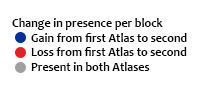
- Status in VT: Increased by 150% (4 to 10 blocks). Greatest increase in Champlain Valley.
- Data from other research: No additional data for VT.
- Conservation status: State rank S3B; SSC; SGCN-M
- Other atlases: NY: 17%; PA: -4%; MD: -29%; ON: 74%
- VT’s role in North American range: VT is in the northeastern edge of the range.
- Causes of change since first Atlas: Increase in early-succesional stage habitat due to farmland abandonment.
- Management/Monitoring recommendations:Maintain power line rights-of-way in an early-successional stage.
First Vermont Breeding Bird Atlas (1976-1981)
Second Vermont Breeding Bird Atlas (2003 – 2007)


Change in Distribution