Skip to content
Northern Mockingbird (Mimus polyglottos)
Summary
- Natural history: As recently as the early twentieth century, the Northern Mockingbird was scarce even in southern New England, and its move into Vermont is part of a broader northward push whose cause, whether climate warming or changing land use, is still debated among ornithologists. It depends on dense shrub cover such as multiflora rose for both food and nest sites, and its Vermont stronghold has been old, brushy pastureland left behind by farm abandonment, habitat that is now maturing into closed forest across much of the state. As that shrubland disappears, the mockingbird’s future here may increasingly depend on suburban yards with ornamental hedges and lawns rather than on former farm fields.
- Status in VT: Decreased by 26% (42 to 31 blocks). Greatest decrease in Northeastern Highlands and Taconic Mountains.
- Data from other research: No additional data for VT.
- Conservation status: State rank S4B
- Other atlases: NY: 10%; PA: 20%; MD 3%
- VT’s role in North American range: VT is in the northeastern corner of the range.
- Causes of change since first Atlas: Succession of fallow, shrub-dominated land into forest.
- Management/Monitoring recommendations:No current recommendations.
Population Trends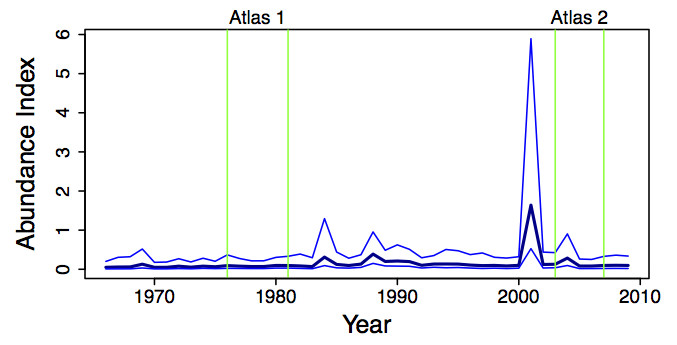
First Vermont Breeding Bird Atlas (1976-1981)
Species Account
Second Vermont Breeding Bird Atlas (2003 – 2007)
Species Account
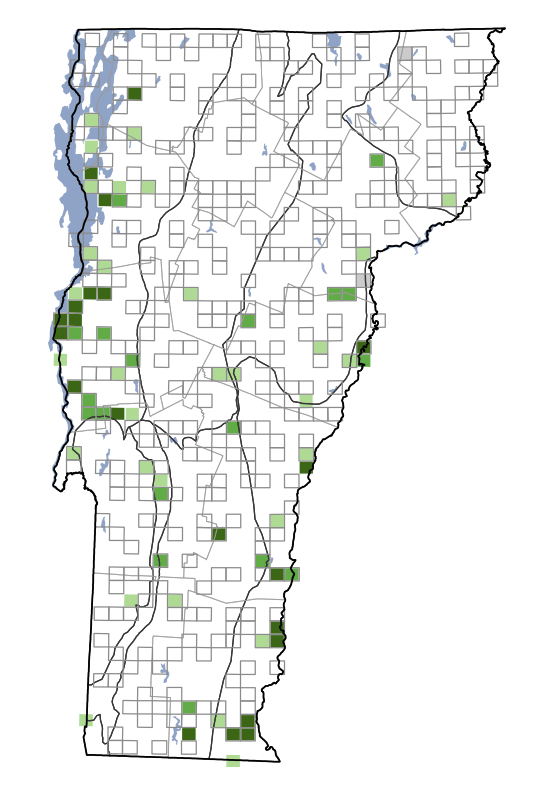
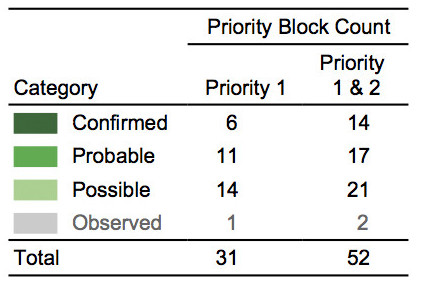
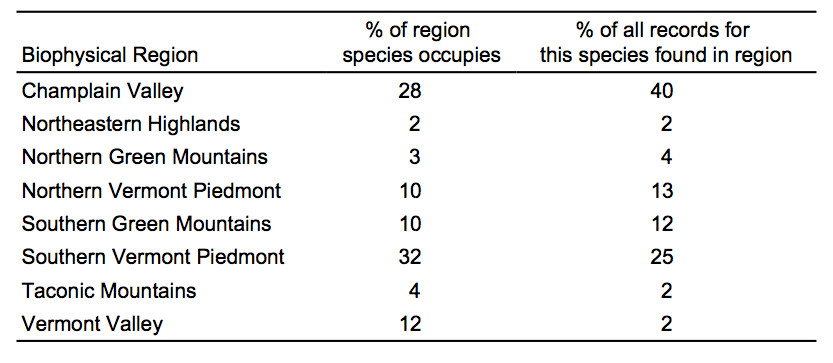
Change in Distribution


Links
Vermont eBird
Encyclopedia of Life
All About Birds