Summary
- Natural history: The Eastern Bluebird actually thrived on the wave of forest clearing that swept Vermont in the 1700s and 1800s, since it nests in cavities but needs open ground to hunt insects, and the hedgerows and fencerows left standing between new pastures supplied exactly the nest holes and foraging space it needed. Numbers later crashed as introduced European Starlings and House Sparrows out-competed bluebirds for cavities and abandoned farmland reverted to forest. The species’ rebound since has been driven largely by volunteers who install and maintain networks of nest boxes known as bluebird trails, which today supply the great majority of its nest sites across the state.
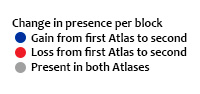
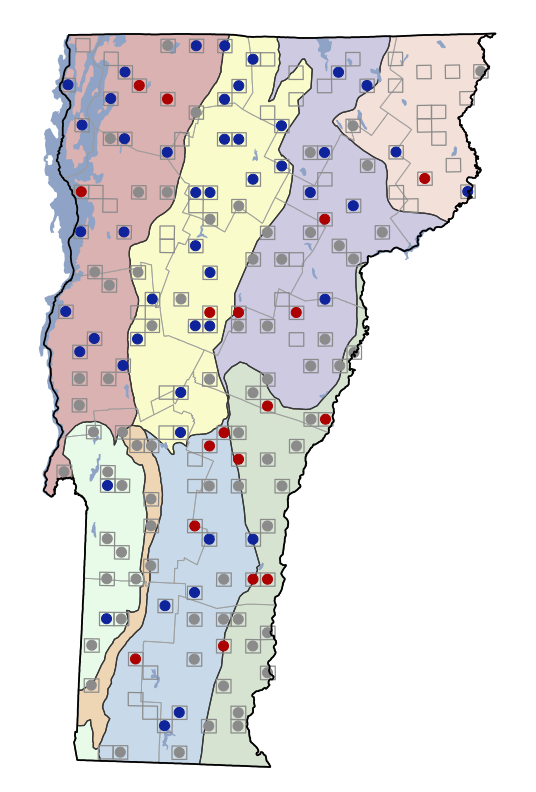
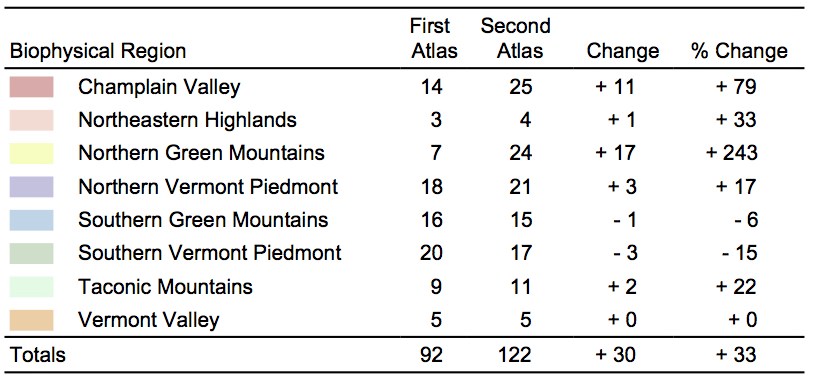
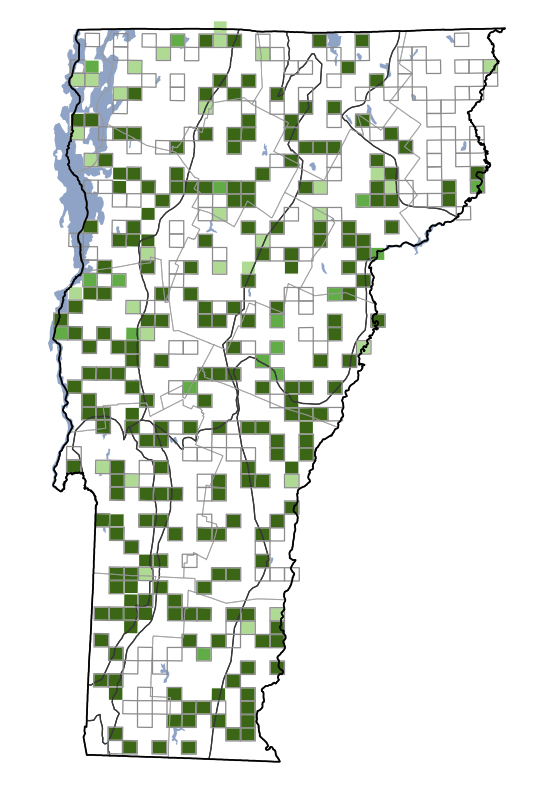
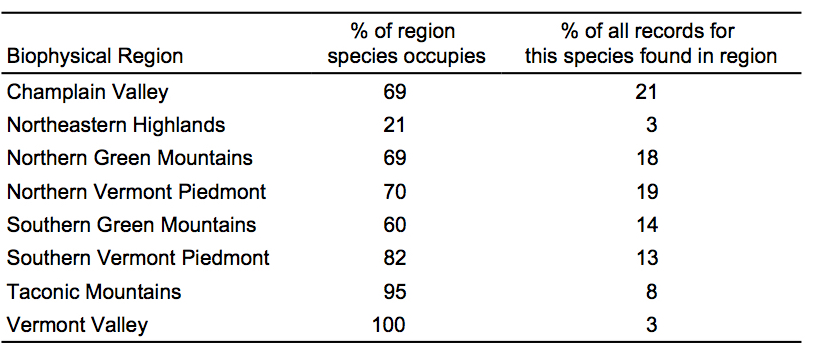
- Status in VT: Increased by 33% (92 to 122 blocks). Greatest increase in Northern Green Mountains.
- Data from other research: No additional data for VT.
- Conservation status: State rank S5B; S3N
- Other atlases: NY: 50%; PA: 9%; MD: 14%; ON: Increase
- VT’s role in North American range: VT is within the core of the range.
- Causes of change since first Atlas: Nest boxes and “nest box trails” created to maximize appeal to Eastern Bluebird and discourage competitors.
- Management/Monitoring recommendations: No current recommendations.
Population Trends
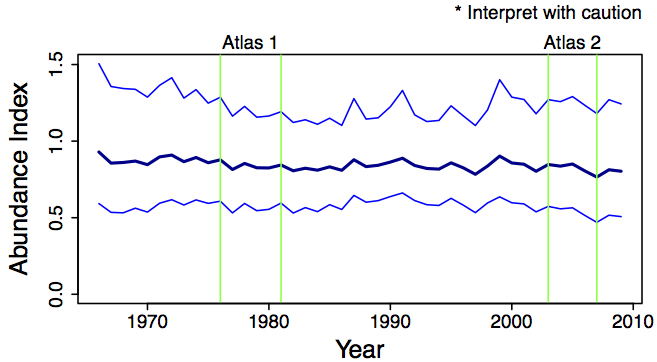
First Vermont Breeding Bird Atlas (1976-1981)
Second Vermont Breeding Bird Atlas (2003 – 2007)

Change in Distribution