Skip to content
Rock Pigeon (Columba livia)
Summary
- Natural history: Every Rock Pigeon in Vermont descends from wild birds first domesticated in Europe thousands of years ago and brought to North America as early as 1606, making it one of the continent’s longest-established non-native birds. It nests almost exclusively on buildings and bridges rather than the natural cliff ledges its ancestors once used, and it breeds so early and so often that a documented nest in Burlington held young in late January, with some pairs squeezing in four or five broods before the year is out. Because the species arrived with European settlement rather than evolving here, its scattered regional declines are not treated as a conservation concern the way a native bird’s would be.
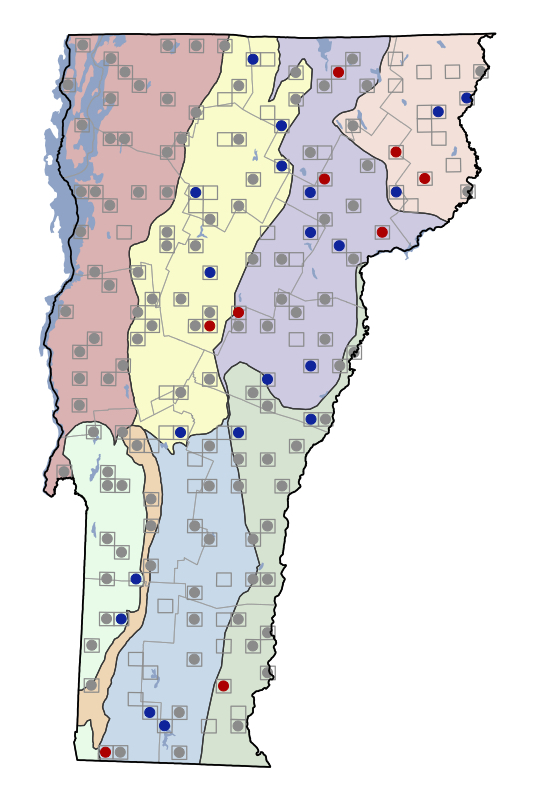
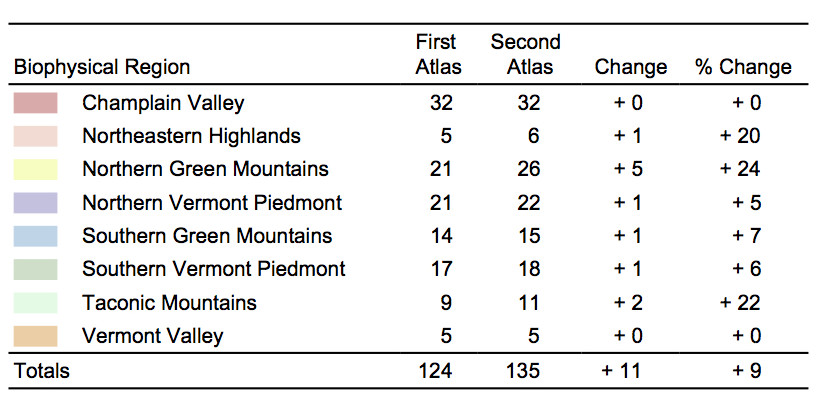
- Status in VT: Increased by 9% (124 to 135 blocks). Greatest increase in Northern Green Mountains.
- Data from other research: No additional data for VT.
- Conservation status: State rank SNA
- Other atlases: NY: -1%; PA: no change; ON: no change
- VT’s role in North American range: VT is within the core of the range.
- Causes of change since first Atlas: Unknown.
- Management/Monitoring recommendations:No current recommendations.
First Vermont Breeding Bird Atlas (1976-1981)
Species Account
Second Vermont Breeding Bird Atlas (2003 – 2007)
Species Account
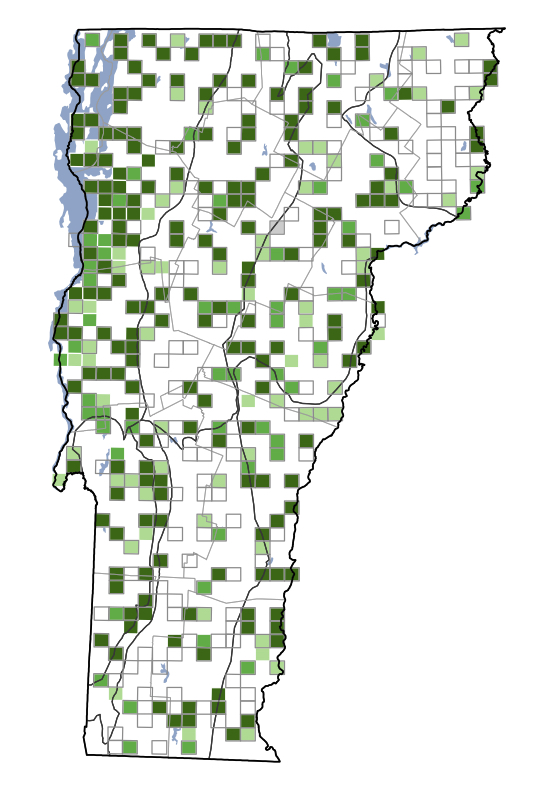
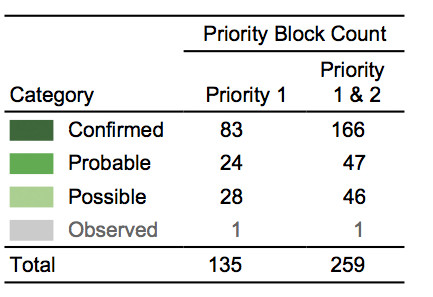
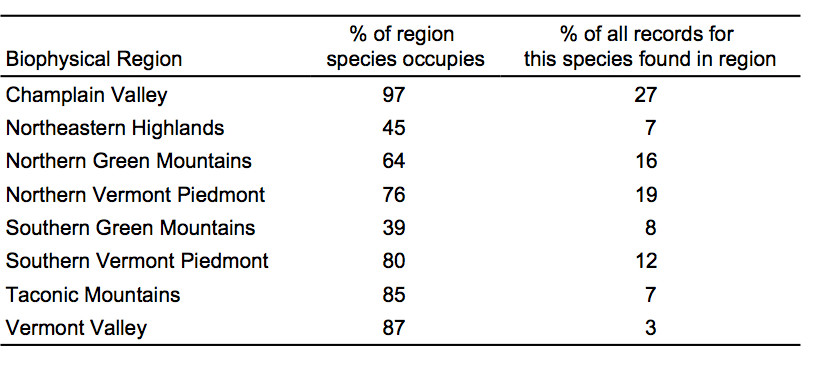
Change in Distribution

Links
Vermont eBird
Encyclopedia of Life
All About Birds