Skip to content
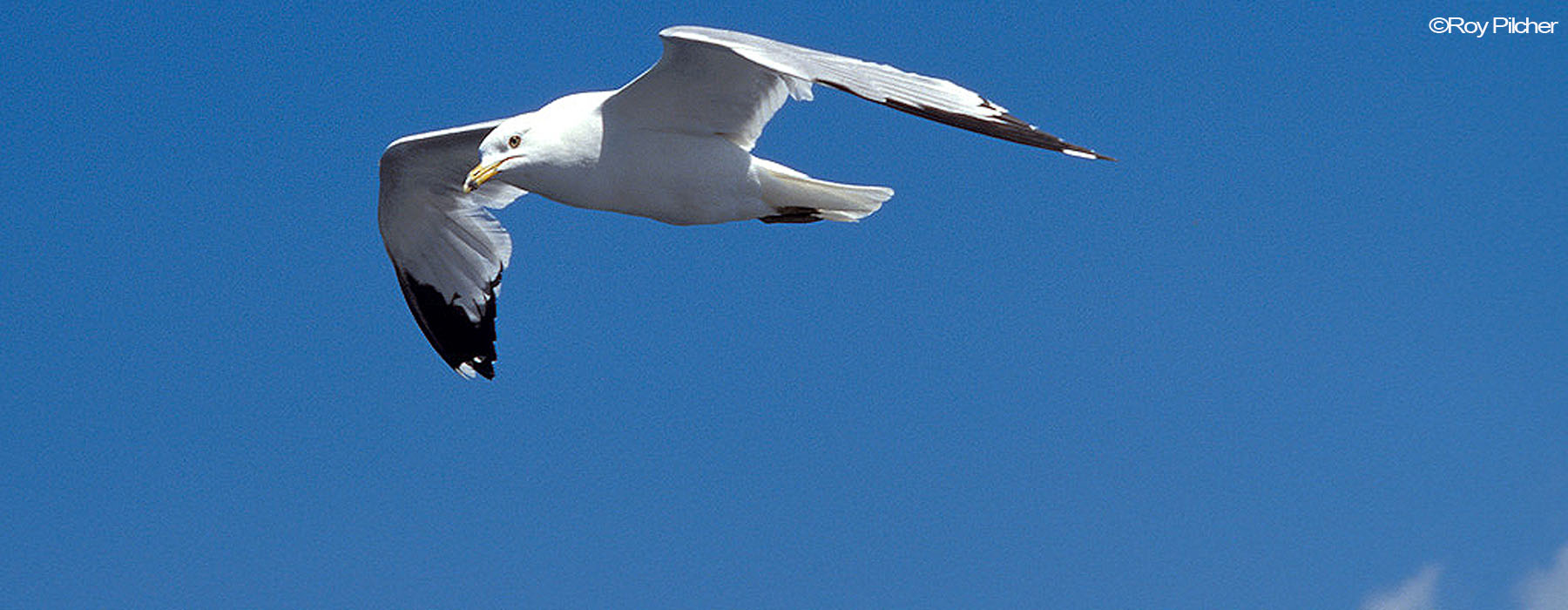
Ring-billed Gull (Larus delawarensis)
Summary
- Natural history: Often mistaken for a coastal seagull, the Ring-billed Gull is in truth a bird of fresh water and farmland, first nesting on Lake Champlain’s islands in the late 1940s before expanding rapidly as an opportunistic feeder around landfills, farm fields, and parking lots. Its Champlain Valley colonies peaked at nearly 28,000 nests in the 1980s before declining by roughly a third, a shift widely blamed on regional landfill closures that cut off a major food supply. Because dense gull colonies can crowd out rarer nesting species, Vermont wildlife managers have actively suppressed numbers on Young Island since 2009 by oiling eggs and removing adult birds, aiming to restore the island’s vegetation to its condition before the state acquired it in 1959.
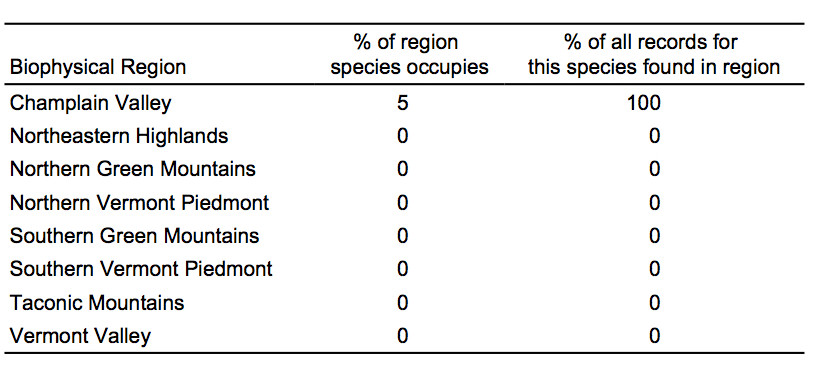
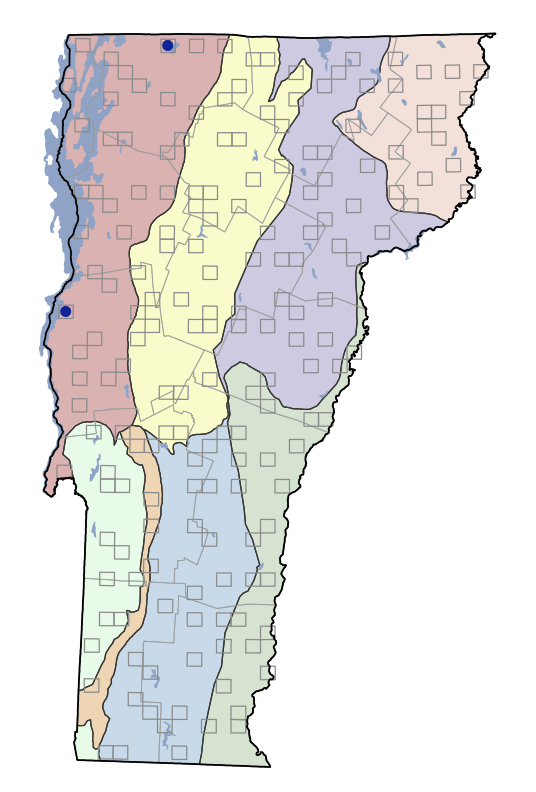
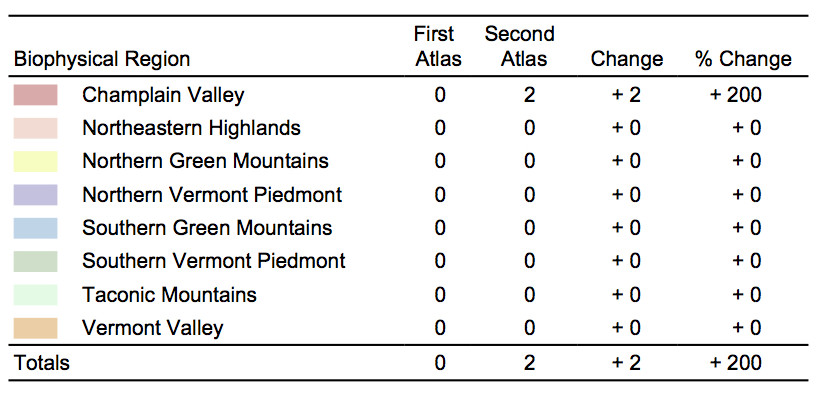
- Status in VT: Increased by 200% (0 to 2 blocks). Greatest increase in Champlain Valley.
- Data from other research: Young Island: more than 10,000 pairs nested annually for the past 30 years on Young Island. Nests also on Papasquash Island and Rock Island.
- Conservation status: State rank S1B; S5N
- Other atlases: NY and ON: range expansions
- VT’s role in North American range: VT is at the southern edge of the range.
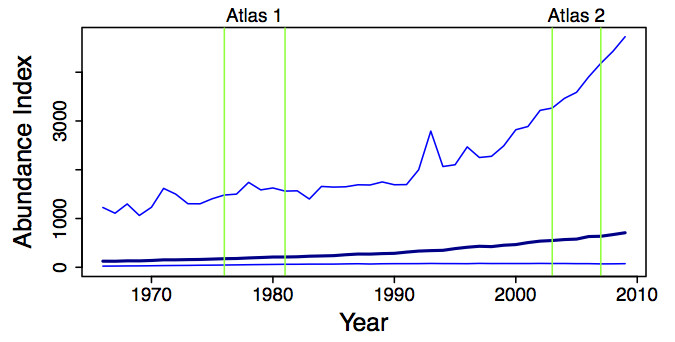
- Causes of change since first Atlas: Recent decrease in abundance due to reduction in available food resources resulting from landfill closures and loss of cropland acreage.
- Management/Monitoring recommendations: population control on Young Island, with the goal of restoring natural vegetation, includes egg-oiling and shooting.
Population Trends
First Vermont Breeding Bird Atlas (1976-1981)
Species Account
Second Vermont Breeding Bird Atlas (2003 – 2007)
Species Account
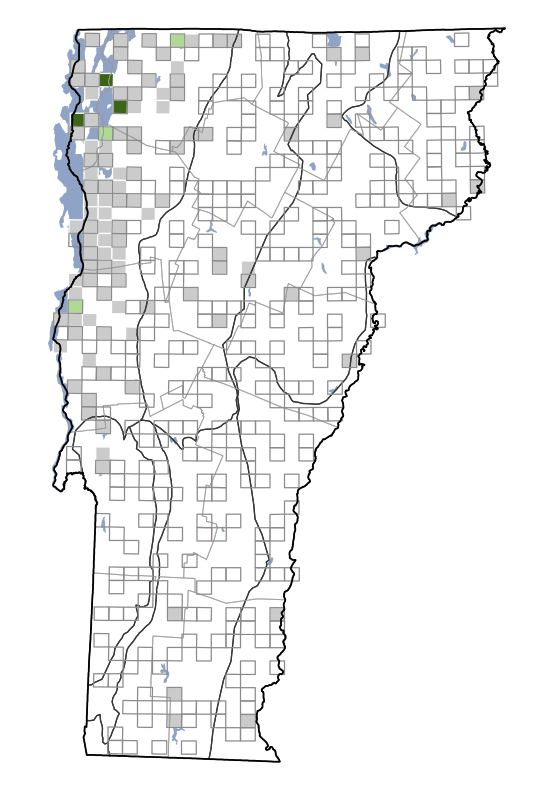
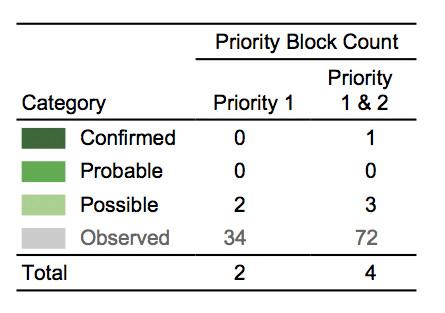
Change in Distribution

Links
Vermont eBird
Encyclopedia of Life
All About Birds