Summary
- Natural history: Falconers in Europe and Asia have valued the Northern Goshawk as a hunting bird for roughly two thousand years, and it remains the largest and most aggressive of North America’s accipiter hawks. Pairs are so attached to a nesting area that they may build as many as eight alternate nests within it over time, yet the adults turn strangely quiet and secretive once incubation begins despite otherwise defending their nest fiercely. Because Vermont’s goshawks depend heavily on Ruffed Grouse and snowshoe hares for food, their numbers are expected to stay low as those prey populations continue to decline across the region.
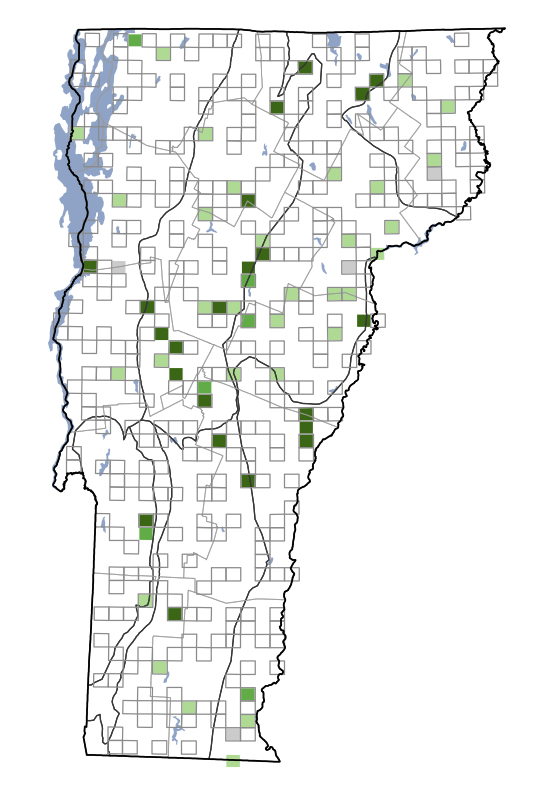
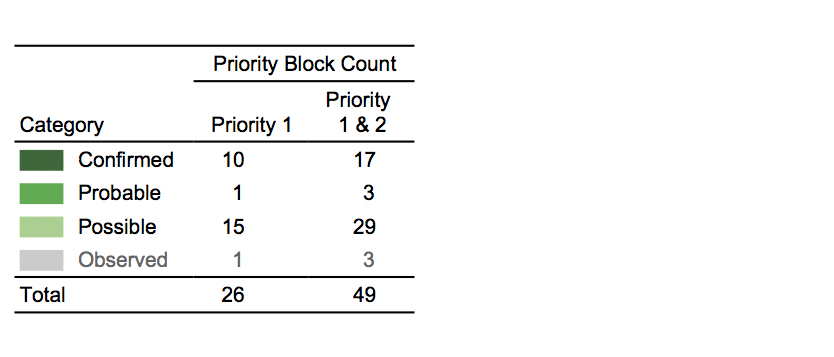
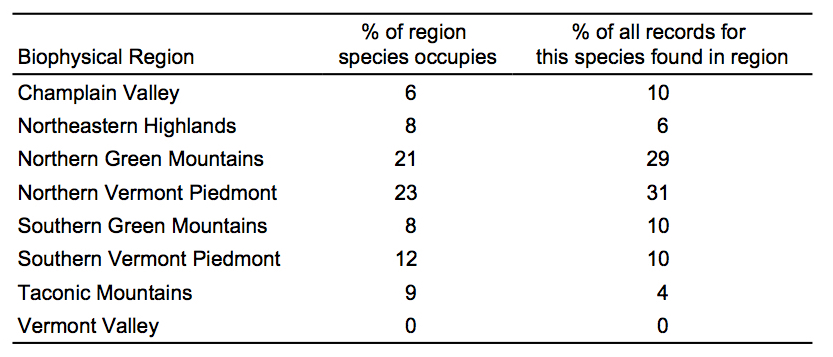
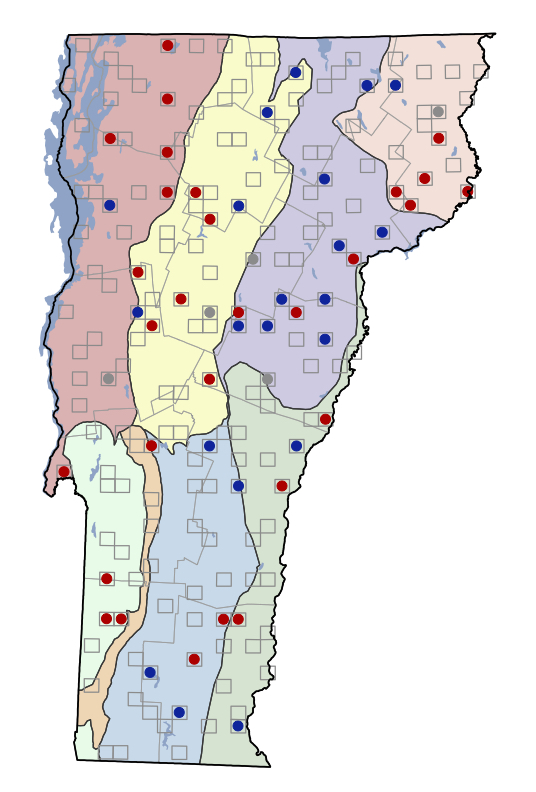
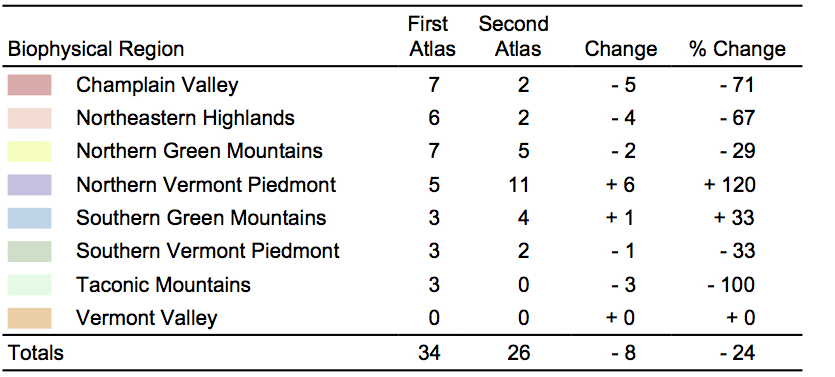
- Status in VT: Decreased by 21% (34 to 27 blocks). Greatest decrease in blocks in Champlain Valley.
- Data from other research: No additional data for VT.
- Conservation status: State rank S2B; S3N; SGCN-M
- Other atlases: NY: -20%; PA: -27%; ON: -40%
- VT’s role in North American range: VT is within the core of the range.
- Causes of change since first Atlas: Habitat fragmentation (?); decrease in prey base (Ruffed Grouse and snowshoe hare) (?).
- Management/Monitoring recommendations:Protect existing nest sites; maintain large tracts of forest land.
First Vermont Breeding Bird Atlas (1976-1981)
Second Vermont Breeding Bird Atlas (2003 – 2007)
Change in Distribution

Links