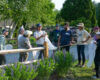
Over 350 Wild Bee Species Found in Vermont, with Help of Community Scientists
October 29, 2025The study, led by researchers from VCE, in collaboration with the Vermont Fish & Wildlife Department (VFWD), and experts from across the continent, provides the first comprehensive faunal list and conservation assessment of Vermont’s wild bees. Read More »
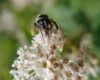
The Journey of a Single Bee Observation
October 23, 2025Last month I reconnected with a colleague from years ago—a geologist—who mentioned that he uses iNaturalist in the university classes he teaches. “We contribute a lot of observations,” he said. “Who knows if they’re really of use to anyone?” Read More »

Bernie Paquette Receives the 2025 Julie Nicholson Community Science Award
October 21, 2025VCE bee biologist Spencer Hardy first met Bernie Paquette at the 2019 Jericho-Underhill Christmas Bird Count. Soon after, Hardy noticed that his neighbor (Bernie lives about two miles away) was uploading an astounding number of bee observations to iNaturalist, where he goes by BugEyedBernie. Read the blog post »

Lunate Longhorn-cuckoo is first new bee species discovered in Vermont in two years
August 12, 2025THETFORD, Vt. — A new bee species has been reported in Vermont, discovered by biologist Amber Jones during a timed pollinator survey in Thetford. According to the Vermont Center for Ecostudies, Jones spotted and caught two bee species of the same genus. Watch the Story on MyNBC 5 »

Are Honey Bees Good?
June 30, 2025Nearly all the honey we eat comes from a single, domesticated species: the Western Honeybee. Some call honeybees flying livestock. But the other 349 species of bees in Vermont are wildly different in many ways, and worthy of as much (if not more) respect and admiration. Read the blog post »

Know Your Five Apple Pollinators
May 01, 2025With more than 350 species of wild bees in Vermont, it’s daunting to understand them all. So let’s start with a beloved flowering tree that is all over Vermont’s commercial farms, homesteads, and private properties alike: apple trees! Read the guide »

Bee Ready: Valuing Vermont’s Native Pollinators
March 18, 2025Vermont native bees are a very different creature than the honey bee (Apis mellifera) and, some biologists point out, increasing the honey bee population does not help native bees. “Honey bees are to wild bees like chickens are to wild birds,” said biologist Spencer Hardy from the Vermont Center for Ecostudies, at a talk he gave at the Montpelier Senior Activity Center Read more at The Bridge »
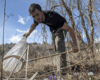
VCE is Abuzz with High-impact Bee Work
April 10, 2024Although VCE’s “bee team” isn’t new, much of the research that made the State of Bees report possible was supported in part by the ALL IN for Biodiversity campaign. Read the update »

VAL Director Provides Testimony on Proposed Neonicotinoid Ban
March 04, 2024In February, VCE Conservation Biologist and Vermont Atlas of Life Director Kent McFarland provided testimony to the Vermont State Agriculture, Food Resiliency & Forestry Committee on H.706, a bill requiring restrictions on neonicotinoids. Read the testimony »

Bumblebee Photographed in Backyard is a New Species for Vermont
August 23, 2023It took a photo, a drawing, a naturalist’s boundless curiosity, and bee experts from across the nation for Vermont to claim a new bumblebee species for the state. Read the story »
How I Became a Bee Expert
July 13, 2023It is clearly evident how far we have come as a community interested in insect observation and conservation. In addition to platforms like iNaturalist, there has been a proliferation of resources to help with bumble bee identification in the field and of people interested in protecting these important pollinators. Read the blog post »
State of Vermonts's Wild Bees released
November 15, 2022This comprehensive report represents the work of countless community scientists and biologists, starting over a decade ago. Read the Press Release »
Summer Bee Update: Four Years in, the Flood of New Species is Becoming a Trickle
September 06, 2022Year four of the Vermont Wild Bee Survey is winding down, but not before adding at least three new species to the state checklist. Additional species certainly await discovery, but the number of new ones found each is steadily declining, suggesting we've located the vast majority of the species present. Read the blog post »

Vermont Viewpoint on the Wild Bee Survey
June 22, 2022Spencer talked with WDEV about the Wild Bee Survey and backyard bee conservation. Hear the interview »
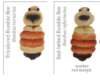
Bee watching is the new bird watching
June 17, 2022WCAX caught up with project coordinator Spencer Hardy to talk about a newly released field guide to the bumble bees of the state and how backyard naturalist can document the bee diversity on their own property. Watch the story »

Meet Vermont’s Newest Endangered Species
April 04, 2022This was once a common bumblebee in the Northeast, but it is now rare. Once a common species in the Champlain Valley, it has not been found since a UVM student’s unwitting discovery in 2000. It occupies grasslands where it nests on the ground among tufts of long grasses. There were few records before 1960, but the available data suggested a mid-century increase in American Bumblebee relative abundance, followed by a significant population decline beginning by the 1980s. Read the blog post »
A Poorly Known Bee Hiding in Plain Sight
October 22, 2021Through a combination of specimens and iNaturalist observations, the Vermont Wild Bee Survey is illuminating a rare bee, even if the exact identity isn't yet known. Read the blog post »
New Bees Discovered in Vermont with Worldwide Teamwork
July 01, 2021The Vermont Wild Bee Survey has amassed over 50,000 bee records and discovered over 50 new bee species for the state in just two years. It takes an entire village to discover bees–volunteer naturalists, field biologists, and bee identification experts. Three new bee discoveries in June highlights the teamwork. Read the blog post »
Vermont Wild Bee Survey Discovers New Pollinators for the State
May 28, 2021The Vermont Atlas of Life Wild Bee Survey has added about 50 new bee species to the state checklist over the last two years and will likely find many more as field surveys continue and historic collections are closely examined. The Vermont Wild Bee Survey (VTBees) is the first step for understanding the conservation status of the entire Vermont bee fauna. You can help too! Join our survey. It’s as easy as snapping a photo with your smartphone. Read the blog post »
Bees of the Eastern Forest
January 28, 2021Recent work in New Jersey has shown that many bee species rely on intact forest. The same is certainly true in Vermont, with many species such as this Waterleaf Mining Bee depending on flowers only found in the forest understory. Read the full story from the Xerces Society »
Pruinose Squash Bee Mission Update
September 30, 2020Earlier this year, we called for citizen scientists to locate Pruinose Squash Bees over the summer of 2020. Here are the results of the mini-mission. Read the update »
Outdoor Radio: Little Bee On A White Flower
August 28, 2020In this episode of Outdoor Radio, hosts Kent McFarland and Sara Zahendra are next to a pond in Strafford, Vermont looking for this rare species of bee with Spencer Hardy. Hear the story »

The conservation status and uncertain future of Vermont's native bees
March 03, 2020Spencer Hardy presented "The conservation status and uncertain future of Vermont's native bees" at VCE's Suds and Science in March. Watch on YouTube »

Vermont Wild Bee Survey Records Over 9,000 Bees in 2019
December 08, 2019Last week the Vermont Wild Bee Survey (VTBees) reached a milestone. Our project coordinator, Spencer Hardy, and our intern, Katie McGranaghan, blow dried, pinned and catalogued the last bee of 2019 to our collection and database. Read more on the VCE Blog »
Bee Survey Says... Numerous Species Found For First Time In Vermont This Summer
August 08, 2019This summer, the Vermont Center for Ecostudies has spearheaded the Vermont Wild Bee Survey in Chittenden County. According to project coordinator Spencer Hardy, more than 320 species have been documented thus far — and nearly a dozen appear to be species of wild bees that were previously unknown to be in the state. Listen to the story at Vermont Public Radio »
VTBees Update From the Field
July 30, 2019Throughout the spring and summer, Vermont Center for Ecostudies biologists and citizen scientists alike have been scouring fields, roadsides, gardens, and all places flowers are found surveying bees for the Vermont Wild Bee Survey (VTBees). As different flowers come into bloom, different specialist bees emerge to nectar on a single species or group of flowers. From pickerelweed to loosestrife, sunflower to goldenrod, chasing down these flowers and the bees that associate with them has led to some exciting apine discoveries Read the latest on the VCE Blog »
Beyond the Headlines: Where have Vermont's bees gone?
June 06, 2019Galen Ettlin spoke with Leif Richardson about the grave concerns they have for some bee populations around the region. Watch the interview on WCAX »
North Americas At-Risk Bumble Bees
April 30, 2019An analysis led by the Xerces Society, and coordinated with the IUCN North American Bumble Bee Specialist Group, indicates that more than one-quarter of North American bumble bees are facing some degree of extinction risk. Read more from the Xerces Society to learn about bumble bee species that are currently most at-risk in North America and their IUCN Red List status. »
UNH Researchers Reveal More Than Dozen Wild Bee Species Declining in Northeast
April 29, 2019Researchers at the University of New Hampshire have found a dramatic decline of 14 wild bee species that are, among other things, important across the Northeast for the pollination of major local crops like apples, blueberries and cranberries. Read the press release on the UNH website »
Get the Buzz on the New Vermont Wild Bee Survey
April 23, 2019Although we estimate there are over 300 species of wild bees known from Vermont, there has never been a full survey of the State’s bees. Without even a checklist of species, it is very difficult to know whether populations of Vermont’s bees are healthy or declining. The Vermont Wild Bee Survey represents the first step in assessing bee populations across Vermont. Read more on the VCE Blog »
Natural habitats, bee diversity key to better apple production
January 17, 2019A Cornell-led study, published Jan. 18 in the journal Science, shows that apple orchards surrounded by agricultural lands are visited by a less diverse collection of bee species than orchards surrounded by natural habitats. In turn, apple production suffers when fewer, more closely-related species of bees pollinate an orchard. Production improves in orchards surrounded by natural habitats, which then draw a broader selection of species to apple blossoms. Read more from Cornell »
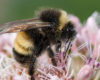
Study Reveals Striking Decline of Vermont’s Bumble Bees
December 15, 2018A new study examining 100 years of bumble bee records reveals that almost half of Vermont’s species, which are vital pollinators, have either vanished or are in serious decline. After conducting the state’s most extensive search for bumble bees, and combing through historical records from museum collections, the team has concluded that four of Vermont’s 17 bumble bee species appear to have gone extinct. The study, led by researchers from the Vermont Center for Ecostudies (VCE) and the University of Vermont (UVM), was published in the Journal of Insect Conservation. Learn more on the VCE Blog »
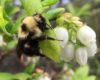
The Secret to Better Berries? Wild Bees
November 28, 2018Want bigger, faster-growing blueberries? New research shows wild bees are an essential secret ingredient in larger and better blueberry yields – producing plumper, faster-ripening berries. The study, led by University of Vermont scientists, is the first to successfully reveal that wild bees improve not only blueberry quantities, but also size and other quality factors. It finds that wild bees provide major benefits for berry farmers, including: greater berry size (12%), quantity (12%), size consistency (11%), and earlier harvests – by two and a half days. Read more on the UVM Blog »