Skip to content
Yellow Warbler (Setophaga petechia)
Summary
- Natural history: An 1884 survey of Vermont’s birds singled out the Yellow Warbler as an especially beneficial species, valued for the insect pests it cleared from orchard and garden trees. The species is a frequent target of Brown-headed Cowbird nest parasitism, and a female that finds a cowbird egg in her nest may respond by building an entirely new nest floor over it and laying a fresh clutch on top. Early twentieth-century accounts described Yellow Warblers as common around the Champlain Valley and the base of Mount Mansfield but scarce across northern Vermont, a pattern that had flipped into near-statewide abundance by the time of the Second Atlas.
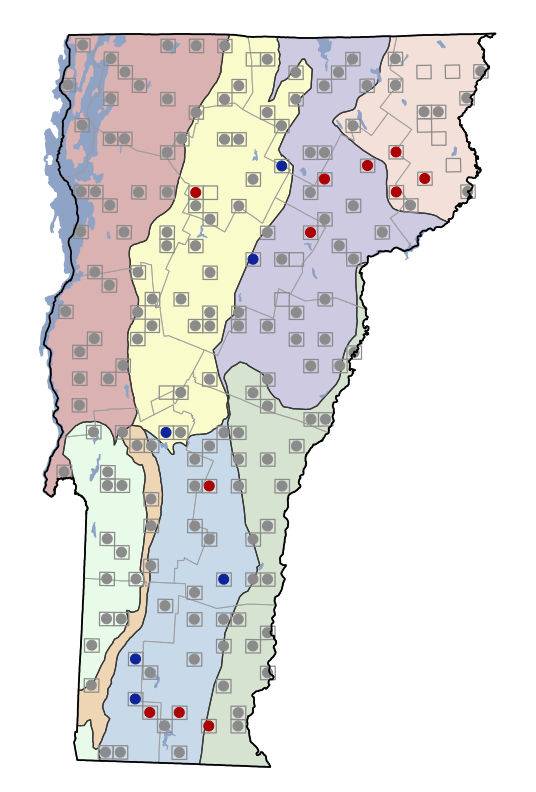
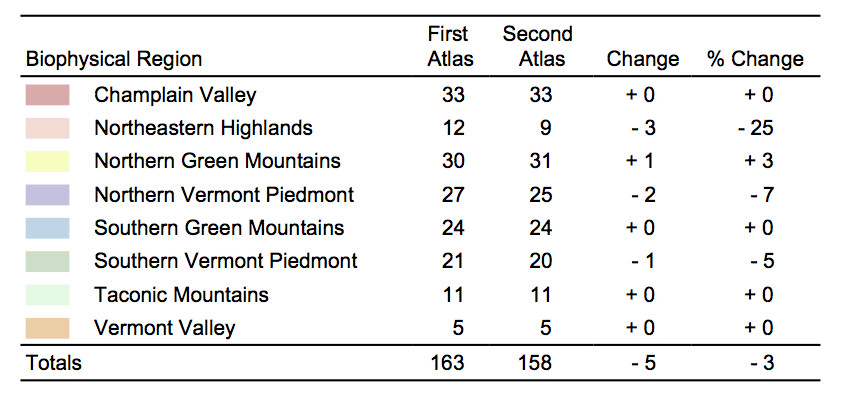
- Status in VT: Decreased by 3% (163 to 158 blocks). Greatest decrease (25%) in Northeastern Highlands.
- Data from other research: No additional data for VT.
- Conservation status: State rank S5B
- Other atlases: NY: no change; PA: 8%; ON: no sig. change
- VT’s role in North American range: VT is within the core of the range.
- Causes of change since first Atlas: Minimal change. Potential threats: loss of early-successional habitat (e.g., channelization of streams); loss of wooded riparian habitats.
- Management/Monitoring recommendations:Maintain linkages among suitable habitat patches; forestry practices that provide combination cover types and timber size classes, particularly along streams/rivers/other water bodies.
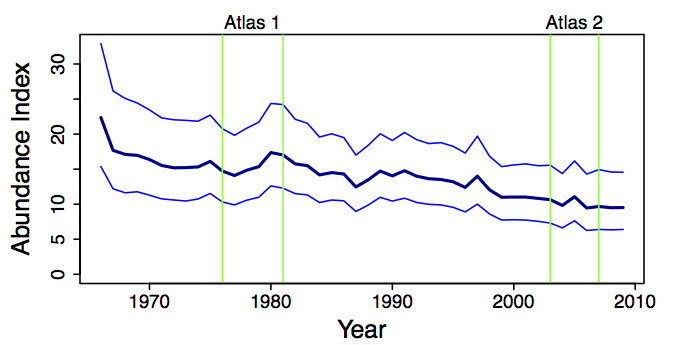
Population Trends
First Vermont Breeding Bird Atlas (1976-1981)
Species Account
Second Vermont Breeding Bird Atlas (2003 – 2007)
Species Account
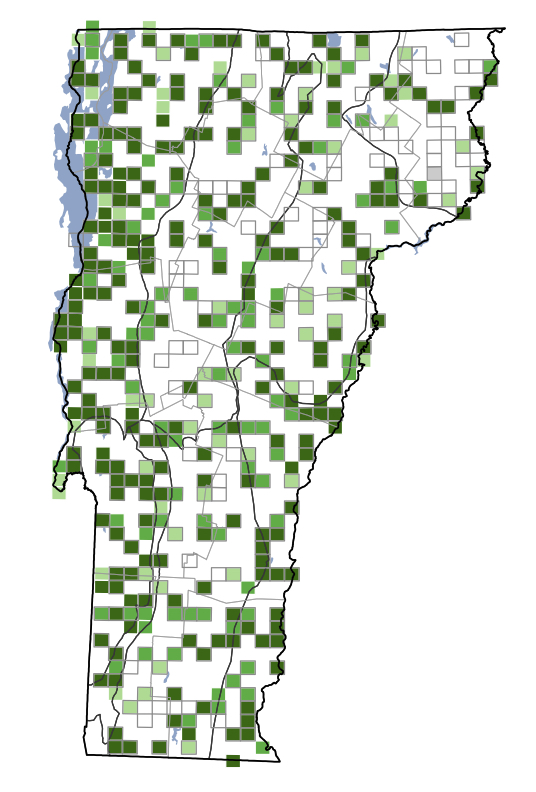
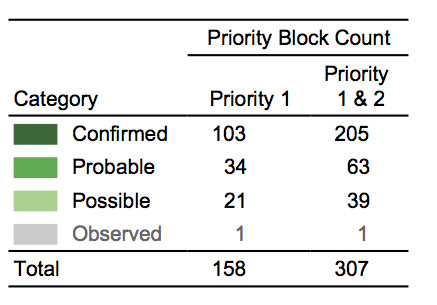
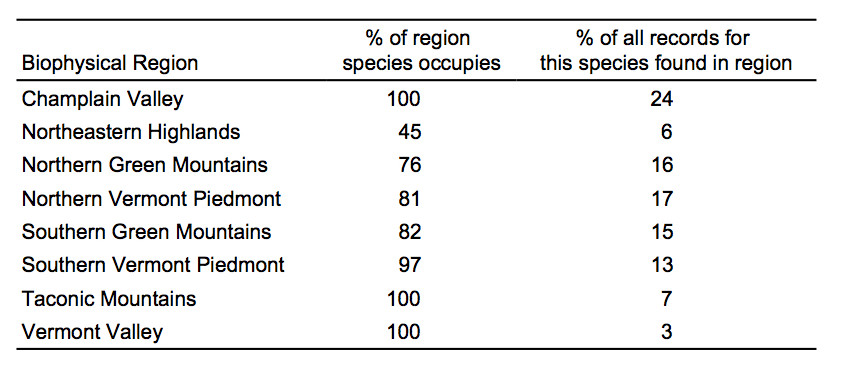
Change in Distribution
Links
Vermont eBird
Encyclopedia of Life
All About Birds