Summary
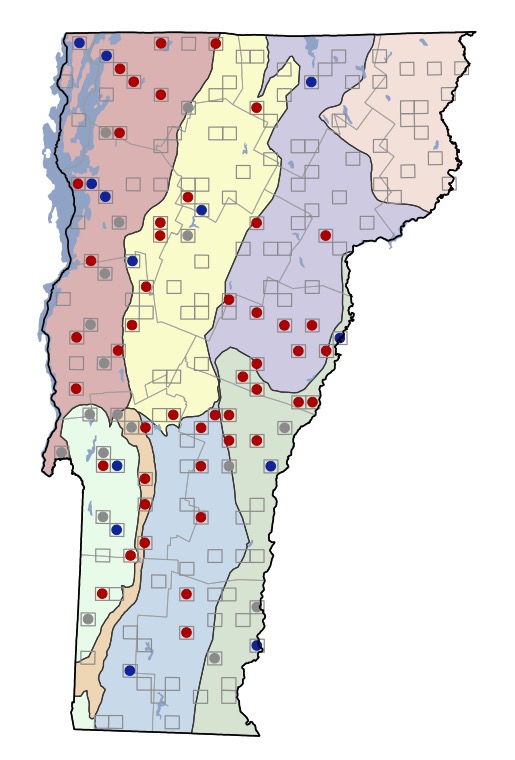
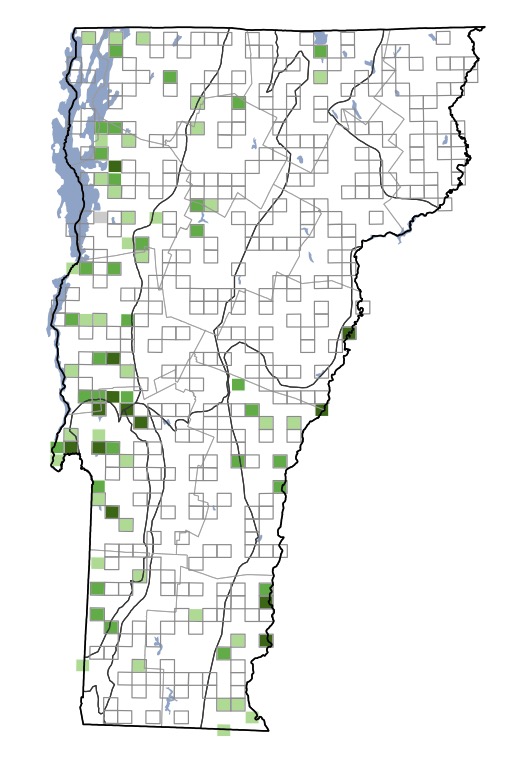
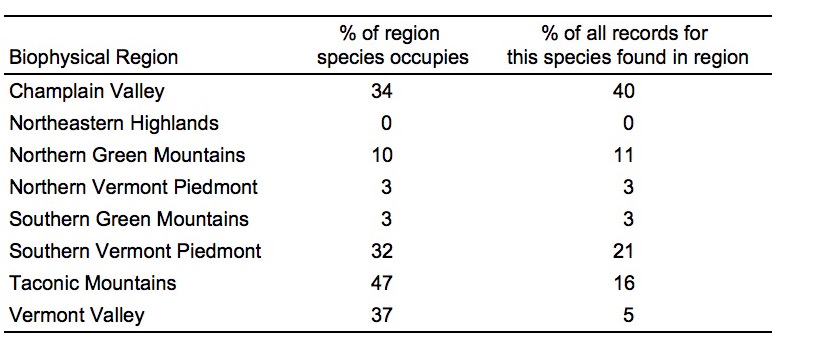
- Natural history: The Yellow-throated Vireo’s canopy-yellow plumage makes it surprisingly hard to spot high in the leafy canopy of oaks and maples, so most birders find it by ear, listening for a slower, huskier version of the much more widespread Red-eyed Vireo’s song. Vermont’s population has contracted sharply since the First Atlas, retreating mostly to the lower Champlain Valley and the Connecticut River valley in the Southern Vermont Piedmont, even though the state has not lost overall forest cover in that time. One theory blames mid-twentieth-century insecticide spraying of shade trees for an early dip, but researchers now suspect the real culprit is a loss of one particular kind of forest edge, the spots where big, tall canopy trees border open fields and wetlands, rather than any overall change in total woodland.
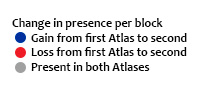
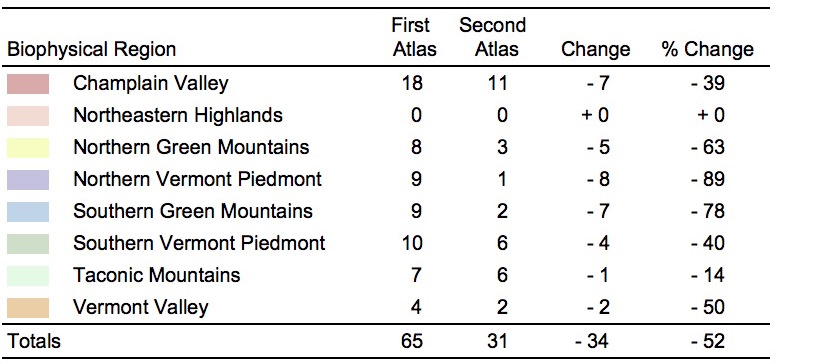
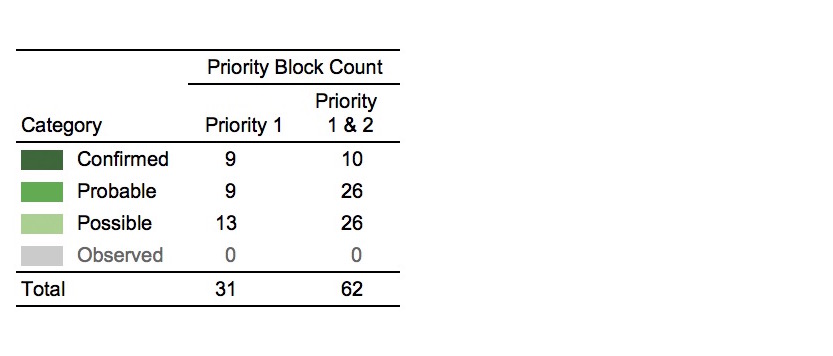
- Status in VT: Decreased by 52% (65 to 31 blocks). Greatest decrease in Northern Vermont Piedmont.
- Data from other research: No additional data for VT.
- Conservation status: State rank S4B
- Other atlases: NY: -7%; PA: 45%; ON: no overall change
- VT’s role in North American range: VT is at the northeastern edge of the range.
- Causes of change since first Atlas: Decline in forest edge habitat due to maturation of VT forests (?).
- Management/Monitoring recommendations:Conduct research on relationship of habitat patch size and distribution to density and demographics of Yellow-throated Vireo.
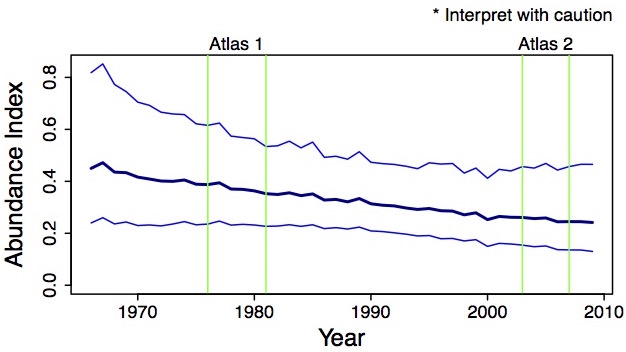
Population Trends
First Vermont Breeding Bird Atlas (1976-1981)
Second Vermont Breeding Bird Atlas (2003 – 2007)
Change in Distribution