Skip to content
Yellow-bellied Flycatcher (Empidonax flaviventris)
Summary
- Natural history: Vermont’s only ground-nesting flycatcher spends less than 70 days on its breeding grounds each year, arriving last among the state’s four Empidonax species in spring and departing first for Central America in fall. It tucks its moss-lined nest into a hidden hollow in a sphagnum moss hummock, an uprooted tree root, or a cliff face in boggy spruce-fir forest, making nests so hard to find that across thirteen different breeding bird atlases, the confirmation rate for this species has been barely 1 percent.
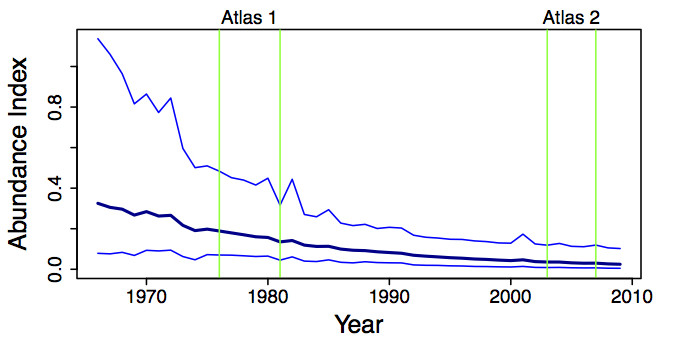
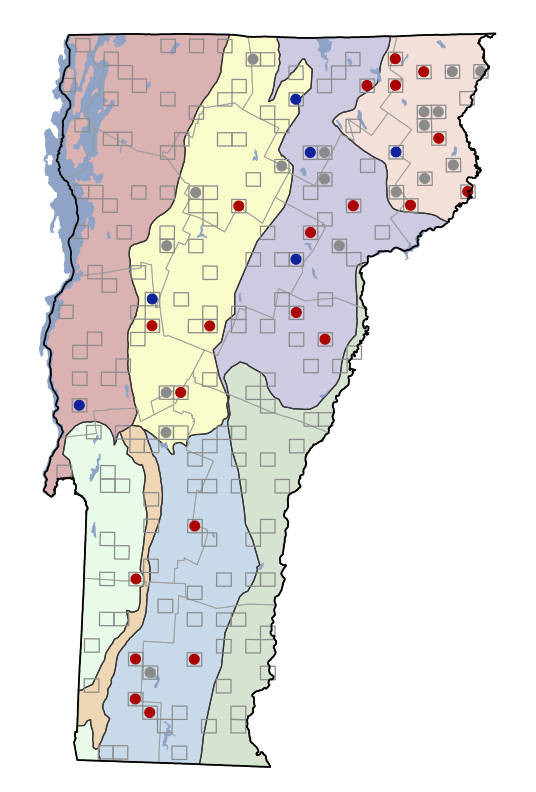
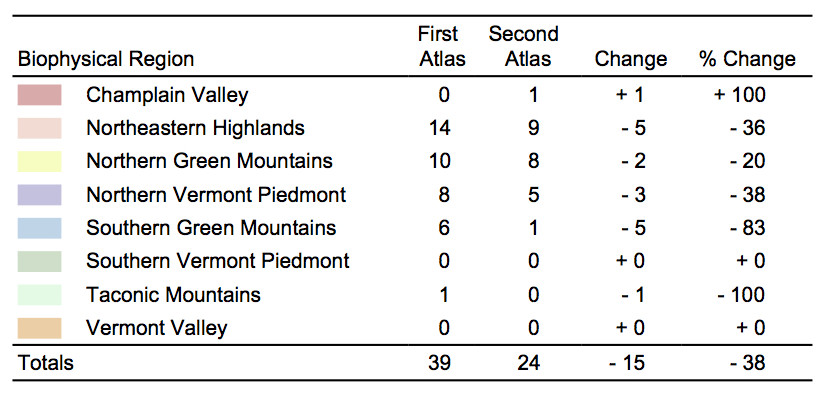
- Status in VT: Decreased by 38% (39 to 24 blocks). Greatest decrease in blocks in Southern Green Mountains.
- Data from other research: No additional data for VT.
- Conservation status: State rank S3B
- Other atlases: NY: 42%; PA: 31%; ON: occurrence doubled.
- VT’s role in North American range: VT is in the southern edge of the range.
- Causes of change since first Atlas: Unknown. Potential threats: habitat alteration from climate change; mountaintop developments; loss of habitat on wintering grounds.
- Management/Monitoring recommendations: Targeted monitoring to ascertain whether trends in VT differ from those elsewhere in the region.
Population Trends
First Vermont Breeding Bird Atlas (1976-1981)
Species Account
Second Vermont Breeding Bird Atlas (2003 – 2007)
Species Account
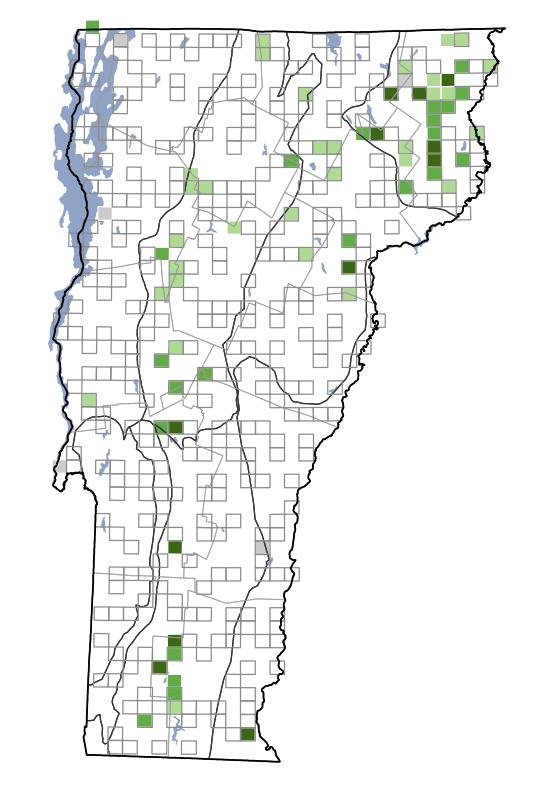
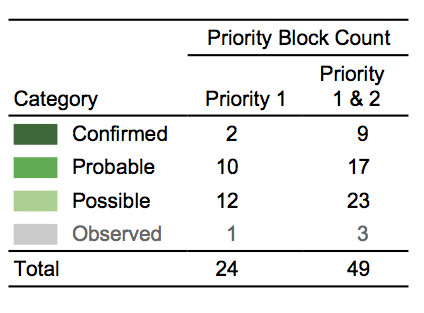
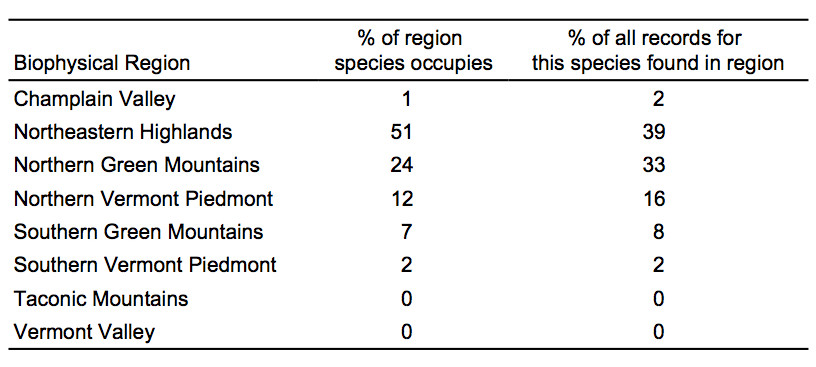
Change in Distribution
Links
Vermont eBird
Encyclopedia of Life
All About Birds