Skip to content
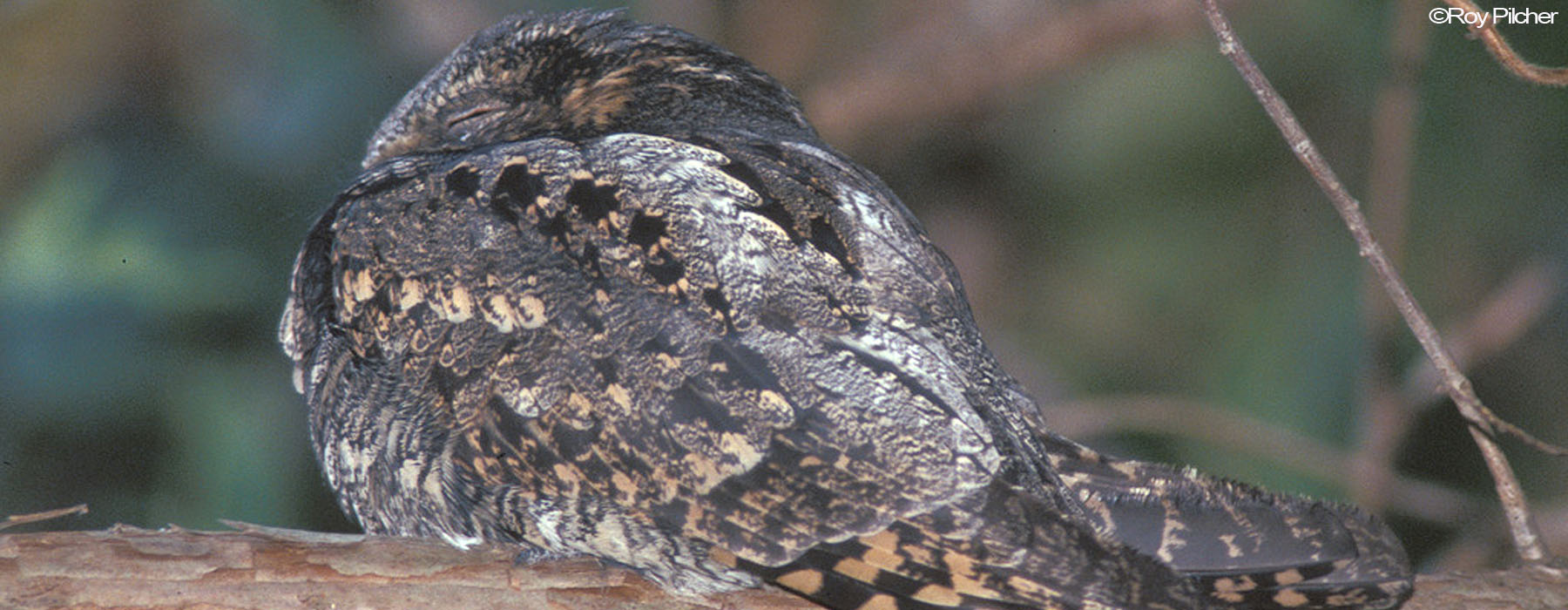
Eastern Whip-poor-will (Caprimulgus vociferus)
Summary
- Natural history: The Whip-poor-will needs a mix of open ground for hunting insects at night and forest cover for nesting, a combination that has grown scarcer in Vermont as fields have reforested and land has been developed. One overlooked culprit behind its decline may be a drop in large moths such as sphinx and silkworm moths, a favorite prey that may have suffered from pesticides and biological controls once aimed at gypsy moths. Because the bird lays its eggs directly on the forest floor, it is also vulnerable to cats, raccoons, and other predators that thrive near human development, compounding losses already caused by disappearing edge habitat.
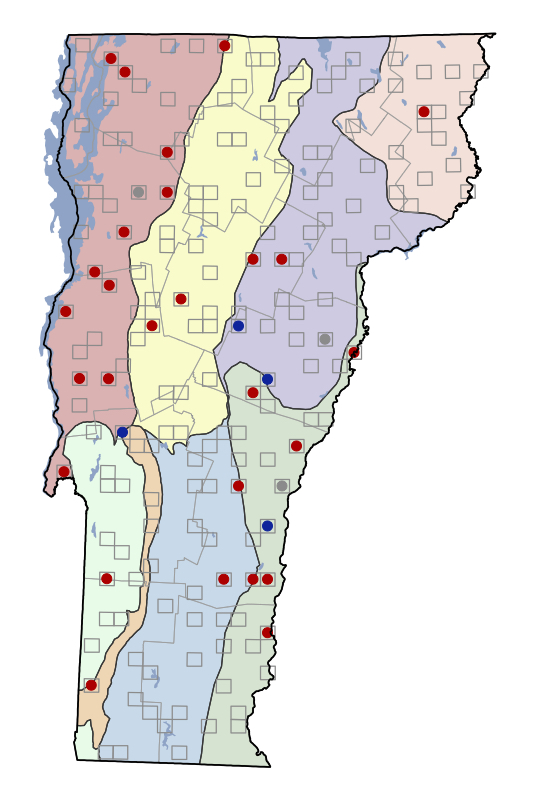
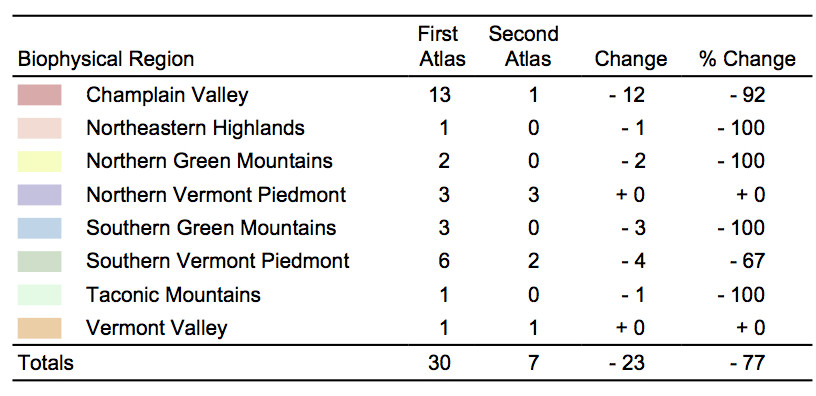
- Status in VT: Decreased by 77% (30 to 7 blocks). Essentially disappeared from Green Mountains, Taconic Mountains, and Northeastern Highlands.
- Data from other research: Detected on 7 of 30 routes surveyed in 2005-07.
- Conservation status: State rank S2B; SSC; SGCN-H
- Other atlases: MD, NY, ON, PA: average decline of 54%
- VT’s role in North American range: VT is near the northeastern edge of the range.
- Causes of change since first Atlas: Forest maturation and development leading to reduction of edge habitat; predation (e.g., cats, raccoons); decline of large moth populations from pesticides used to control forest pest insect species (?).
- Management/Monitoring recommendations: Targeted surveys; continue regional monitoring program; research needed to determine causes of declines, to understand demographics, and to determine whether there are significant threats on the wintering grounds.
First Vermont Breeding Bird Atlas (1976-1981)
Species Account
Second Vermont Breeding Bird Atlas (2003 – 2007)
Species Account
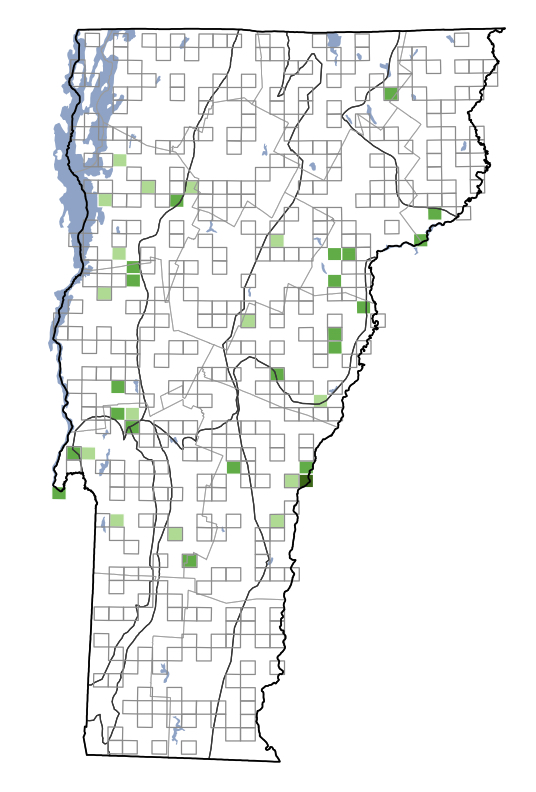
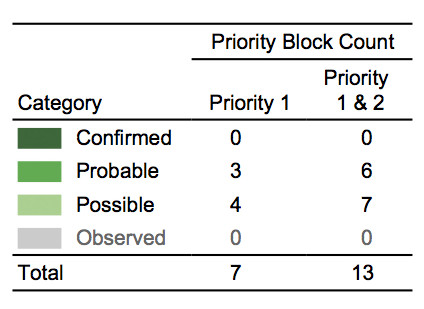
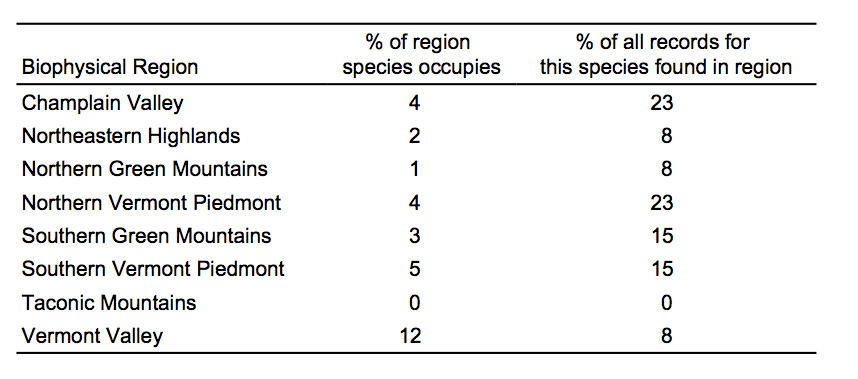
Change in Distribution

Links
Vermont eBird
Encyclopedia of Life
All About Birds