Skip to content
Virginia Rail (Rallus limicola)
Summary
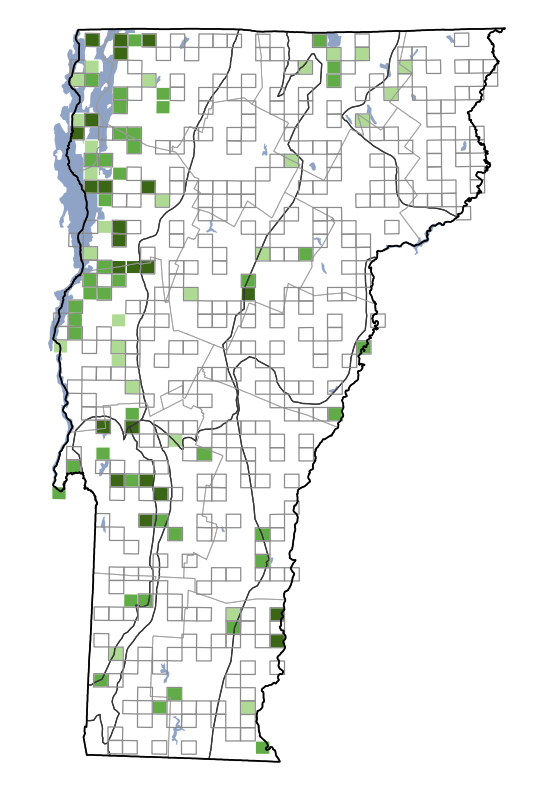
- Natural history: Virginia Rails are so secretive that they are detected far more often by ear than by eye, and biologists routinely coax them into calling by broadcasting recordings of their own vocalizations, a technique shown elsewhere to prompt a response from roughly two-thirds of nearby birds. The species will nest in cattail marshes as small as a quarter acre, though it favors larger wetlands, building over standing water among dense marsh vegetation. Most confirmed breeding records actually came from spotting recently fledged chicks rather than active nests, and the apparent jump in occupied blocks between the First and Second Atlas probably reflects greater use of call broadcasts by the later survey’s observers rather than a true population increase.
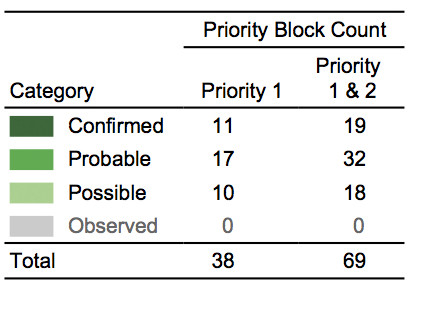
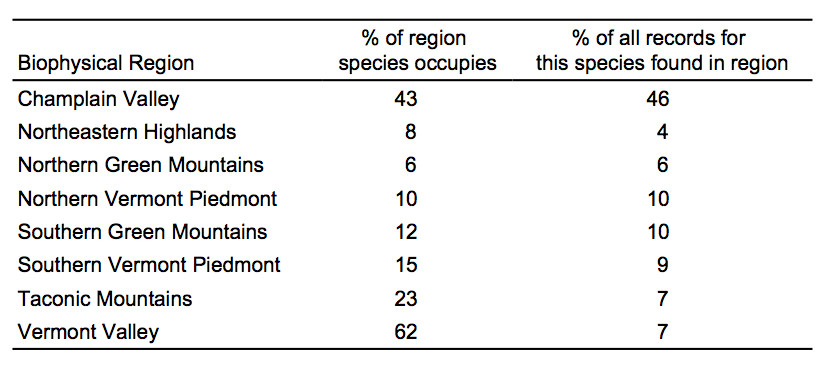
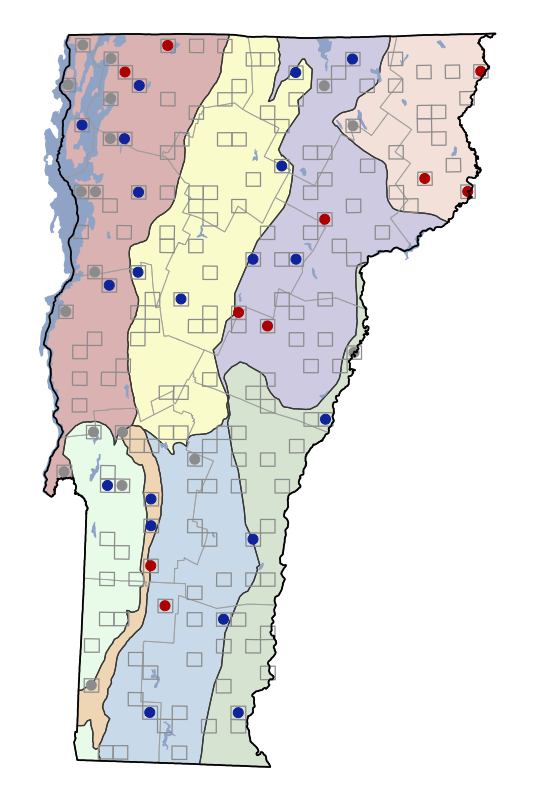
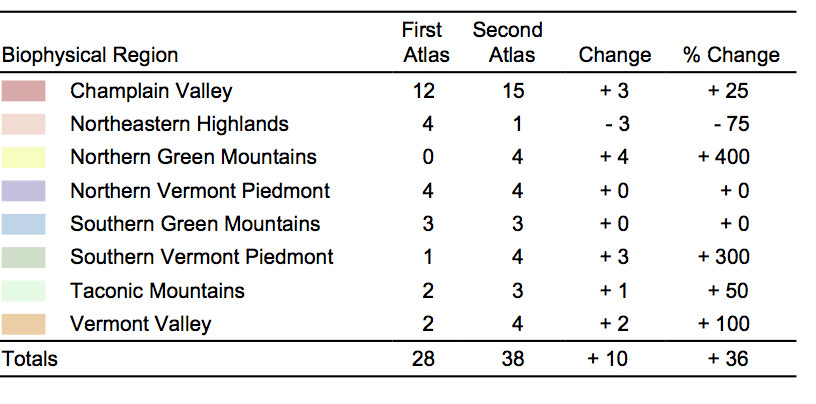
- Status in VT: Increased by 36% (28 to 38 blocks). Greatest increases in Northern Green Mountains and Southern Vermont Piedmont.
- Data from other research: VT Marsh Bird Survey (1996 – 2008): average of 0.3 to 1.2 birds per survey station in 4 Champlain Valley marsh systems. Most abundant of the 7 species surveyed.
- Conservation status: State rank S4B
- Other atlases: NY: 21%; PA: 29%; ON: 72%
- VT’s role in North American range: VT is within the core of the range.
- Causes of change since first Atlas: More frequent use of recorded calls in second Atlas to elicit responses (?).
- Management/Monitoring recommendations: Use standardized surveys in Vermont’s marsh systems to track abundance.
First Vermont Breeding Bird Atlas (1976-1981)
Species Account
Second Vermont Breeding Bird Atlas (2003 – 2007)
Species Account
Change in Distribution

Links
Vermont eBird
Encyclopedia of Life
All About Birds