Skip to content
Vesper Sparrow (Pooecetes gramineus)
Summary
- Natural history: Vesper Sparrows need dry, open ground with sparse vegetation and a few elevated perches for singing, conditions that in Vermont now occur almost entirely on farms and, oddly, at airports. Two of the state’s few known nesting records came from the short grass along runways at the Franklin County and John H. Boylan state airports. The bird was common here after nineteenth-century settlers cleared land for farming, but as Vermont’s farmland shrank by roughly a quarter between 1978 and 2007 and reverted to forest, the species collapsed alongside similar grassland birds across the entire Northeast.
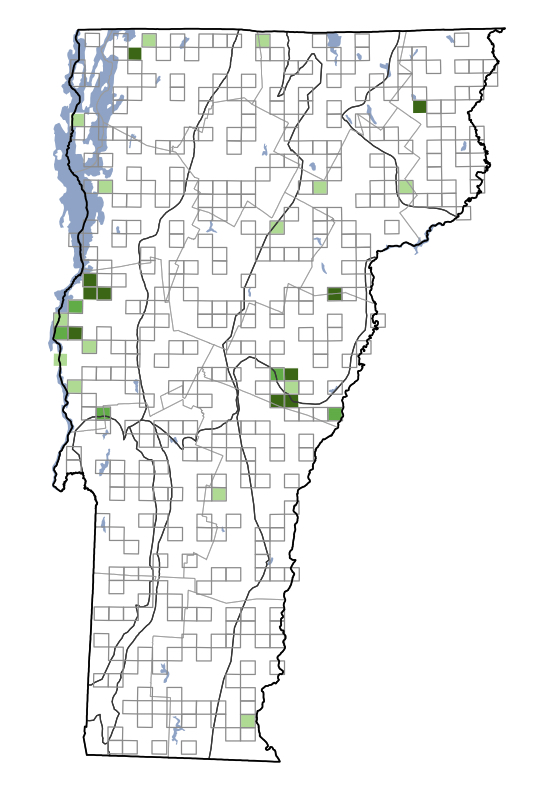
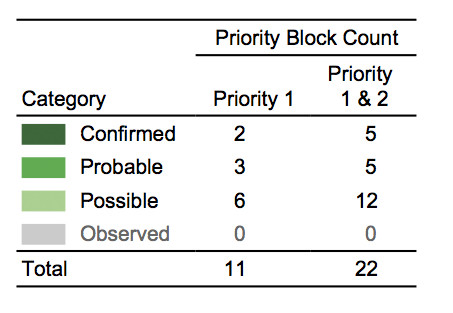
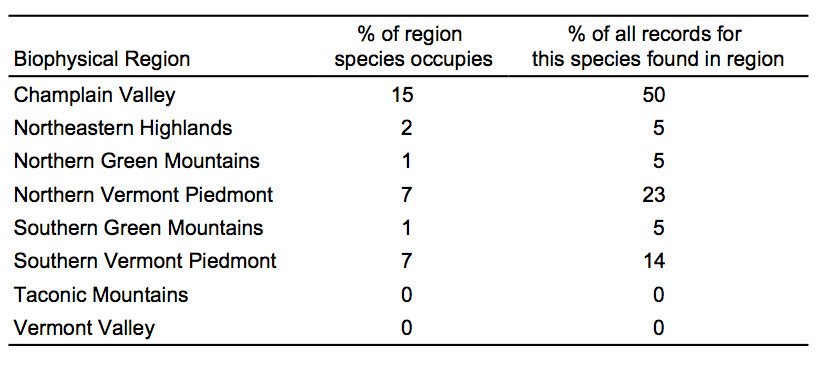
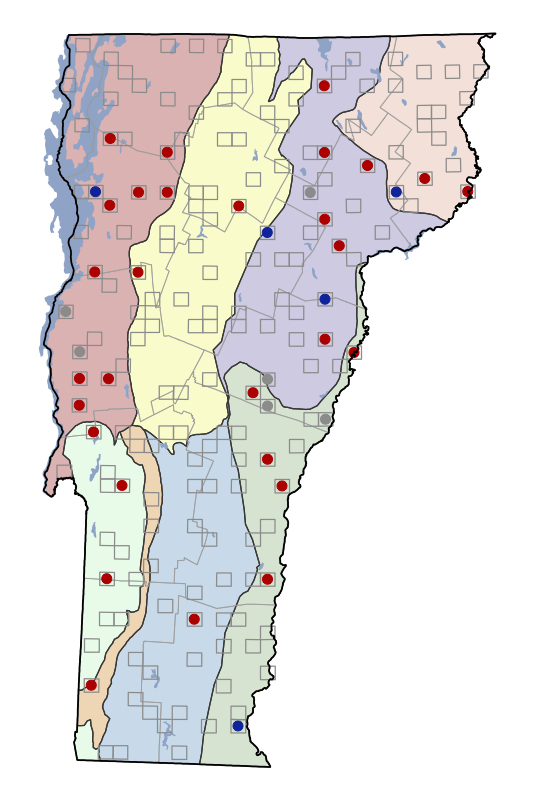
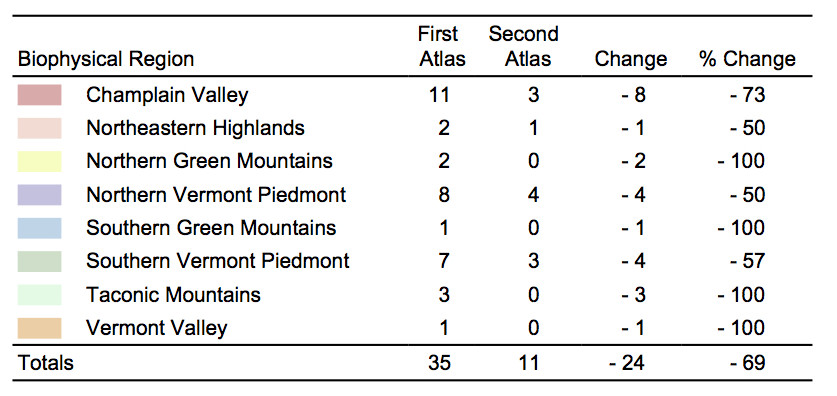
- Status in VT: Decreased by 69% (35 to 11 blocks). Greatest decreases in Northern Green Mountains, Southern Green Mountains, Taconic Mountains, Vermont Valley.
- Data from other research: No additional data for VT.
- Conservation status: State rank S2S3B; SSC; SGCN-H
- Other atlases: NY: -49%; PA: -19%; ON: -29%
- VT’s role in North American range: VT is near the northeastern edge of the range.
- Causes of change since first Atlas: Changes in agricultural practices including early hay harvest and more intensive management of other row crops; conversion of agricultural habitats to urban/suburban development; old field succession and farm abandonment also decreasing habitat availability; area-sensitive.
- Management/Monitoring recommendations: No current recommendations.
Population Trends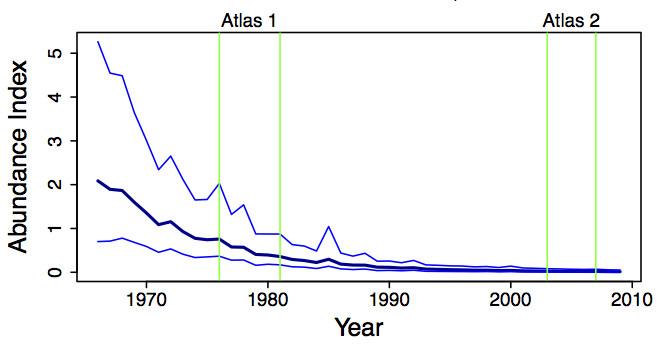
First Vermont Breeding Bird Atlas (1976-1981)
Species Account
Second Vermont Breeding Bird Atlas (2003 – 2007)
Species Account
Change in Distribution

Links
Vermont eBird
Encyclopedia of Life
All About Birds