Skip to content
Veery (Catharus fuscescens)
Summary
- Natural history: The Veery does most of its singing at dusk, and nowhere does the bird reach higher population densities than right here in Vermont, near the center of its breeding range in the Northeast. Although the species is often described as a bird of damp woods, Vermont’s Veeries settle into secondary hardwood forest regardless of how wet the ground is, favoring the low, dense shrub cover of young or edge habitat over the open understory of older forest interiors when they build their nests on or near the ground. As Vermont’s forests have continued to mature in recent decades, this preference for brushy, early-successional habitat has left the Veery in a slow decline even though it remains one of the state’s most widespread birds, a trend serious enough that the species is now listed as a Species of Greatest Conservation Need and tracked as an indicator of floodplain forest health.
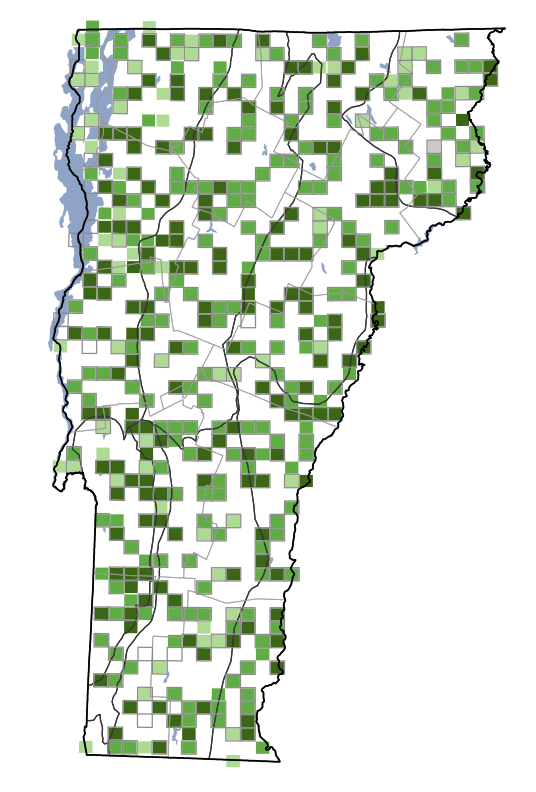
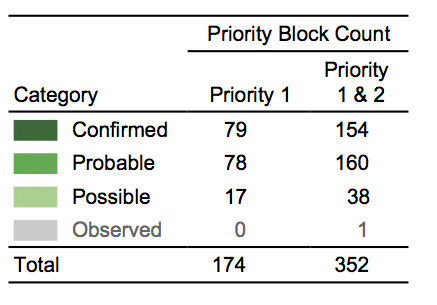
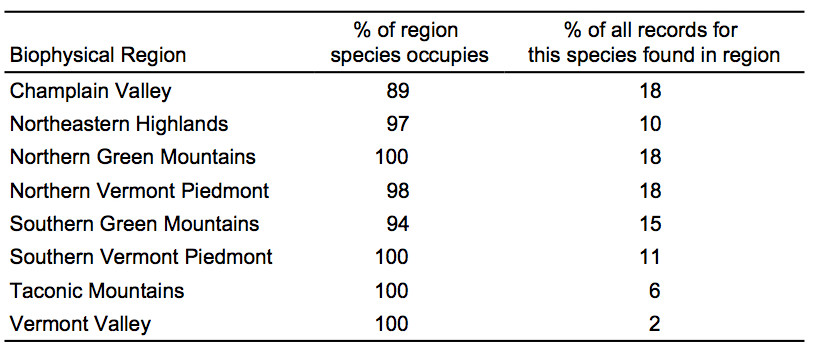
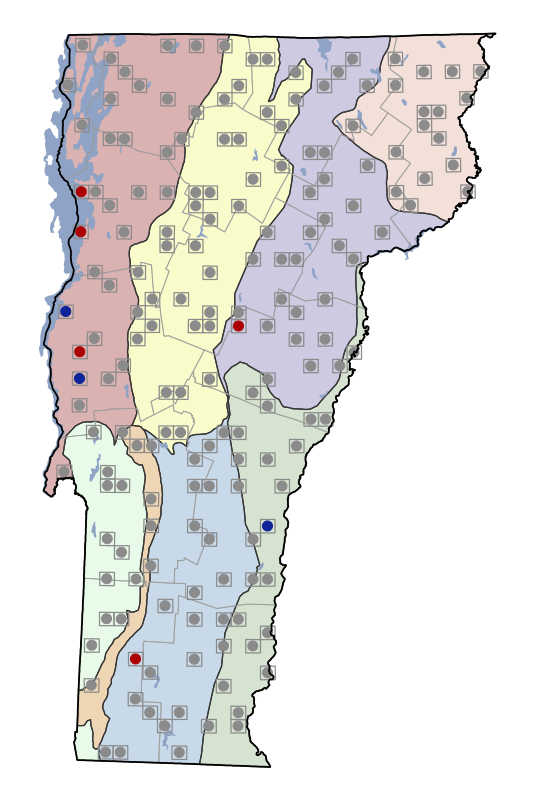
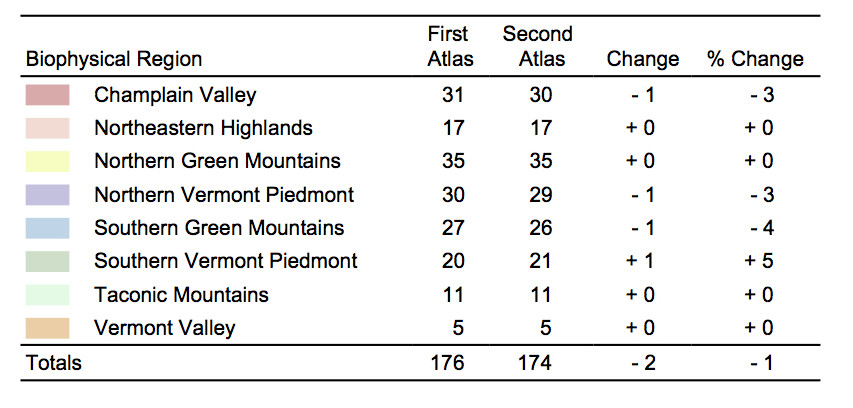
- Status in VT: Decreased by 1% (176 to 174 blocks). Decreases in Champlain Valley and Southern Vermont Piedmont.
- Data from other research: No additional data for VT.
- Conservation status: State rank S5B; SGCN-M
- Other atlases: NY: -2%; PA: 10%; MD: -5% ON: slight overall decline.
- VT’s role in North American range: VT is within the core of the range.
- Causes of change since first Atlas:Minimal/no change. Maturation of forests could result in less suitable interior forest habitat (?).
- Management/Monitoring recommendations: No current recommendations.
Population Trends
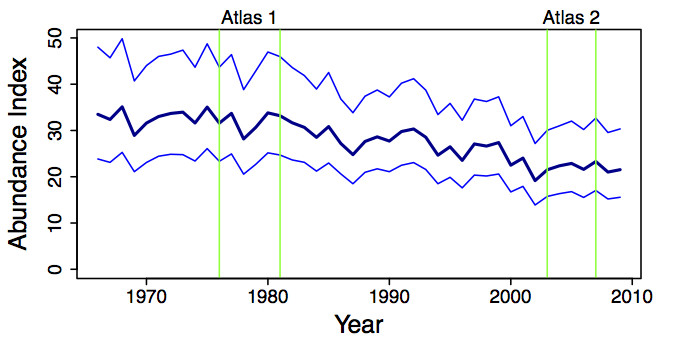
First Vermont Breeding Bird Atlas (1976-1981)
Species Account
Second Vermont Breeding Bird Atlas (2003 – 2007)
Species Account
Change in Distribution

Links
Vermont eBird
Encyclopedia of Life
All About Birds