Skip to content
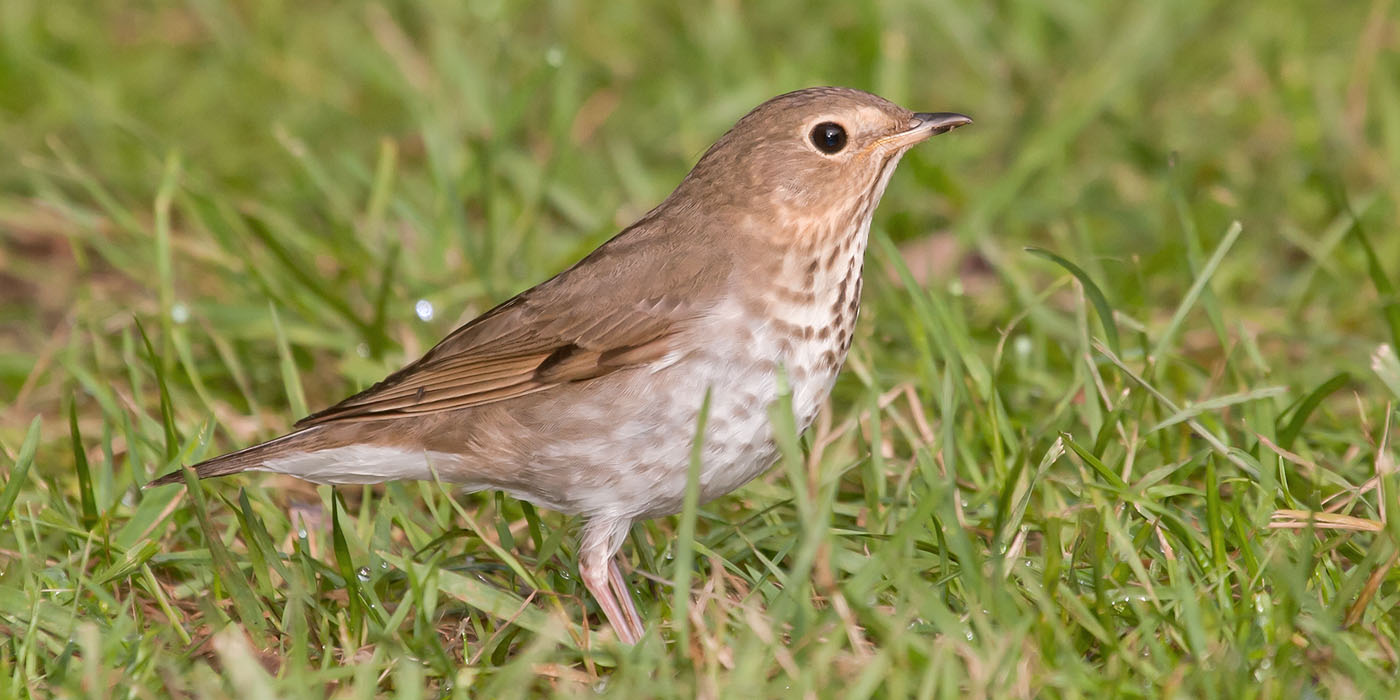
Swainson's Thrush (Catharus ustulatus)
Summary
- Natural history: A Swainson’s Thrush is far easier to hear than to see, since its rising, breathy song carries through Vermont’s spruce-fir forest at first and last light while the bird itself stays hidden in dense cover. Within Vermont’s mountains it nests mostly in balsam fir, typically favoring somewhat older, higher-elevation stands than the closely related Hermit Thrush, though avoiding the stunted, wind-battered firs right at treeline in favor of denser forest just below. Because it builds an exposed, open nest instead of hiding its eggs in a cavity, the thrush’s nesting success rises and falls with boom-and-bust conifer cone crops, which drive the predator populations responsible for a naturally high rate of nest losses, and warming-driven shifts in where fir forest can grow may eventually push it into new competition with the rarer Bicknell’s Thrush at the highest elevations.
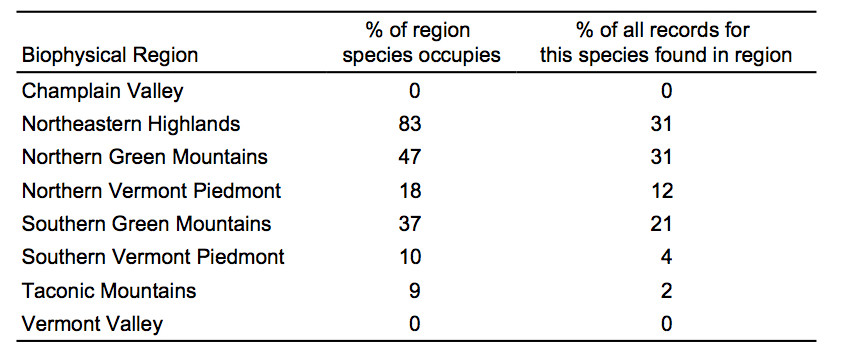
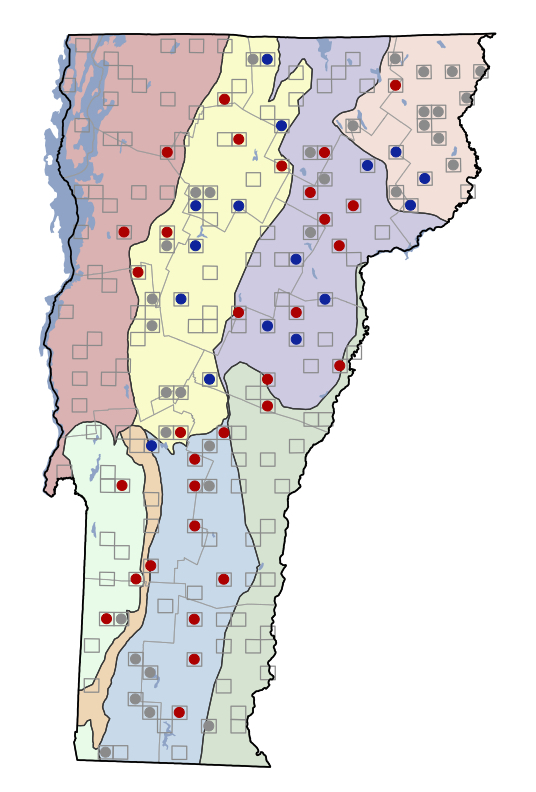
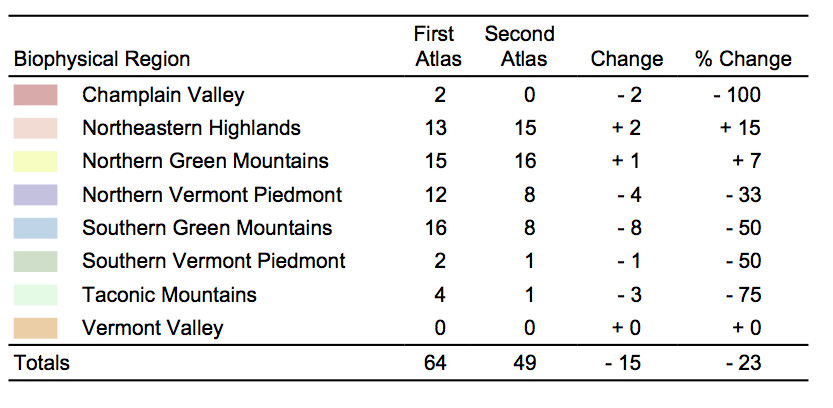
- Status in VT: Decreased by 23% (64 to 49 blocks). Greatest decreases in Champlain Valley andTaconic Mountains.
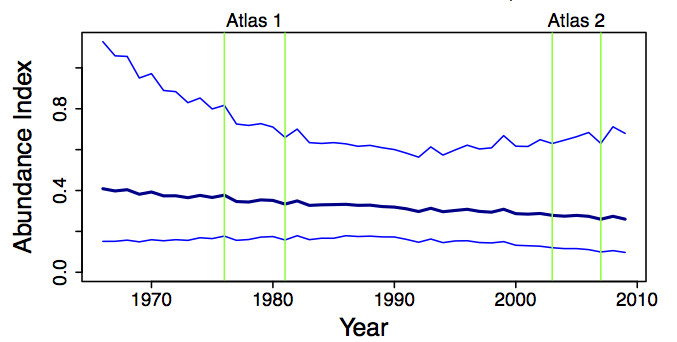
- Data from other research: FBMP: annual decline of 4%.
- Conservation status: State rank S4B
- Other atlases: NY: -16%; PA: 130%; ON: 4%
- VT’s role in North American range: VT is at the southern edge of the range.
- Causes of change since first Atlas: Unclear; not limited by habitat availability.
- Management/Monitoring recommendations: No specific recommendations; climate change models predict upslope migration of temperature-sensitive fir forests, possibly resulting in competition with Bicknell’s Thrush.
Population Trends
First Vermont Breeding Bird Atlas (1976-1981)
Species Account
Second Vermont Breeding Bird Atlas (2003 – 2007)
Species Account
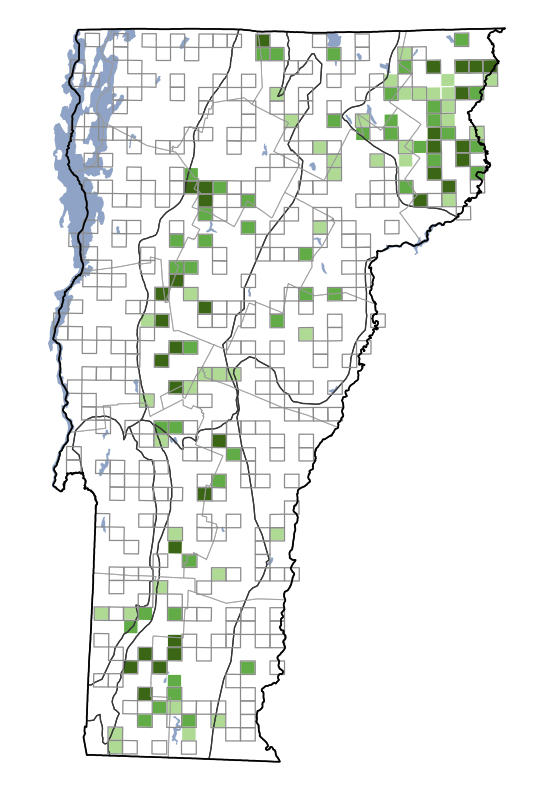
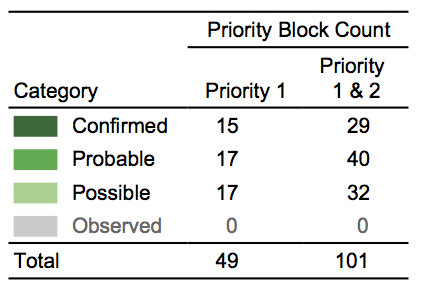
Change in Distribution

Links
Vermont eBird
Encyclopedia of Life
All About Birds