Skip to content
Rusty Blackbird (Euphagus carolinus)
Summary
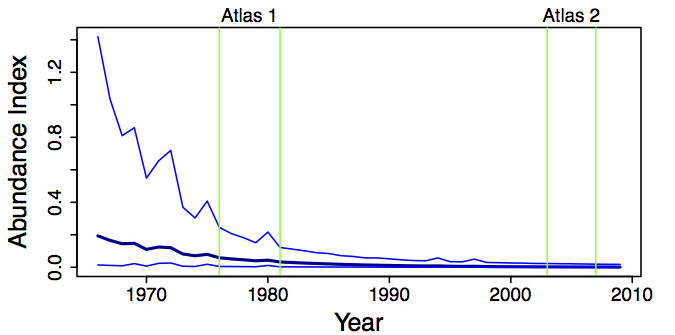
- Natural history: The Rusty Blackbird has quietly suffered one of the steepest population crashes of any North American landbird, losing an estimated 85 to 95 percent of its numbers over the past half-century, yet the decline went largely unnoticed by scientists until only recently. It nests in remote, hard-to-survey boreal wetlands like beaver ponds and conifer swamps, mostly in Vermont’s colder northern reaches, and researchers still are not certain how much of the loss traces to logging and mercury contamination on the breeding grounds versus the clearing of wintering habitat in southeastern U.S. bottomland forests.
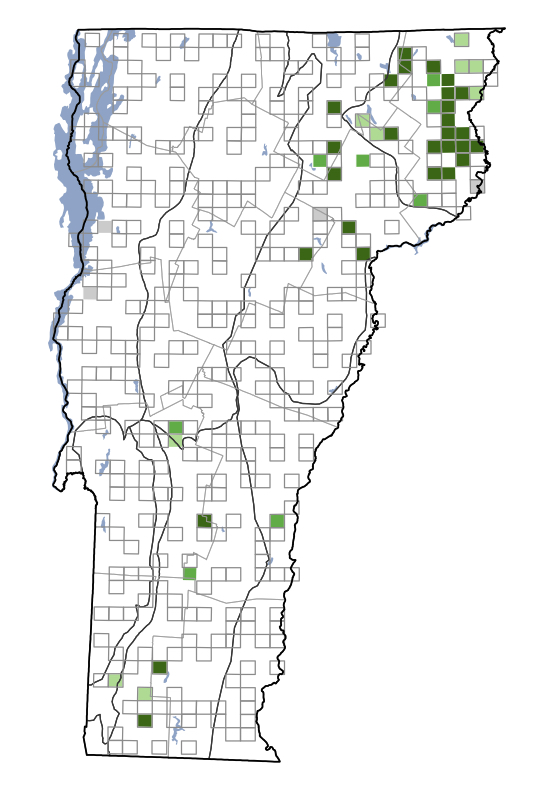
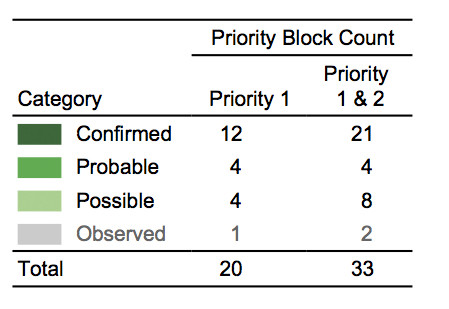
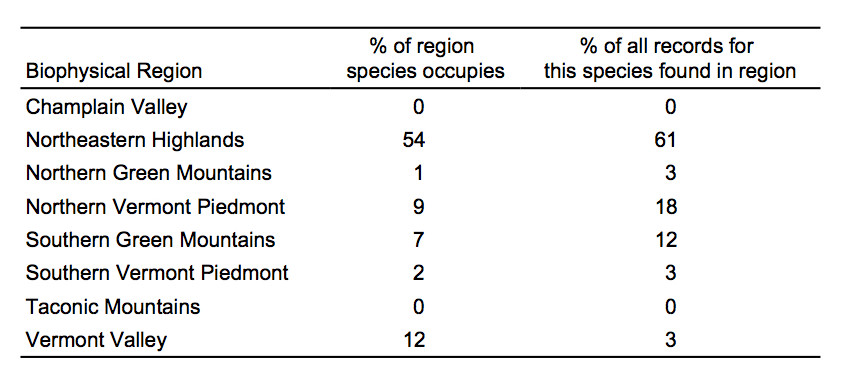
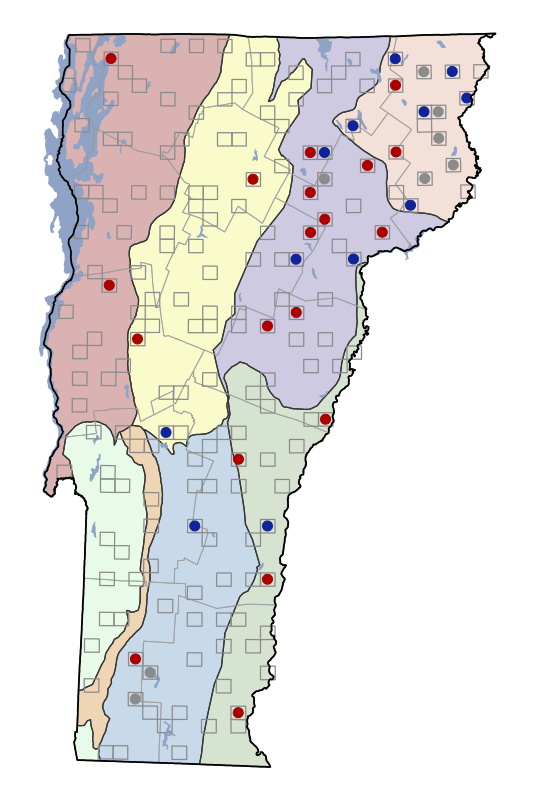
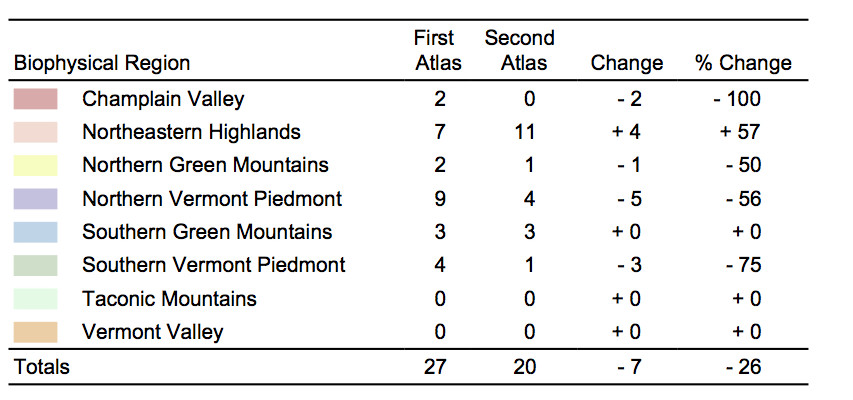
- Status in VT: Decreased by 26% (27 to 20 blocks). Greatest decrease in Southern Vermont Piedmont.
- Data from other research: No additional data for VT.
- Conservation status: State rank S3B; SSC; SGCN-M
- Other atlases: NY: -23%; ON: possible distribution shift
- VT’s role in North American range: VT is on the southeastern edge of the range.
- Causes of change since first Atlas: Loss of primary wintering habitat due to extensive clearing of bottomland forest in southeastern US; habitat degradation from development, logging, and climate change.
- Management/Monitoring recommendations: Provide un-logged 100m buffers around suitable nesting wetlands to reduce depredation.
Population Trends
First Vermont Breeding Bird Atlas (1976-1981)
Species Account
Second Vermont Breeding Bird Atlas (2003 – 2007)
Species Account
Change in Distribution

Links
Vermont eBird
Encyclopedia of Life
All About Birds