Skip to content
Ruffed Grouse (Bonasa umbellus)
Summary
- Natural history: Ruffed Grouse depend heavily on young aspen stands, since aspen buds supply most of their food through the winter months, so wildlife managers promote cutting patches of even-aged timber to maintain this habitat as Vermont’s woods mature overall. Known locally by the old nickname ‘partridge,’ the bird is one of the few species that ordinary residents encounter as often as trained atlas volunteers, thanks to its startling flush from underfoot and its far-carrying spring drumming display. Vermont’s numbers have stayed comparatively stable in recent decades even as populations fell sharply in New York, Pennsylvania, and parts of Ontario, making the state something of a regional stronghold.
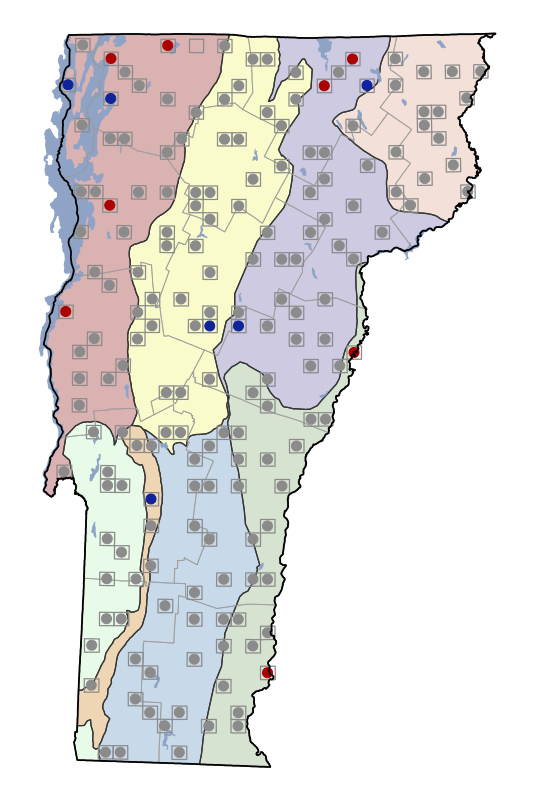
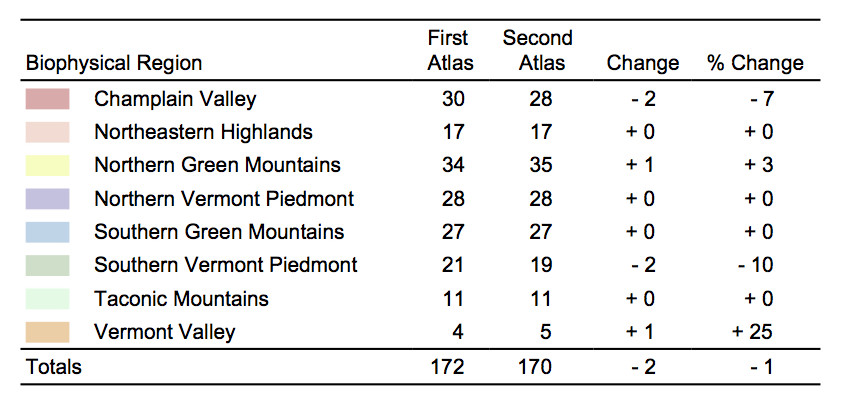
- Status in VT: Decreased by 1% (172 to 170 blocks). Decreases in Southern Vermont Piedmont and Champlain Valley.
- Data from other research: No additional data for VT.
- Conservation status: State rank S4S5; SGCN-M
- Other atlases: NY: -18%; PA: -33%; ON: declines in south, 27% increase in Northern Shield.
- VT’s role in North American range: VT is within the core of the range.
- Causes of change since first Atlas: Early successional habitat in decline (?).
- Management/Monitoring recommendations:Promote use of even age forest stand management; retain aspen-birch stands and soft mast; enhance shrub growth along roads and around seeps; plant legumes on forest roads and clearings; save clumps of conifers for winter cover. Recommendations for Private Landowners.
Population Trends
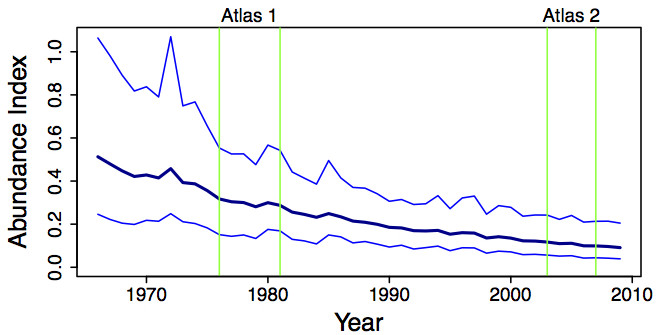
First Vermont Breeding Bird Atlas (1976-1981)
Species Account
Second Vermont Breeding Bird Atlas (2003 – 2007)
Species Account
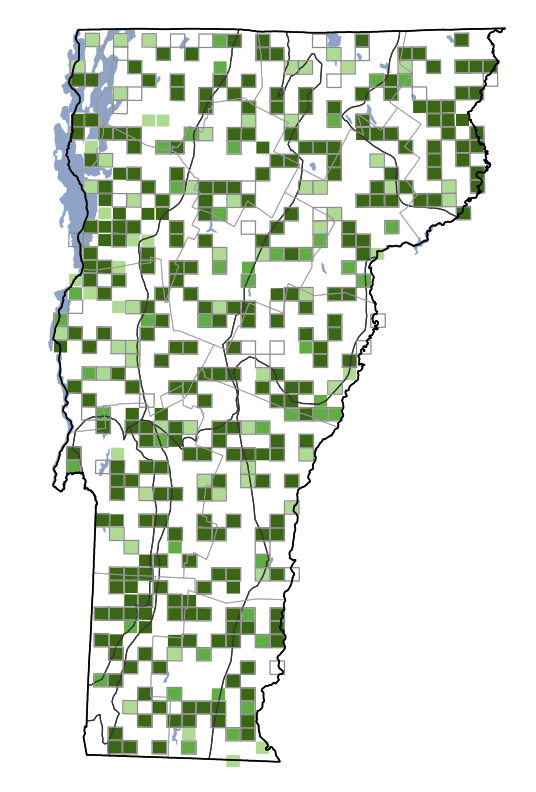
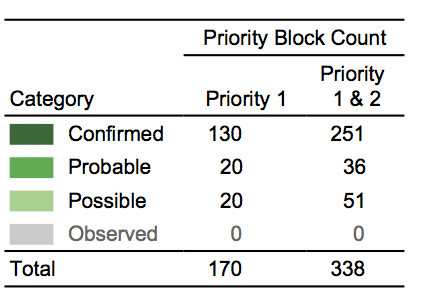
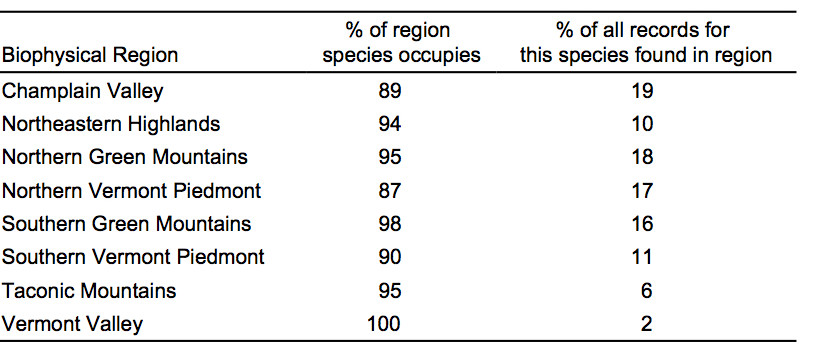
Change in Distribution

Links
Vermont eBird
Encyclopedia of Life
All About Birds