Skip to content
Ruby-crowned Kinglet (Regulus calendula)
Summary
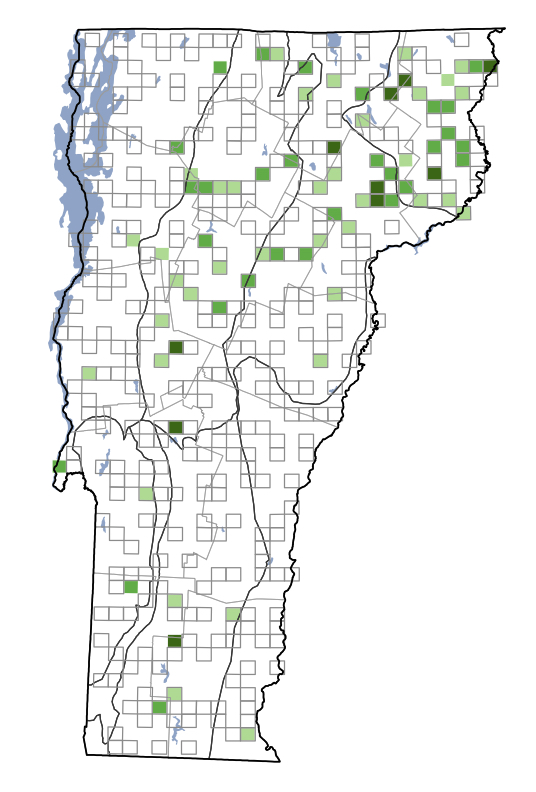
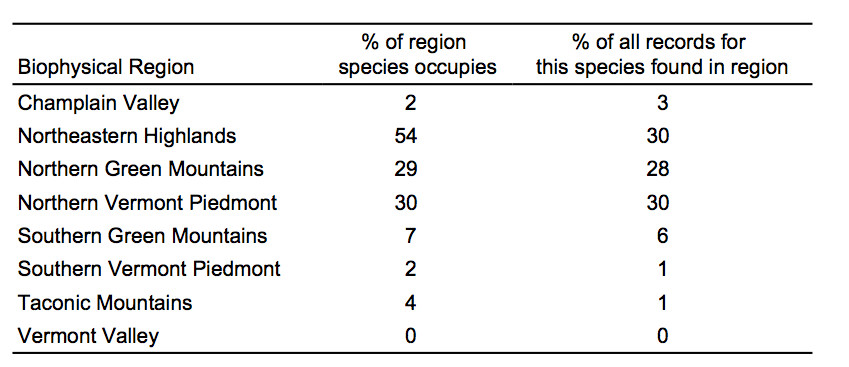
- Natural history: Male Ruby-crowned Kinglets can flash a hidden patch of scarlet crown feathers into a startling burst of color when excited, yet the species is so secretive, and its nest so often hidden high in dense conifer foliage, that Vermont biologists didn’t gather solid proof of local breeding here until the First Atlas. Vermont sits at the southern edge of a breeding range centered on remote boreal and high mountain forests farther north and west, and within the state the bird sticks mainly to high-elevation conifer forest in the Northeast Kingdom and the Green Mountains. It remains so scarce and hard to detect here that ongoing monitoring programs still haven’t gathered enough encounters to tell whether its Vermont population is rising or falling.
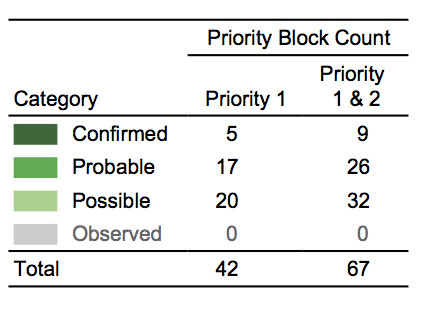
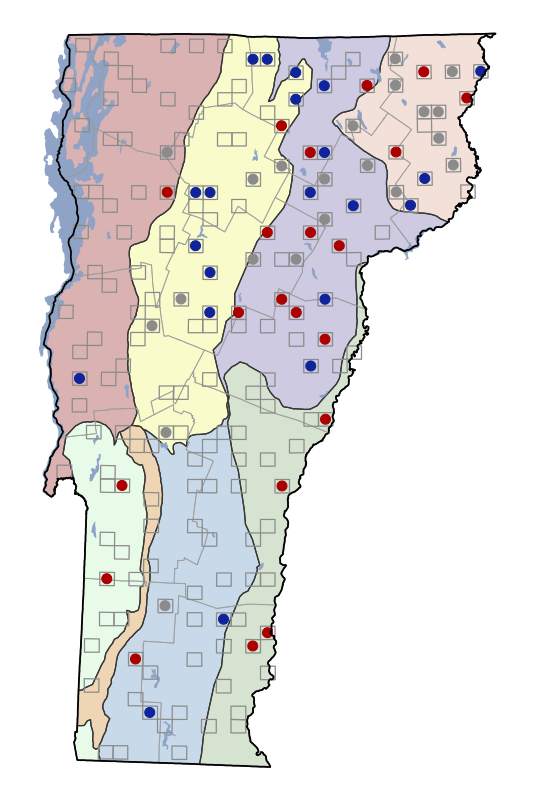
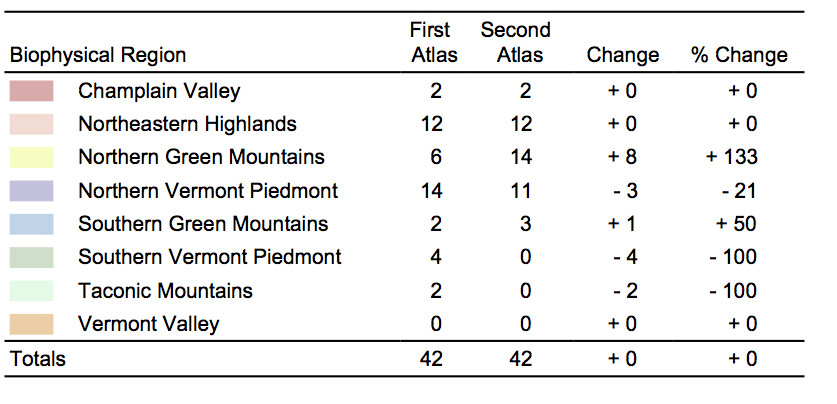
- Status in VT: No change in number of blocks (42). Increase in Northern Green Mountains (133%), decrease in Southern Vermont Piedmont and Taconic Mountains (each 100%).
- Data from other research: No additional data for VT.
- Conservation status: State rank S4B
- Other atlases: NY: -6%; ON: declines in south, increases in north
- VT’s role in North American range: VT is at the southern edge of the range.
- Causes of change since first Atlas: No change.
- Management/Monitoring recommendations:Targeted monitoring may help to identify reasons for decline in eastern populations.
Population Trends

First Vermont Breeding Bird Atlas (1976-1981)
Species Account
Second Vermont Breeding Bird Atlas (2003 – 2007)
Species Account
Change in Distribution

Links
Vermont eBird
Encyclopedia of Life
All About Birds