Skip to content
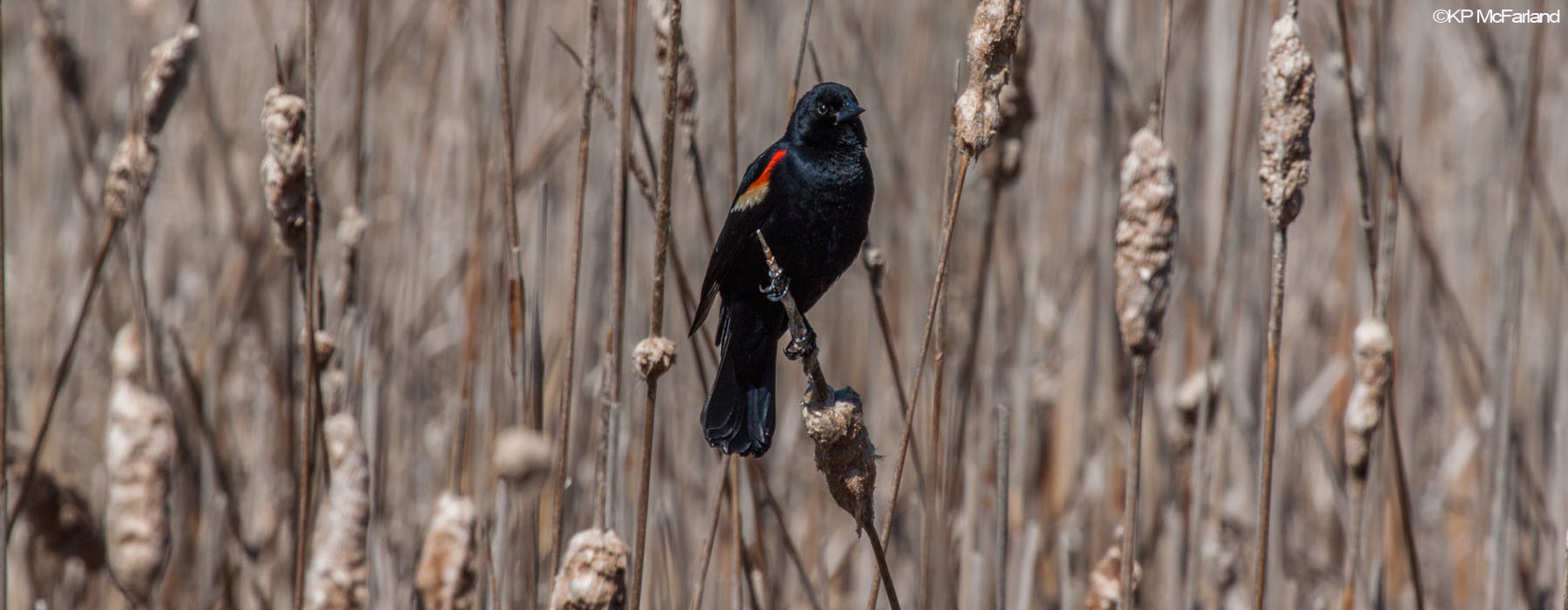
Red-winged Blackbird (Agelaius phoeniceus)
Summary
- Natural history: Red-winged Blackbirds are highly polygynous, with a single male’s territory sometimes holding as many as 15 females at once, a mating pattern so pronounced that biologists studying the species developed the ‘polygyny threshold theory’ to explain when female birds benefit from sharing a mate. Despite being one of the most abundant birds in North America, with an estimated continental population above 200 million, the species is also considered an agricultural pest capable of damaging corn and other grain crops, though lethal control efforts have shown little effect on either crop damage or blackbird numbers.
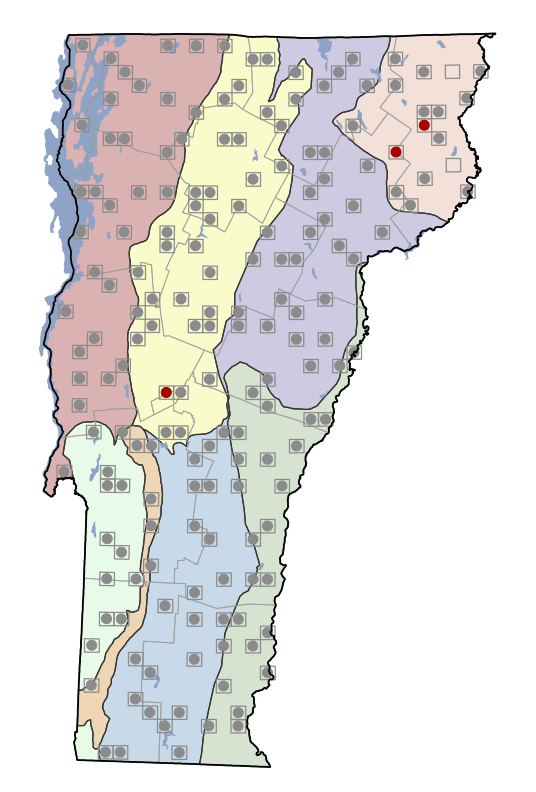
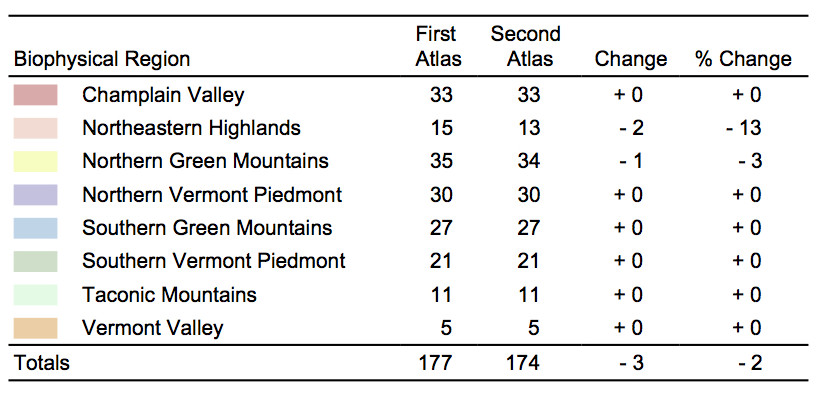
- Status in VT: Decreased by 2% (177 to 174 blocks). Greatest decrease in Northeastern Highlands.
- Data from other research: No additional data for VT.
- Conservation status: State rank S5B
- Other atlases: NY: -2%; PA: -1%; MD: 2%; ON: -22%
- VT’s role in North American range: VT is in the southeastern edge of the range.
- Causes of change since first Atlas: Forest succession (?).
- Management/Monitoring recommendations: No current recommendations.
Population Trends
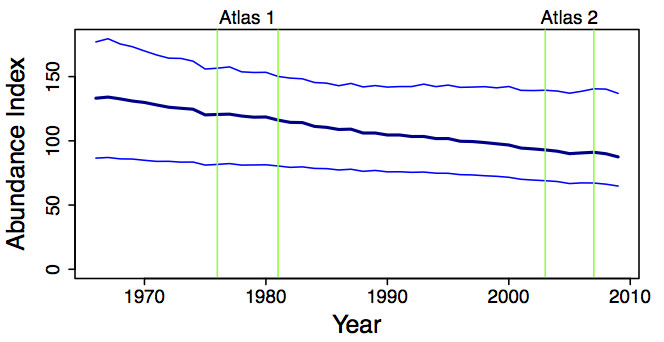
First Vermont Breeding Bird Atlas (1976-1981)
Species Account
Second Vermont Breeding Bird Atlas (2003 – 2007)
Species Account
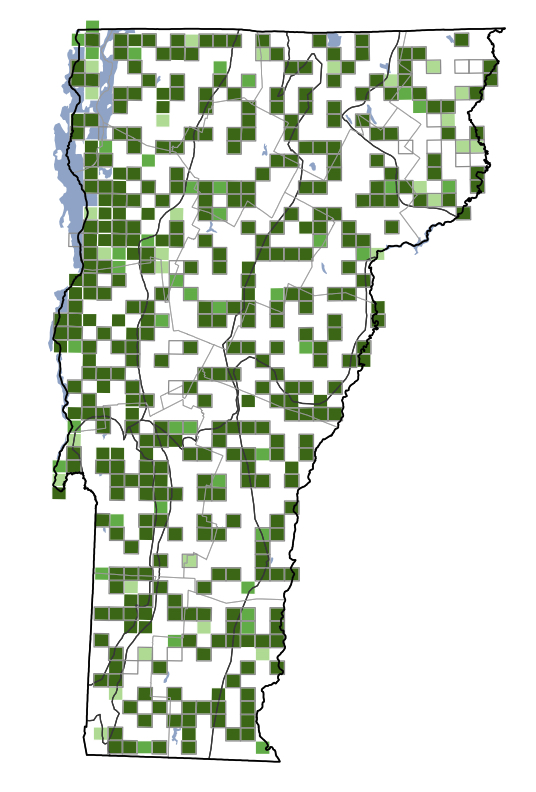
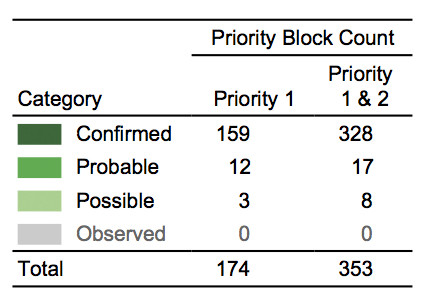
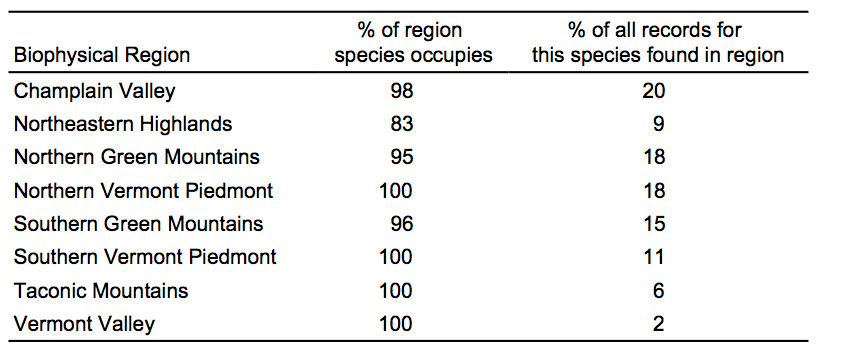
Change in Distribution

Links
Vermont eBird
Encyclopedia of Life
All About Birds