Skip to content
Red-tailed Hawk (Buteo jamaicensis)
Summary
- Natural history: Vermont’s largest breeding buteo and one of its most familiar hawks, the Red-tailed Hawk has nested in the state since at least the early 1800s, though its numbers were likely suppressed for decades in the late 1800s and early 1900s by widespread shooting and trapping of large hawks seen as a threat to game and poultry. The hawk favors open country, watching for prey from high perches at the edges of fields, so as farmland has reverted to forest in areas like the Green Mountains, occupied territories there have thinned out. Many Red-tailed Hawks seen wintering in Vermont are not visitors from farther north but local breeders lingering near their own nesting territories.
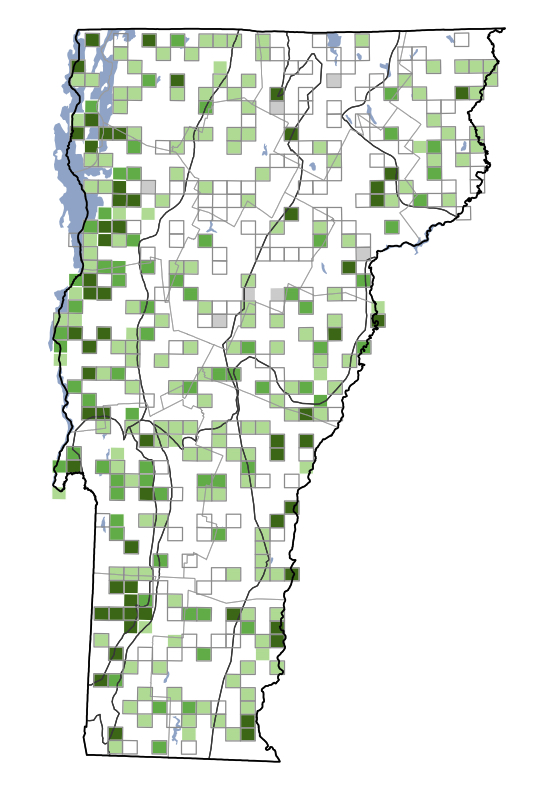
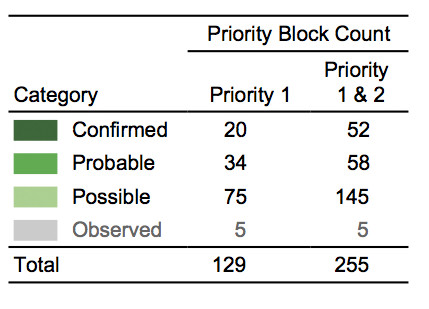
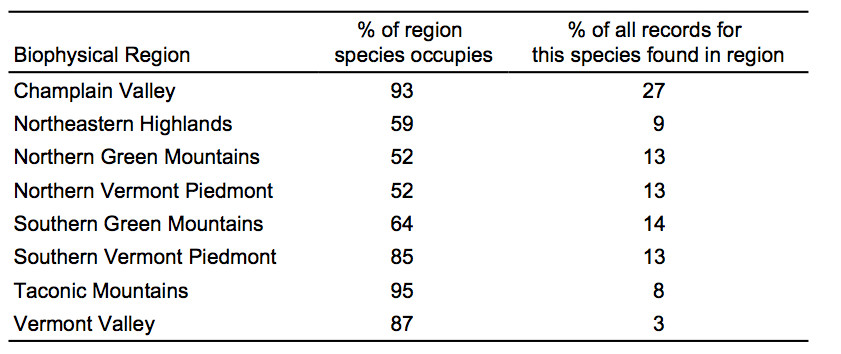
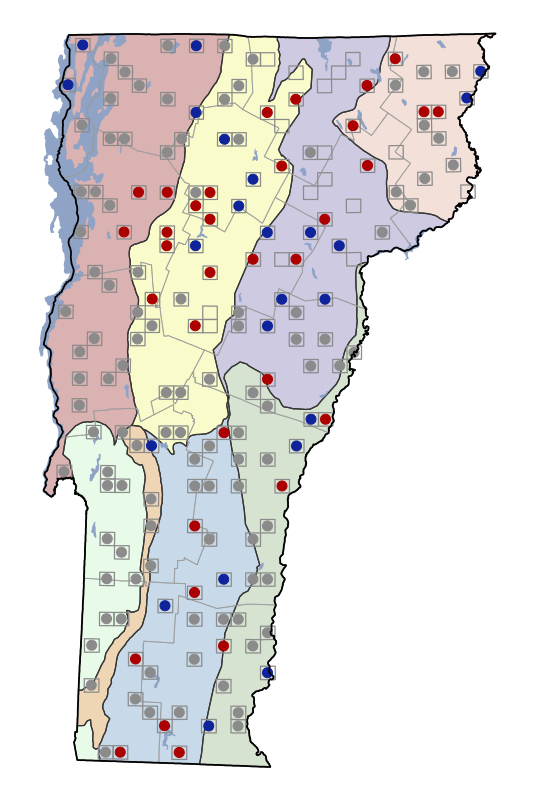
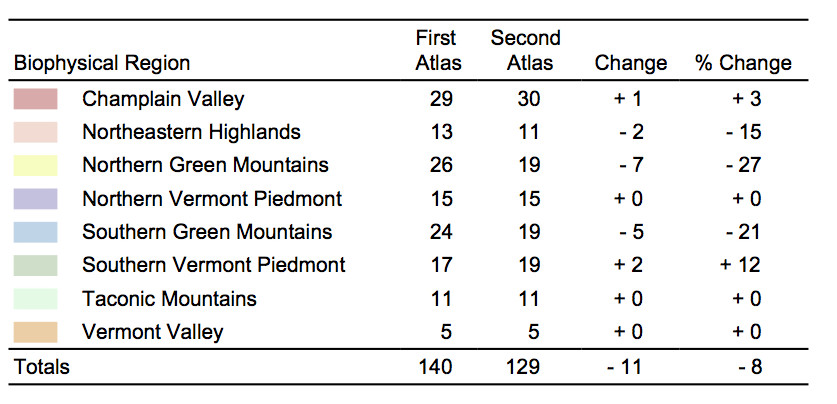
- Status in VT: Decreased by 8% (140 to 129 blocks). Greatest decrease in Northeastern Highlands, Northern Green Mountains, Southern Green Mountains.
- Data from other research: No additional data for VT.
- Conservation status: State rank S3S4B; S5N
- Other atlases: NY: 6%; MD: 26%; PA: 13%; ON: decreasing;
- VT’s role in North American range: VT is within the core of the range.
- Causes of change since first Atlas: Minimal change; decreases at higher elevations perhaps associated with succession of open fields and grassy areas to forest.
- Management/Monitoring recommendations:No current recommendations.
First Vermont Breeding Bird Atlas (1976-1981)
Species Account
Second Vermont Breeding Bird Atlas (2003 – 2007)
Species Account
Change in Distribution

Links
Vermont eBird
Encyclopedia of Life
All About Birds