Skip to content
Pileated Woodpecker (Dryocopus pileatus)
Summary
- Natural history: Vermont’s largest woodpecker was once considered rare and reclusive by early naturalists, a scarcity blamed on the extensive clearing of forest for farmland, but the Pileated Woodpecker has rebounded as those fields grew back into mature woods with the large trees and snags it needs for nesting. Its rectangular feeding excavations remain visible on tree trunks for years, often giving away the bird’s presence more reliably than an actual sighting, while its abandoned nest holes, rounder and neater than the feeding holes, go on to shelter many other kinds of wildlife.
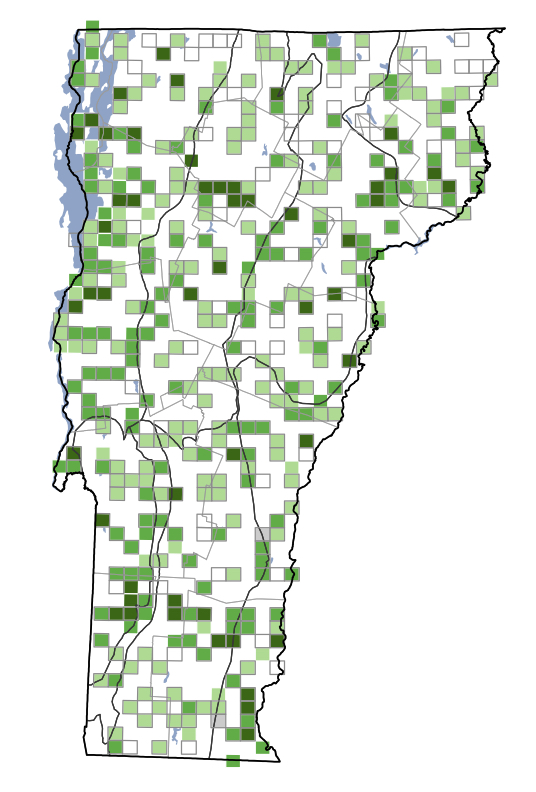
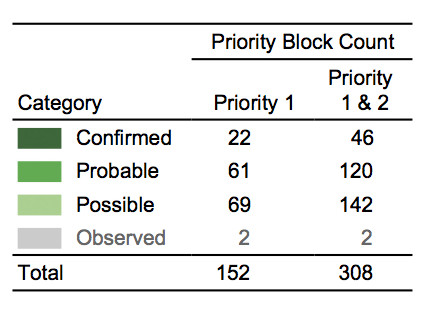
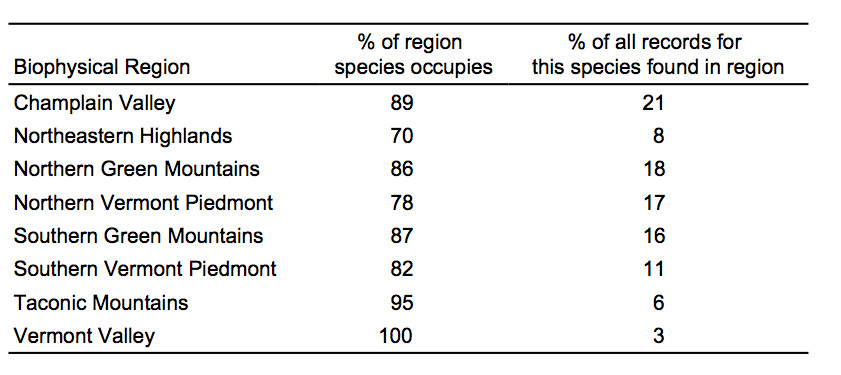
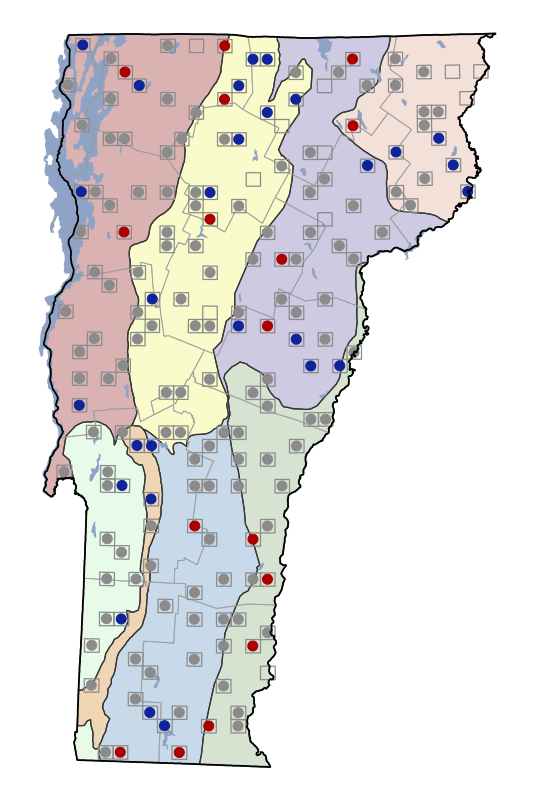
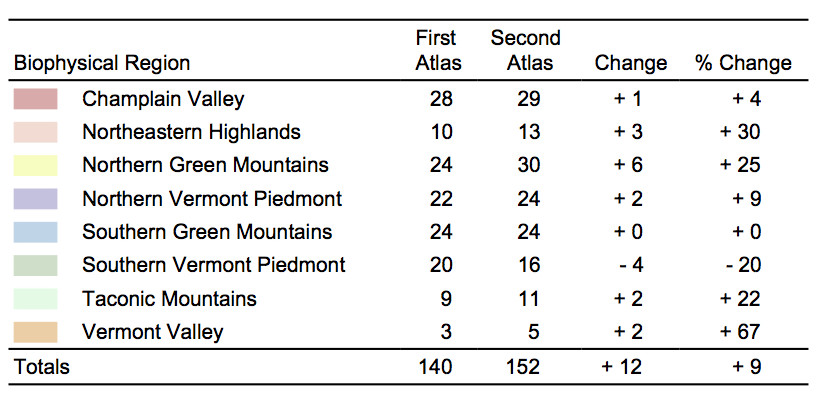
- Status in VT: Increased by 9% (140 to 153 blocks). Greatest increase of occupied blocks in Northeastern Highlands.
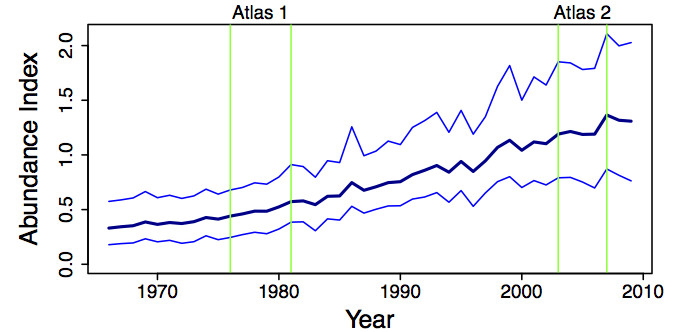
- Data from other research: FBMP: no sig. trend.
- Conservation status: State rank S5
- Other atlases: NY: 29%; PA: 38%; MD: 34%
- VT’s role in North American range: VT is within the core of the range.
- Causes of change since first Atlas: Continued succession of farmland to forest.
- Management/Monitoring recommendations:No current recommendations.
Population Trends
First Vermont Breeding Bird Atlas (1976-1981)
Species Account
Second Vermont Breeding Bird Atlas (2003 – 2007)
Species Account
Change in Distribution

Links
Vermont eBird
Encyclopedia of Life
All About Birds