Skip to content
Northern Parula (Setophaga americana)
Summary
- Natural history: As Vermont’s smallest warbler, the Northern Parula avoids competing with the larger warblers sharing its habitat by specializing in gleaning insects from the very tips of branches. It builds its nest by hollowing out a hanging clump of tree lichen called old man’s beard, the same specialized nesting strategy that leads it to use Spanish moss farther south. The bird’s range has a curious gap running through southern New England and New Jersey, a stretch where decades of air pollution stripped host trees of the lichens this warbler depends on, so its rebounding numbers in Vermont may hint that lichens are recovering as air quality improves and forests mature.
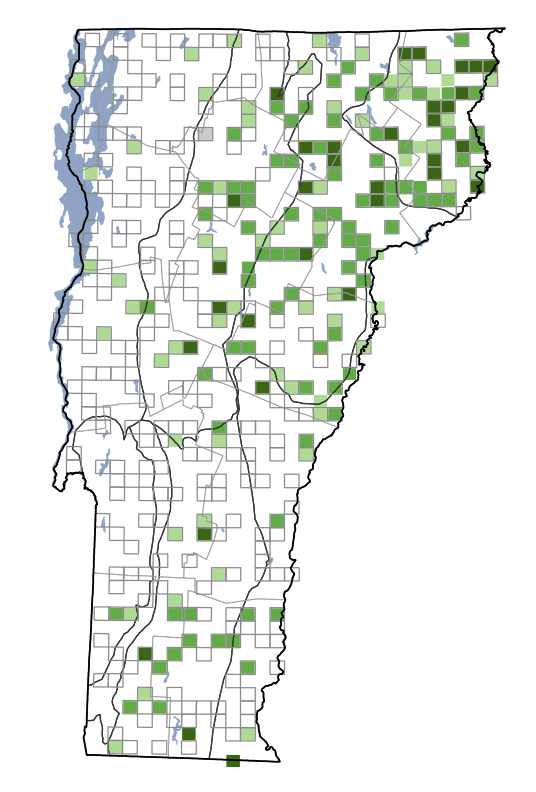
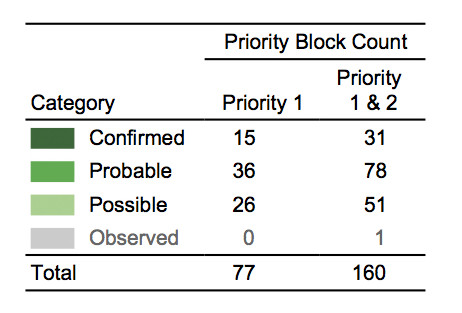
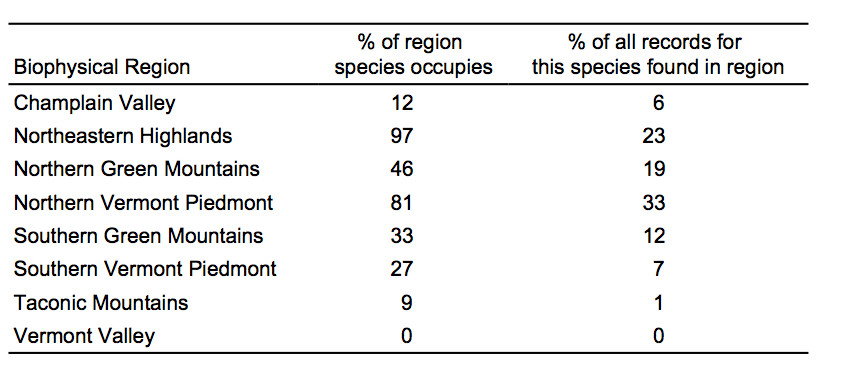
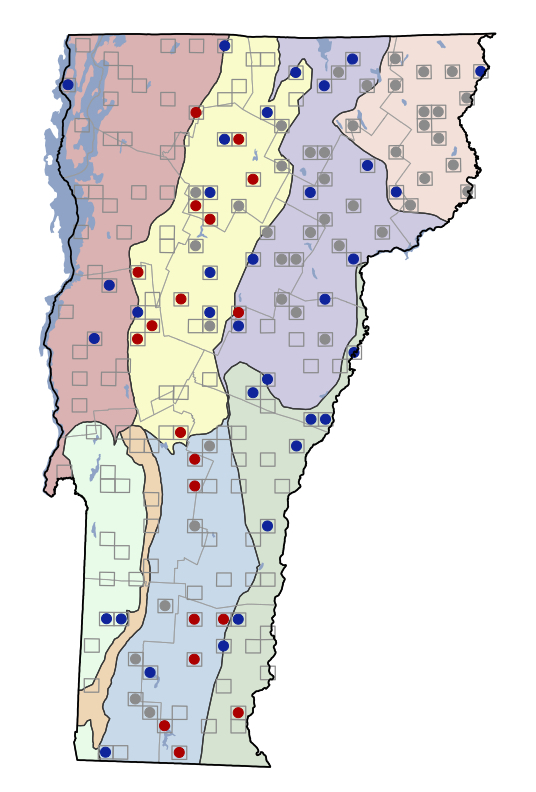
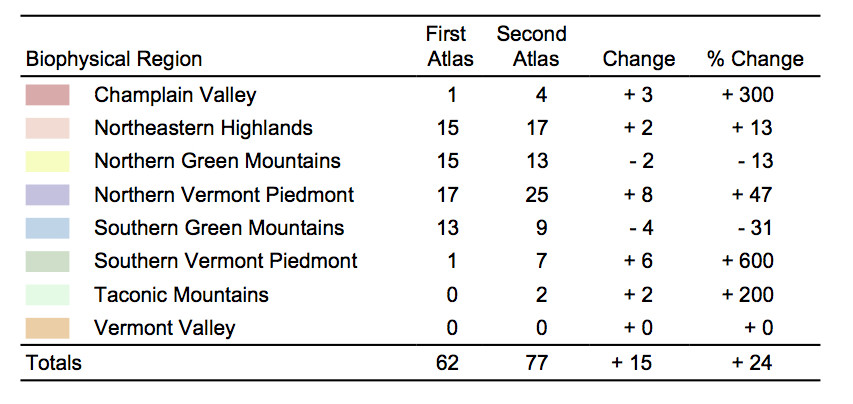
- Status in VT: Increased by 24% (62 to 77 blocks). Greatest increase in Southern Vermont Piedmont.
- Data from other research: No additional data for VT.
- Conservation status: State rank S4B
- Other atlases: NY: 51%; PA: 122%; ON: sig. increase in province as a whole, especially in Northern and Southern Shield.
- VT’s role in North American range: VT is within the core of the range.
- Causes of change since first Atlas: Forest maturation and/or reduction in air pollution may have led to increase in nest substrate (epiphytic lichens) (?).
- Management/Monitoring recommendations:No current recommendations.
Population Trends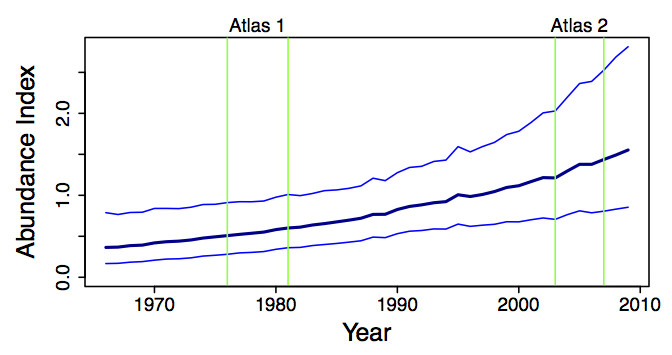
First Vermont Breeding Bird Atlas (1976-1981)
Species Account
Second Vermont Breeding Bird Atlas (2003 – 2007)
Species Account
Change in Distribution

Links
Vermont eBird
Encyclopedia of Life
All About Birds