Summary
- Natural history: Unlike Vermont’s other woodpeckers, the Northern Flicker spends much of its time on the ground hunting for ants, its favorite food, rather than drilling into trees like its relatives. It was considered the state’s most common woodpecker back when nineteenth-century farms had opened up much of Vermont’s forest, and today’s more modest numbers are attributed to a shortage of dead-tree nesting cavities, competition from introduced European Starlings, and lawn pesticides that reduce its insect prey.
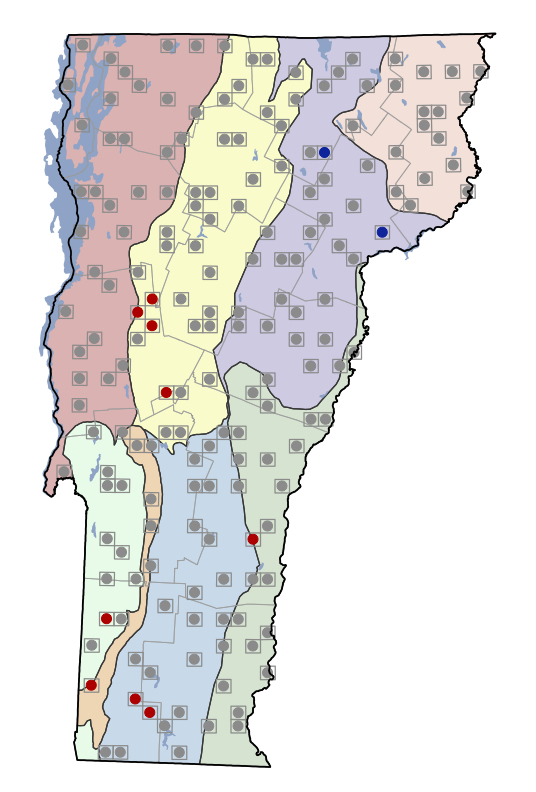
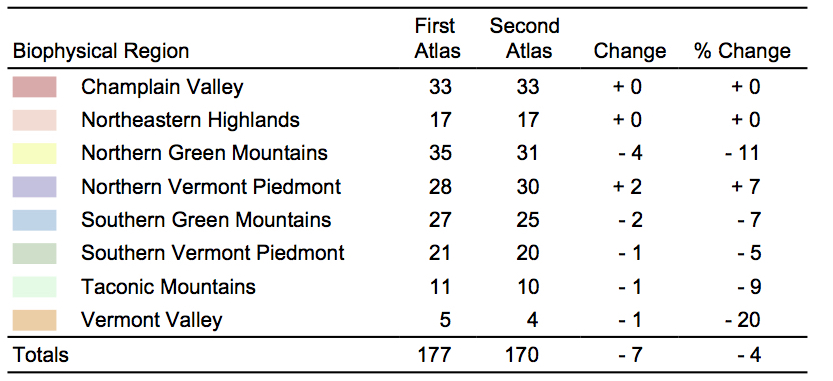
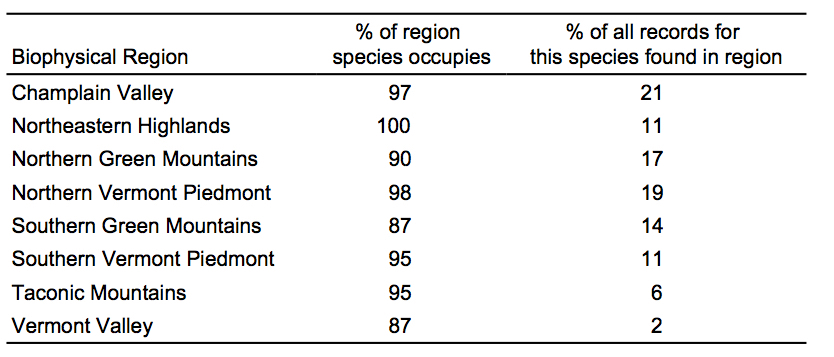
- Status in VT: Decreased by 5% (177 to 169 blocks). Greatest change in Vermont Valley (-20%).
- Data from other research: FMBP: Decreased by 10%
- Conservation status: State rank S5B
- Other atlases: MD, NY, ON, PA: minimal change
- VT’s role in North American range: VT is within the core of the range.
- Causes of change since first Atlas: Minimal change; concerns include: lack of standing dead trees for nesting; competition for nest cavities; reduced prey availability due to pesticide application on golf courses and suburban lawns.
- Management/Monitoring recommendations:Investigate effects of climate change on distribution.
First Vermont Breeding Bird Atlas (1976-1981)
Second Vermont Breeding Bird Atlas (2003 – 2007)
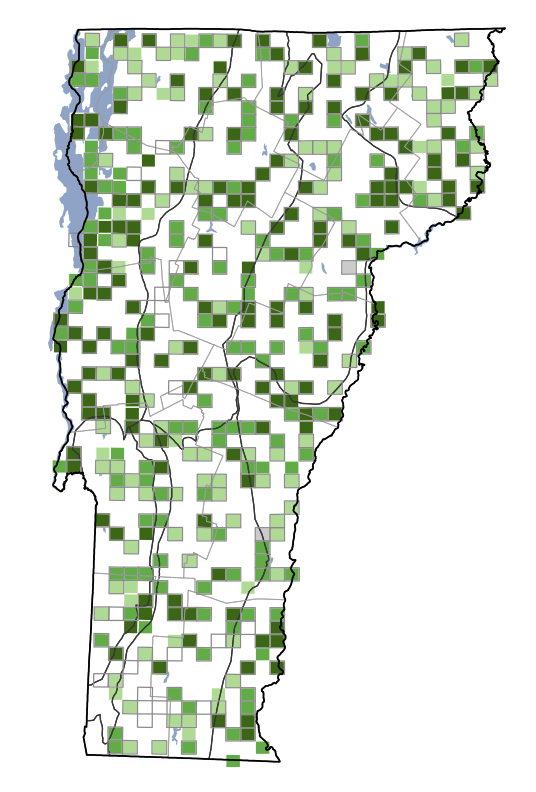
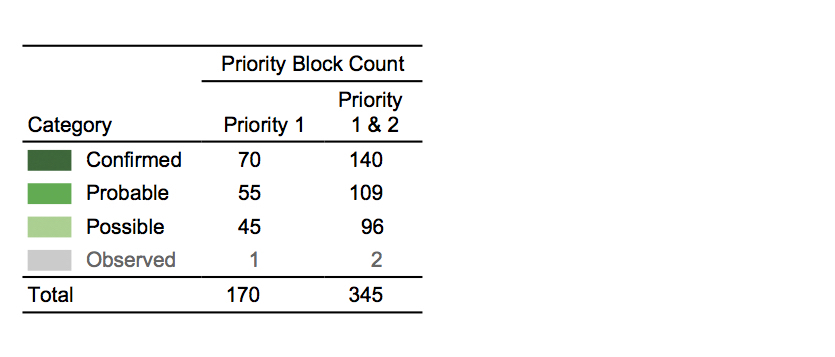
Change in Distribution