Summary
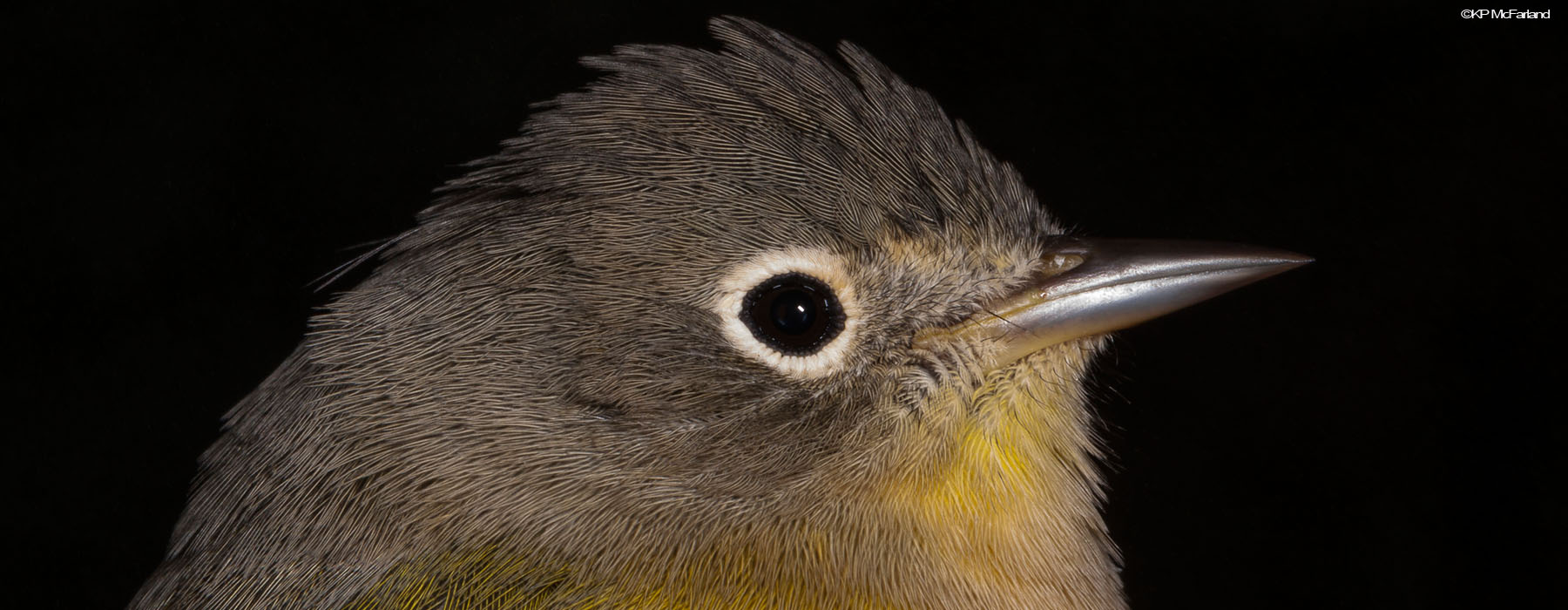
- Natural history: The unbroken, mature forests that once covered the Northeast offered little suitable habitat for the Nashville Warbler, which favors scrubby, low secondary growth over old woods. A century of forest clearing for farmland, followed by the wholesale abandonment of those farms, created vast acreages of exactly the brushy young habitat the species needs, letting it go from rare to fairly common by the early twentieth century. It also finds similar low, tangled vegetation along the edges of northern bogs and wetlands, where nutrient-poor soil naturally stunts trees and shrubs into a shape resembling second growth.
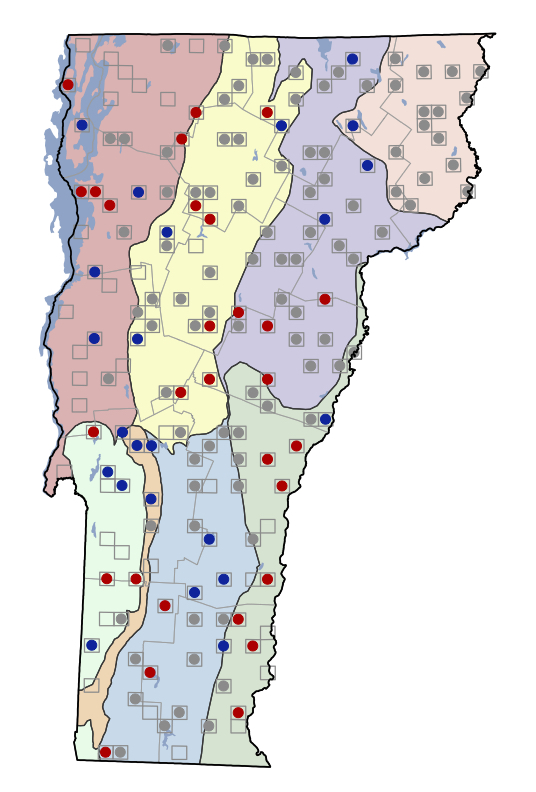
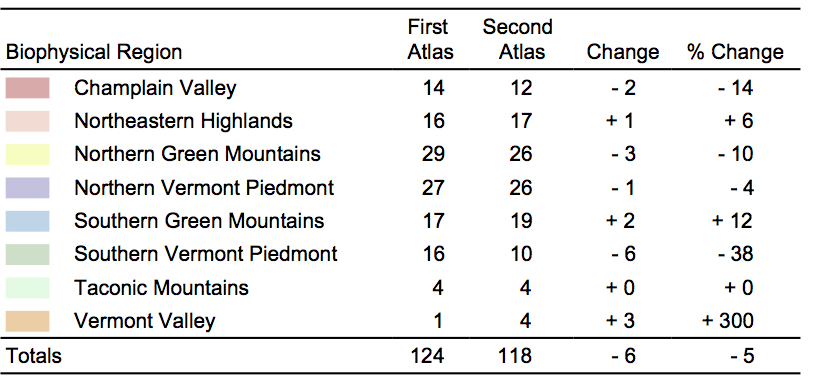
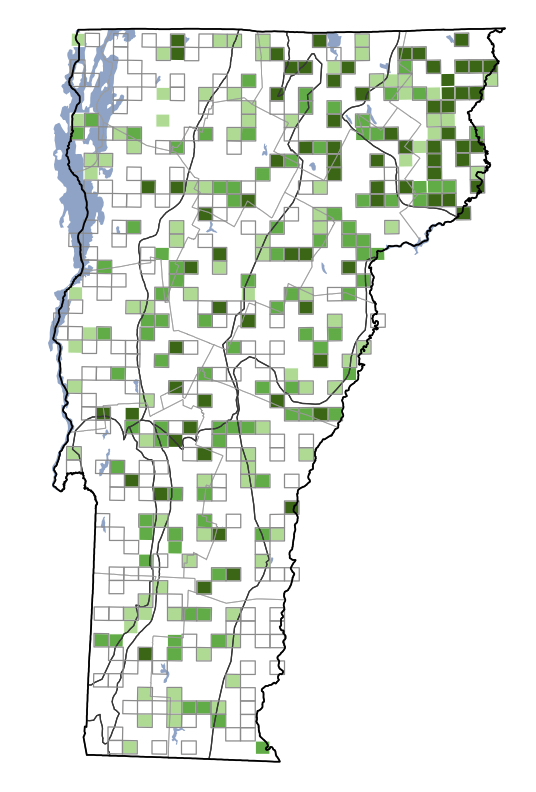
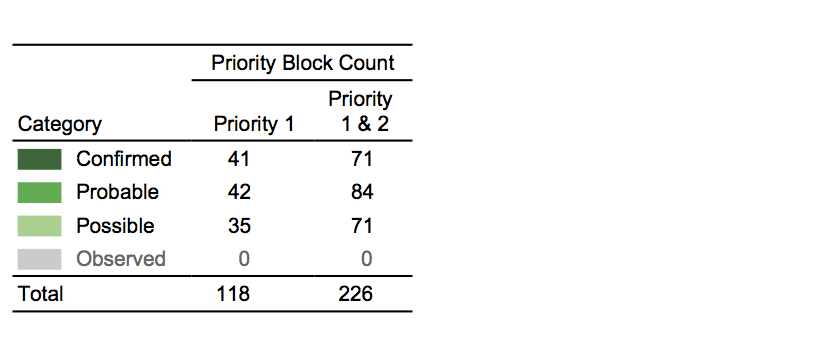
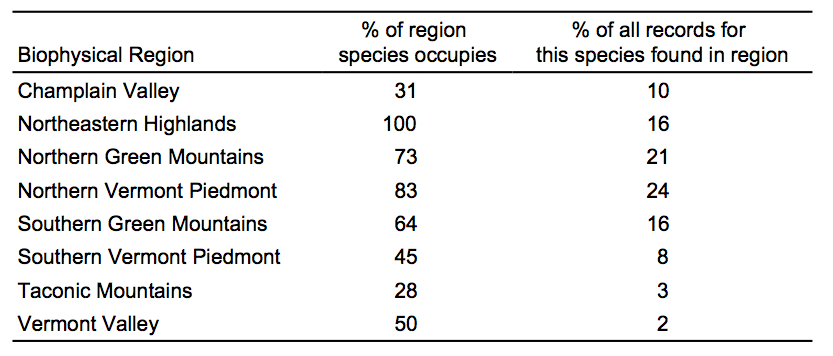
- Status in VT: Decreased by 5% (124 to 118 blocks). Greatest decrease in Southern Vermont Piedmont (38%).
- Data from other research: No additional data for VT.
- Conservation status: State rank S5B
- Other atlases: NY: -7%; PA: -2%; ON: 50%
- VT’s role in North American range: VT is within the core of the eastern breeding range.
- Causes of change since first Atlas: Maturation of forests from secondary growth (?).
- Management/Monitoring recommendations:No current recommendations.
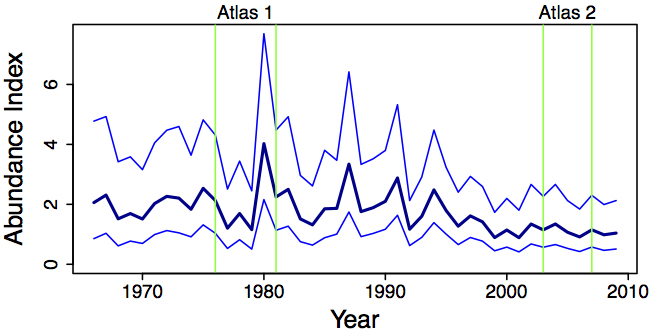
Population Trends
First Vermont Breeding Bird Atlas (1976-1981)
Second Vermont Breeding Bird Atlas (2003 – 2007)
Change in Distribution