Summary
- Natural history: The Mourning Warbler gets its somber name from the dark gray hood draping over its head and breast, though its belly underneath is a cheerful yellow. It specializes in temporary forest openings, and in one New Hampshire study a population moved into a freshly cut clearing within two years, peaked in abundance around year five, then declined within a decade as the surrounding trees grew back. Because the bird skulks through dense tangles and is most easily detected by its distinctive song, some observers have wondered whether early naturalists simply overlooked a bird that was already common rather than watching it truly increase.
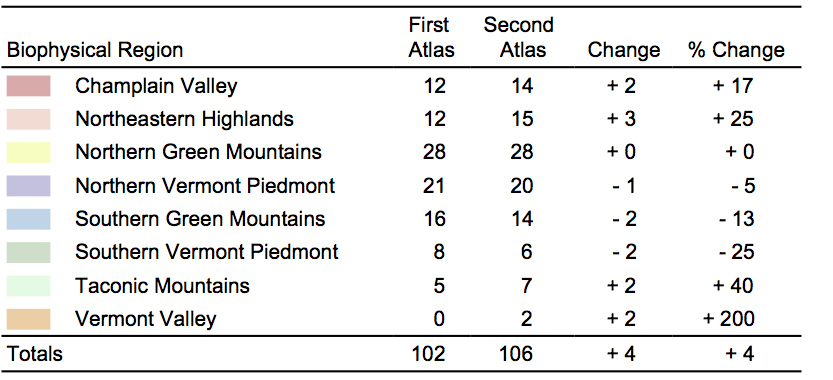
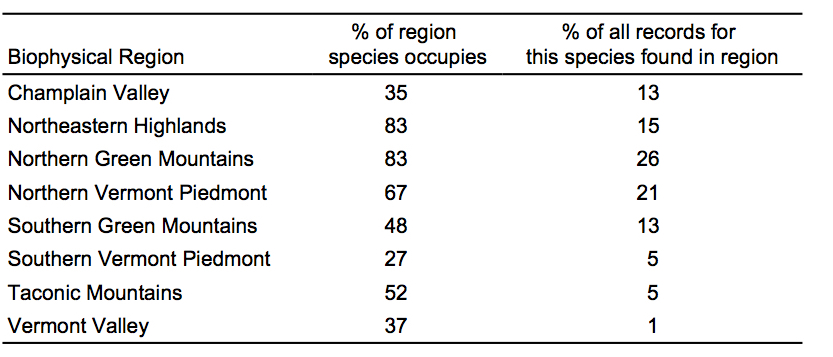
- Status in VT: Increased by 4% (102 to 105 blocks). Greatest increase in Vermont Valley.
- Data from other research: No additional data for VT.
- Conservation status: State rank S5B
- Other atlases: NY: 4%; PA: 83%
- VT’s role in North American range: VT is at the southern edge of the range.
- Causes of change since first Atlas: Minimal change.
- Management/Monitoring recommendations: No specific recommendations.
Population Trends
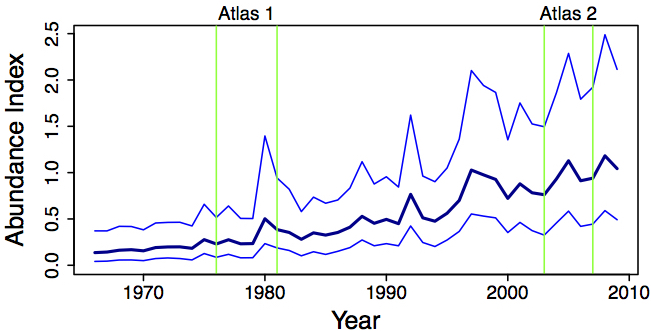
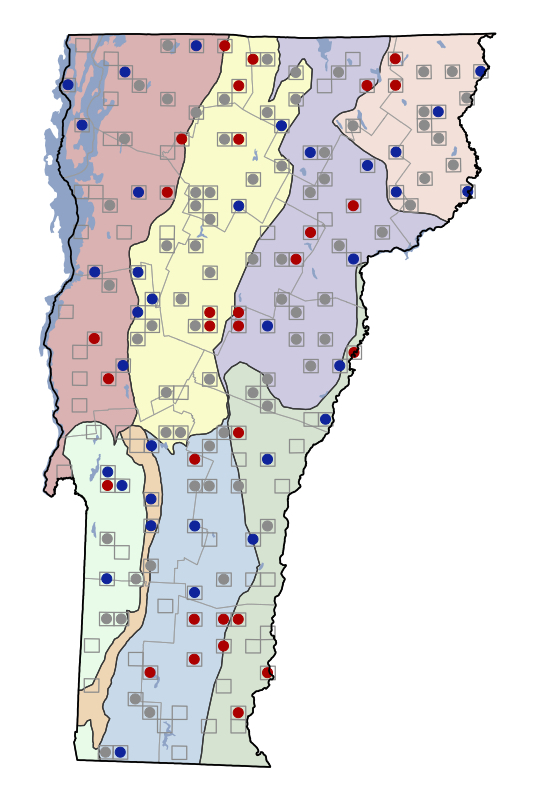
First Vermont Breeding Bird Atlas (1976-1981)
Second Vermont Breeding Bird Atlas (2003 – 2007)
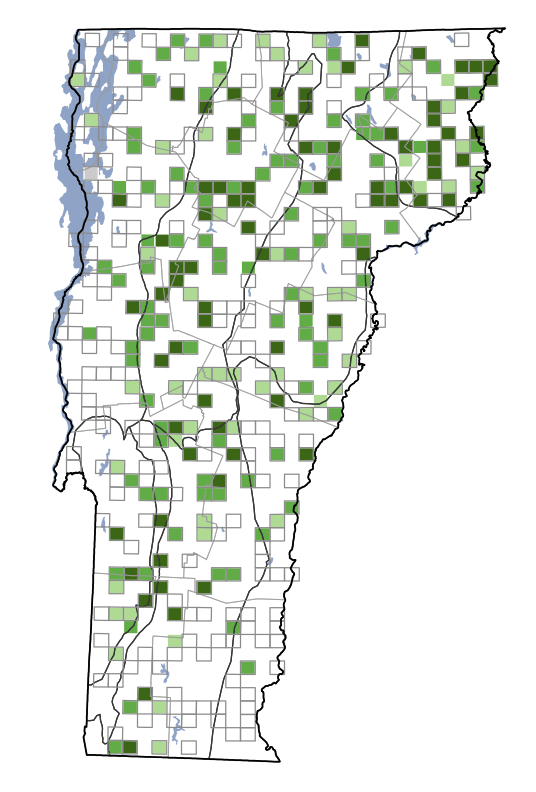

Change in Distribution