Summary
- Natural history: A male Marsh Wren keeps several mates interested at once, and around each one he constructs a scattering of empty decoy nests that no eggs will ever fill, seemingly a way of showing off his energy and skill. Both males and females also sneak into neighboring nests to puncture eggs, including those of unrelated marsh-nesting species, a startling bit of household sabotage. In Vermont the wren sticks to the state’s largest, most permanent cattail marshes along Lake Champlain, the Connecticut River, and Lake Memphremagog, largely abandoning smaller marsh patches except in occasional high-population years, though it quickly moves back into any wetland that has been restored.
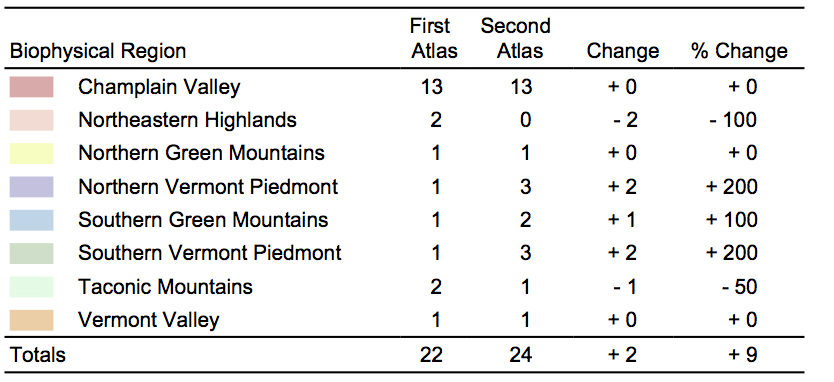
- Status in VT: Increased by 9% (22 to 24 blocks). Greatest increases in Northern Vermont Piedmont and Southern Vermont Piedmont.
- Data from other research: No additional data for VT.
- Conservation status: State rank S4B
- Other atlases: NY: 5%; PA: -31%; ON: no sig. change
- VT’s role in North American range: VT is on the northeastern edge of the range.
- Causes of change since first Atlas: Wetlands inhabited by Marsh Wren have been subjected to regulatory protection.
- Management/Monitoring recommendations: No current recommendations.
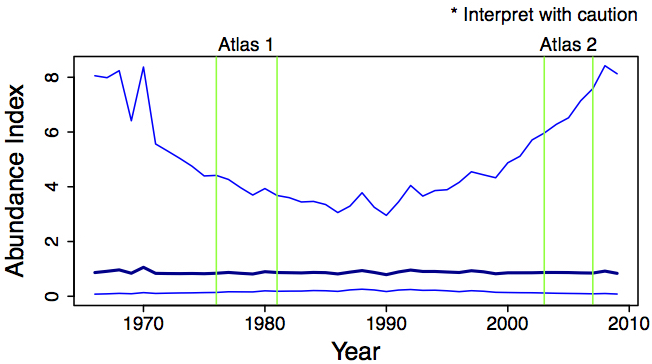
Population Trends
First Vermont Breeding Bird Atlas (1976-1981)
Second Vermont Breeding Bird Atlas (2003 – 2007)
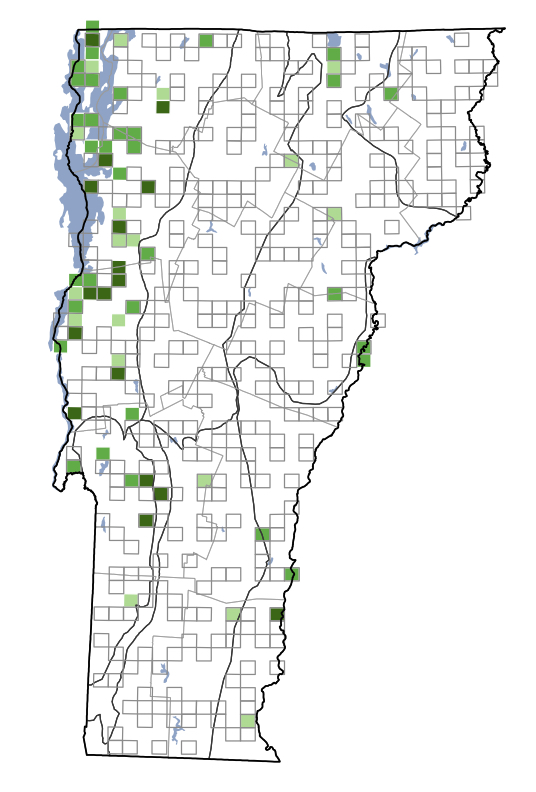

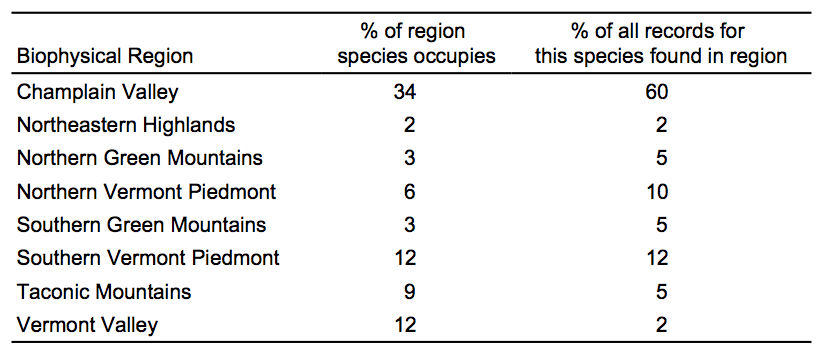
Change in Distribution