Summary
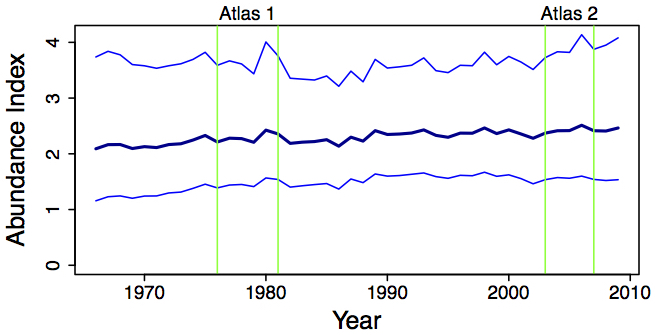
- Natural history: The Magnolia Warbler’s name is something of a historical accident, coming from the tree an early specimen happened to be collected in rather than from any real attachment to magnolias, which the species rarely visits. Considered rare in Vermont in the early 1900s, it boomed by mid-century once discarded farmland grew back into the young pine and spruce thickets it favors. Its numbers have since leveled off, and populations have even dipped slightly in places like the Green Mountains as those same successional forests mature past the scrubby young-conifer stage this warbler needs.
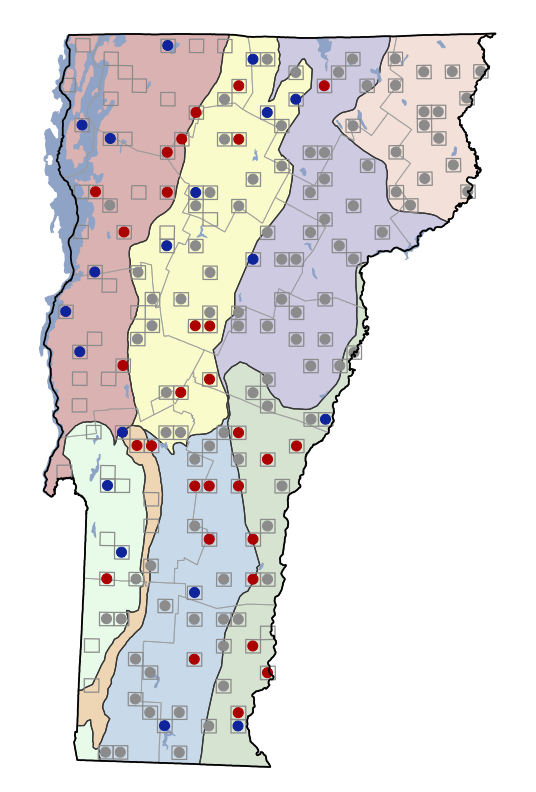
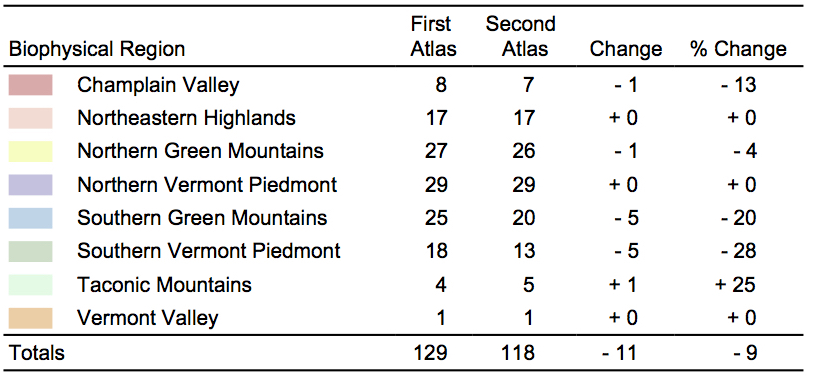
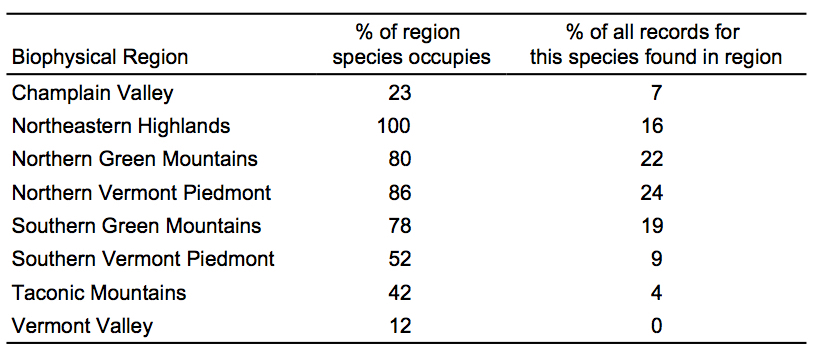
- Status in VT: Decreased by 9% (129 to 118 blocks). Greatest decrease in Southern Vermont Piedmont.
- Data from other research: No additional data for VT.
- Conservation status: State rank S5B
- Other atlases: NY: 26%; PA: 83%; ON: increase in all portions of province
- VT’s role in North American range: VT is within the core of the range.
- Causes of change since first Atlas: Maturation of early successional coniferous and mixed communities to northern hardwoods (?).
- Management/Monitoring recommendations:No current recommendations.
Population Trends
First Vermont Breeding Bird Atlas (1976-1981)
Second Vermont Breeding Bird Atlas (2003 – 2007)
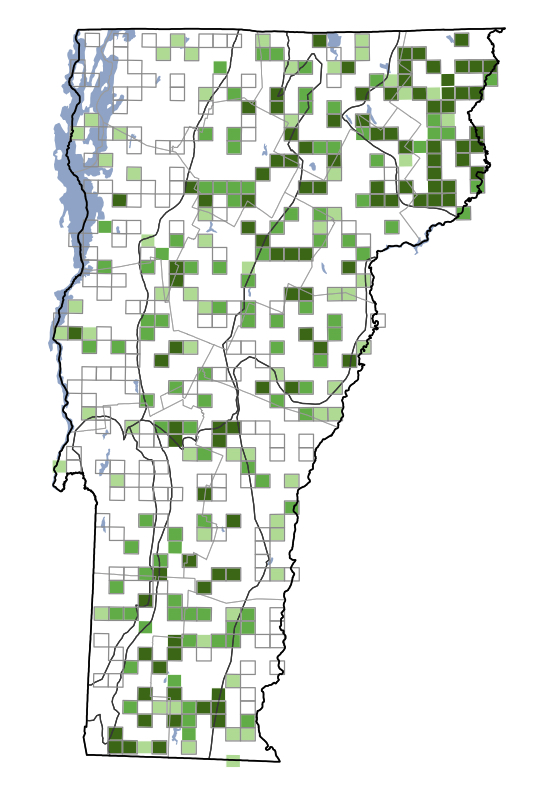

Change in Distribution