Summary
- Natural history: Louisiana Waterthrushes hide their nest in a stream bank or beneath a fallen log, and an incubating female flushed from it may feign injury to lure an intruder as far as 240 feet from the nest. Because the species depends on mayflies and other aquatic invertebrates that cannot tolerate sediment or pollution, its presence along a stream is considered a good sign of clean water. Once the chicks fledge, the brood splits in two, with the male and female each taking charge of feeding and guarding half the young.
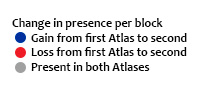
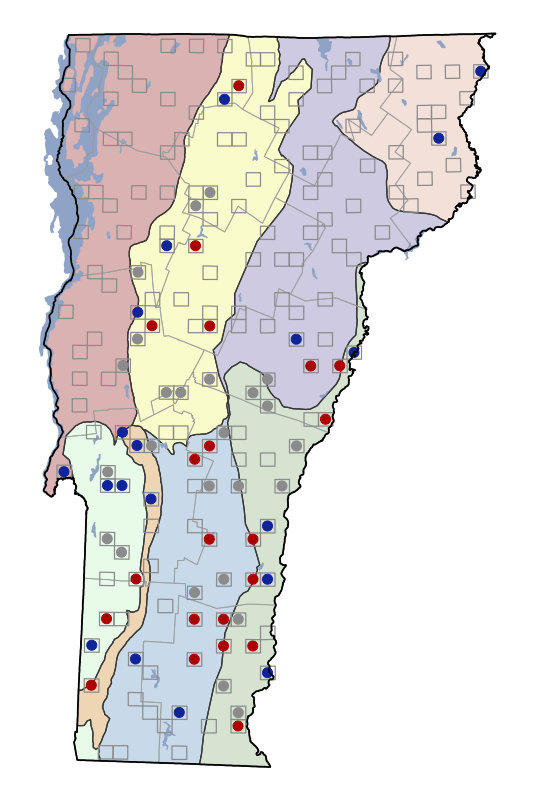
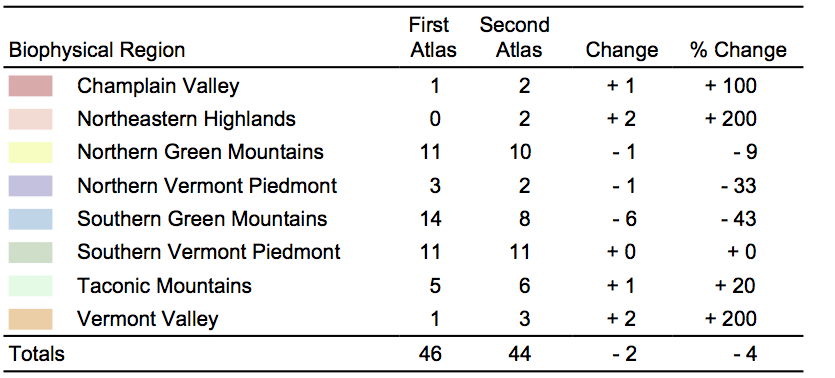
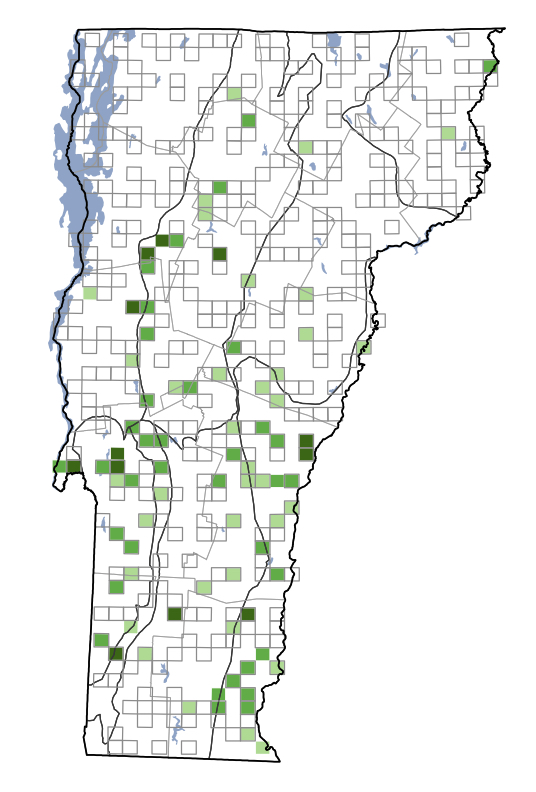
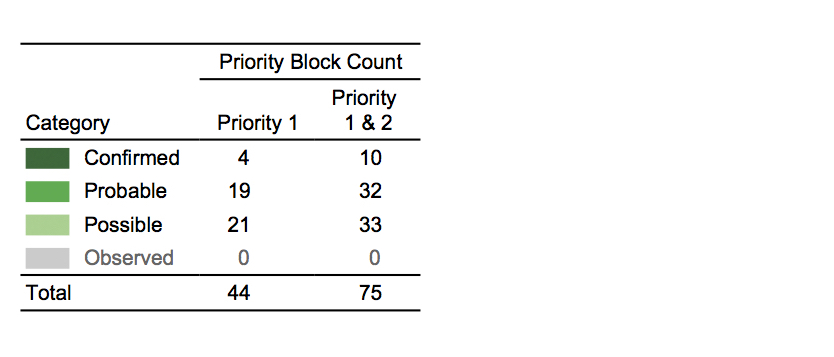
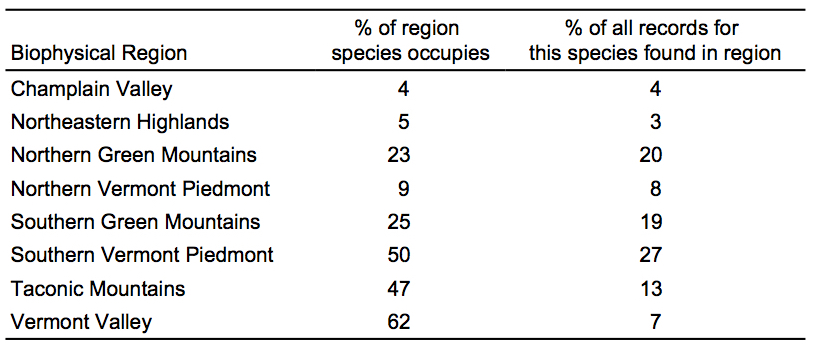
- Status in VT: Decreased by 4% (46 to 44 blocks). Greatest decrease in Southern Green Mountains. Increased distribution to northeastern VT.
- Data from other research: No additional data for VT.
- Conservation status: State rank S4B
- Other atlases: NY: -21%; PA: 29%; MD: 2%; ON: no change
- VT’s role in North American range: VT lies within the northeastern corner of the range.
- Causes of change since first Atlas: Adverse impacts of acid deposition and hemlock wooly adelgid on habitat in Appalachian Mountains (?).
- Management/Monitoring recommendations: No current recommendations.
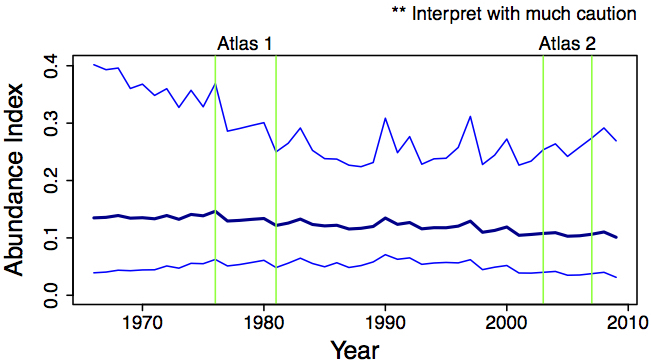
Population Trends
First Vermont Breeding Bird Atlas (1976-1981)
Second Vermont Breeding Bird Atlas (2003 – 2007)
Change in Distribution