Summary
- Natural history: The Long-eared Owl is so secretive that even experienced birders rarely detect it, and Vermont sits near the southern edge of its eastern breeding range. Wintering birds often gather in communal roosts wherever rodents are abundant, and that same site may become the following summer’s nesting spot if prey stays plentiful, sometimes allowing pairs to raise two broods in a single year. Because the owl is nomadic and follows boom-and-bust rodent cycles rather than returning to fixed territories, it rarely nests in the same place twice.
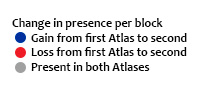
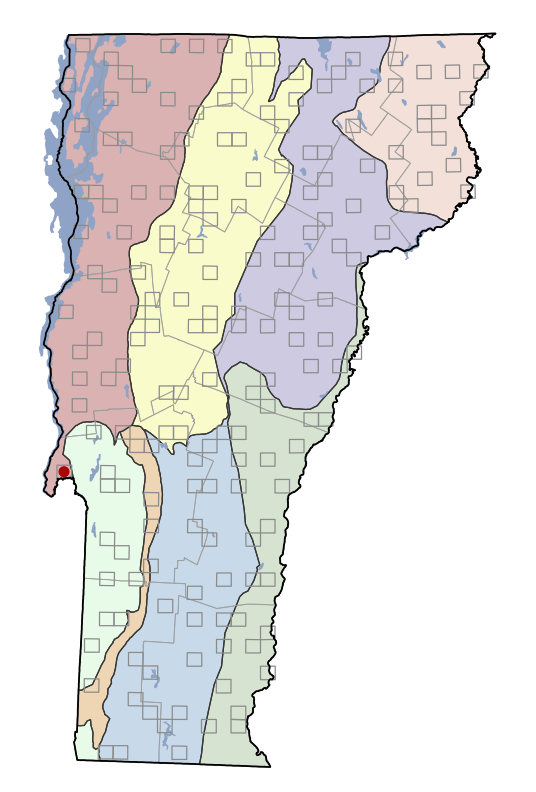
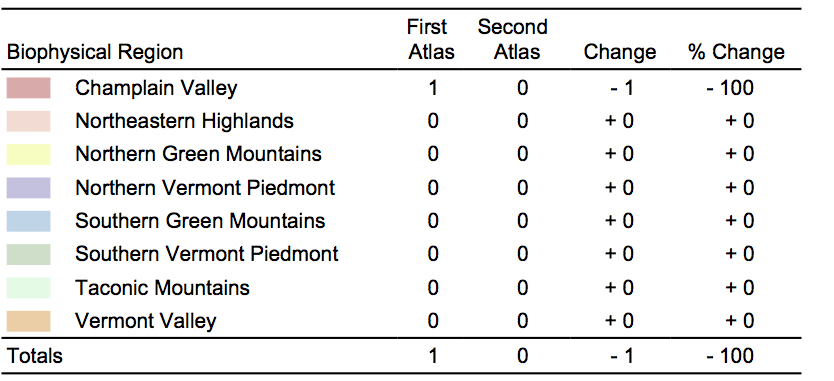
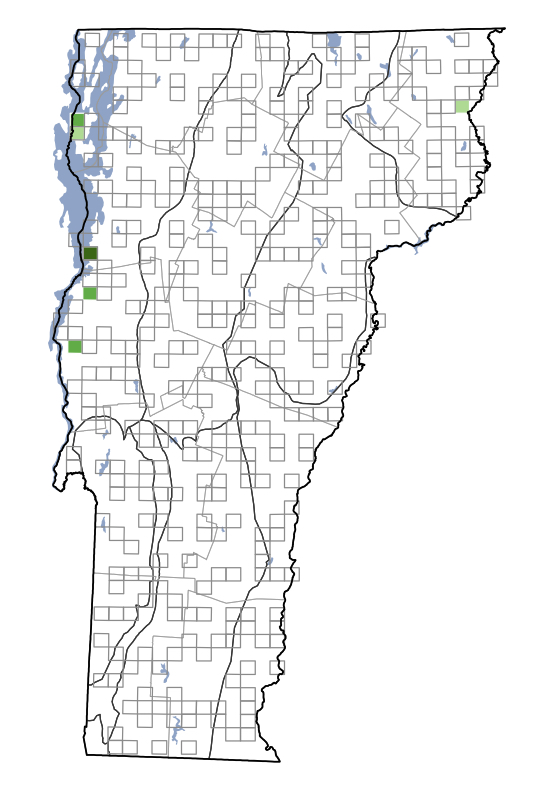
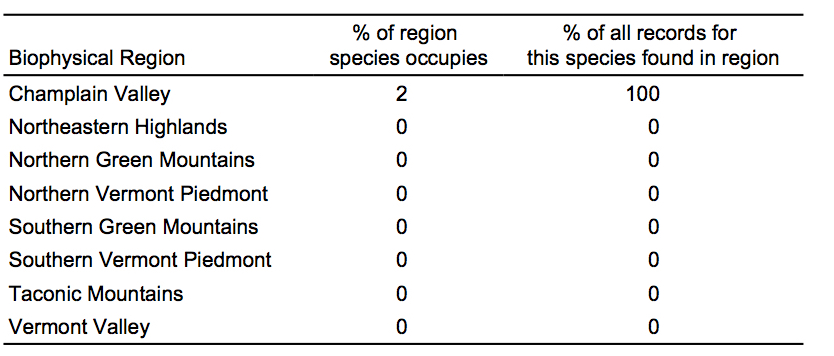
- Status in VT: Decreased by 100% in Champlain Valley (1 to 0 blocks). Little breeding data exists in VT.
- Data from other research: No additional data for VT.
- Conservation status: State rank S1B; SGCN-M
- Other atlases: NY: -41%; PA: 17%; ON: High occupancy turnover.
- VT’s role in North American range: VT is within the southeastern edge of the range.
- Causes of change since first Atlas: Species so seldom reported, no reliable assumptions can be made about changes in abundance or distribution.
- Management/Monitoring recommendations:Provision of clearings for foraging.
First Vermont Breeding Bird Atlas (1976-1981)
Second Vermont Breeding Bird Atlas (2003 – 2007)

Change in Distribution