Summary
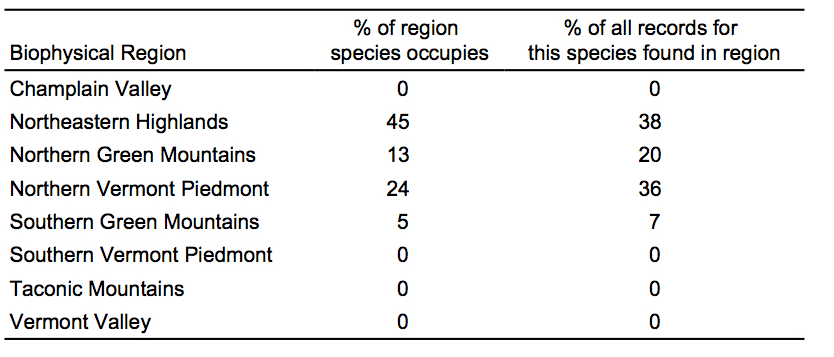
- Natural history: Lincoln’s Sparrow is so secretive that its first documented Vermont nest was not found until the Second Atlas survey, discovered in the town of Wolcott despite the species having likely bred in the state for decades. It favors wet willow thickets, boggy meadows, and beaver wetlands mostly in Vermont’s cooler northeastern corner, a habitat so specialized that the state likely holds only around 1,200 of the roughly 40 million Lincoln’s Sparrows in North America. Because males fall completely silent once a female begins incubating, atlas surveyors sometimes had to rely on females performing a distracting, mouse-like scurry through the grass to reveal where a nest might be hidden.
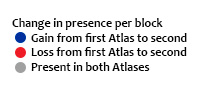
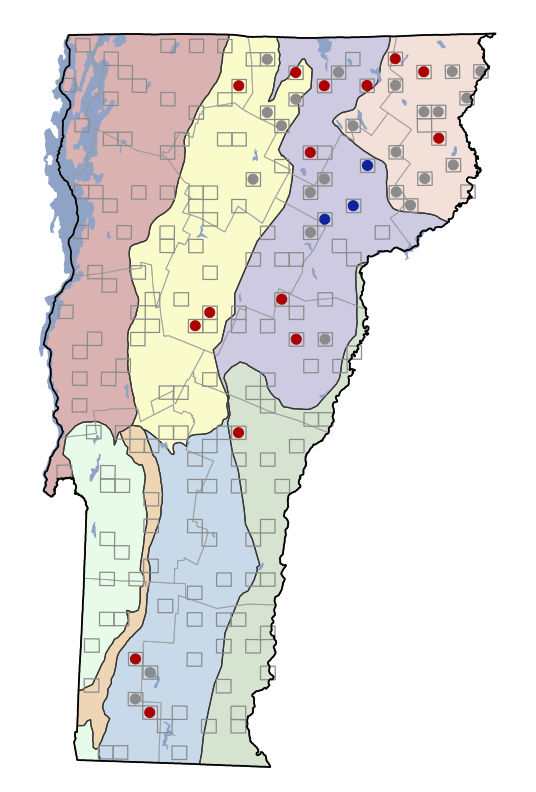
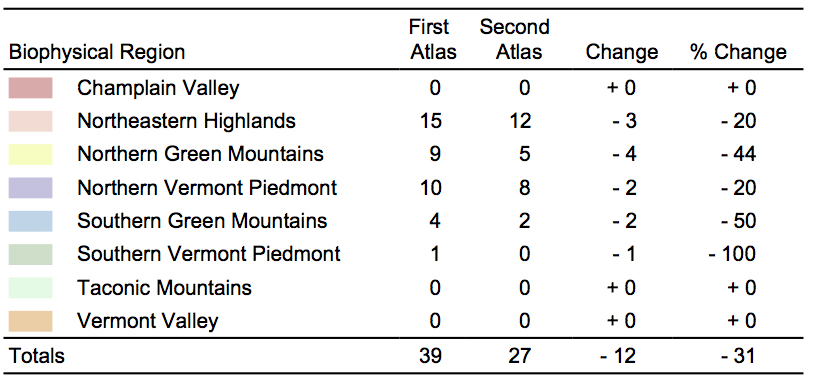
- Status in VT: Decreased by 31% (39 to 27 blocks). Greatest decrease in Southern Vermont Piedmont.
- Data from other research: No additional data for VT.
- Conservation status: State rank S4B
- Other atlases: NY: -13%; ON: 46%
- VT’s role in North American range: VT is at the southeastern edge of the range.
- Causes of change since first Atlas: Maturation of forests bordering streamside willow thickets (?).
- Management/Monitoring recommendations:Protect local populations by maintaining their habitat in an early successional state.
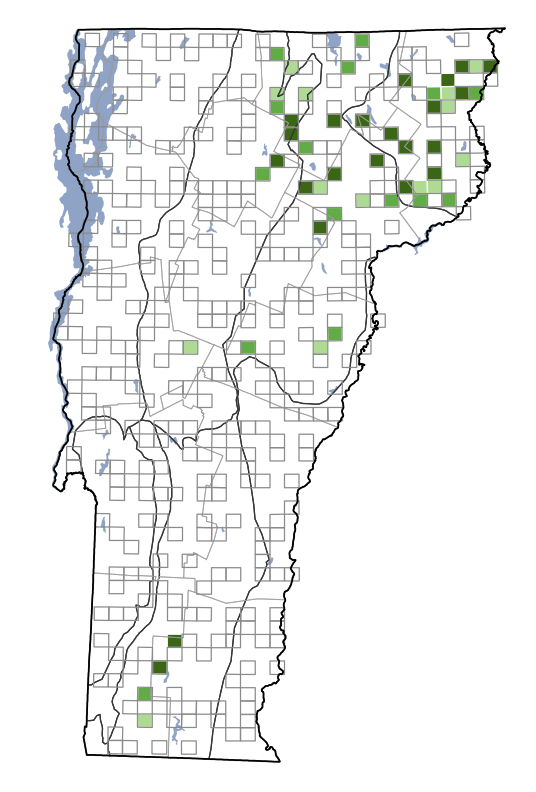
First Vermont Breeding Bird Atlas (1976-1981)
Second Vermont Breeding Bird Atlas (2003 – 2007)

Change in Distribution