Summary
- Natural history: Standing barely a foot tall, the Least Bittern is Vermont’s smallest and least often seen heron, and its habit of nesting deep in cattail stands on the previous year’s dead stalks keeps it almost completely hidden from view. So elusive is this bird that the entire Second Atlas produced just one confirmed breeding record, a brood of fledglings spotted near Colchester Point in 2003, even though biologists suspect it nests in many more of the larger Champlain Valley marshes than records suggest. Populations are declining region-wide, including in the Great Lakes basin and Canada, where the species is now considered at risk, adding urgency to Vermont’s designation of the bittern as a Species of Special Concern.
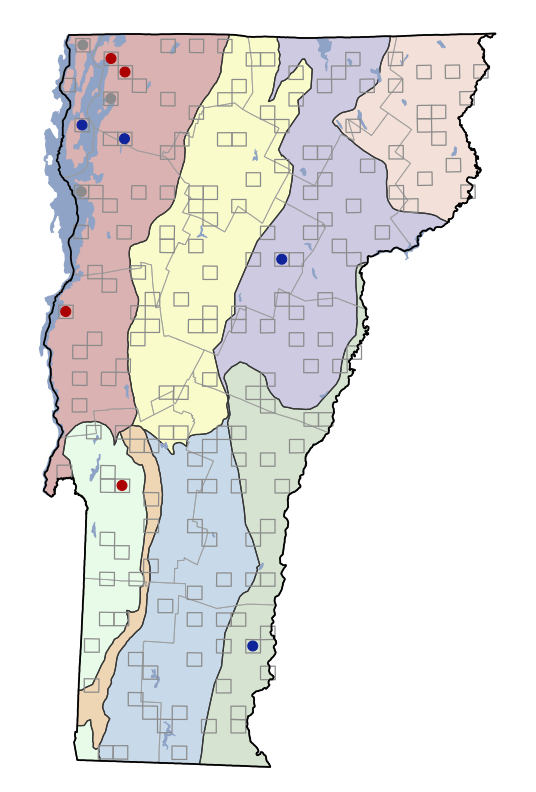
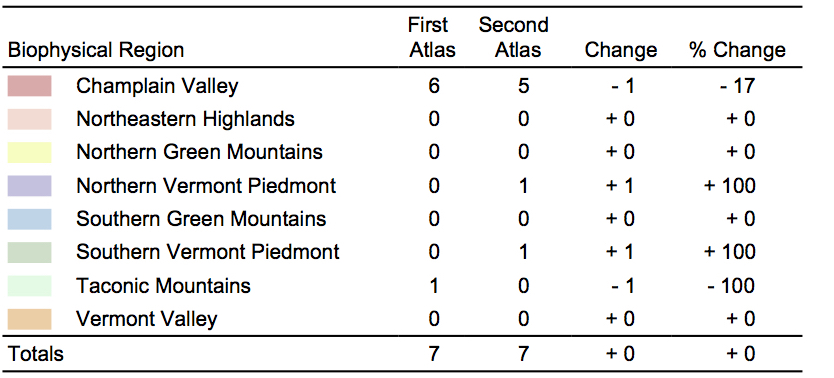
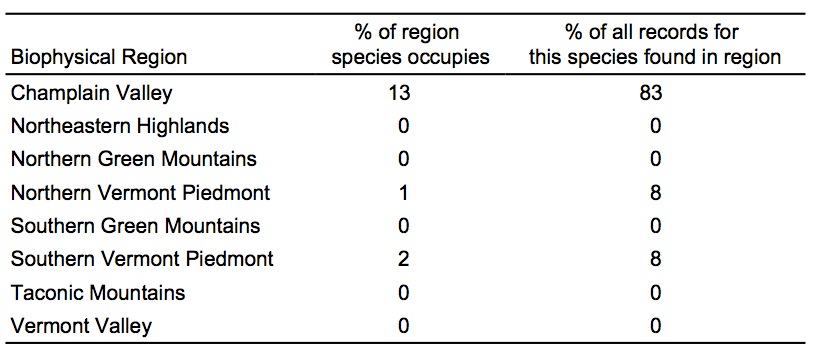
- Status in VT: No change.
- Data from other research: No additional data for VT.
- Conservation status: State rank S2B; SSC; SGCN-H
- Other atlases: NY: -9%; PA: -10%; ON: no sig. change
- VT’s role in North American range: VT is within the northeastern edge of the range.
- Causes of change since first Atlas: No change. Potential threats: invasive plants (?); factors during migration or winter (?).
- Management/Monitoring recommendations: Protection of wetlands from invasive plants; biological control (e.g., beetle releases) of invasive plants; implementation of thorough surveys with standardized protocols.
First Vermont Breeding Bird Atlas (1976-1981)
Second Vermont Breeding Bird Atlas (2003 – 2007)


Change in Distribution