Summary
- Natural history: Male Indigo Buntings sing almost nonstop through the heat of summer days, in part because their mating system rewards persistence, since a male may hold multiple females within his territory and often resumes singing once his current mate starts incubating, hoping to attract yet another. Females can rebuild a nest in as little as two days, which lets many pairs squeeze in a second brood before the season ends, with about half of males helping feed the first brood’s fledglings so their mate can get started on the next nest sooner. Indigo Buntings depend on brushy, sunlit edges such as clear-cuts and power-line corridors, and interestingly, New York’s Adirondack population declined after land-use rules there reduced the forest fragmentation these birds rely on, a pattern not yet seen in Vermont, where forests still offer plenty of brushy edge habitat.
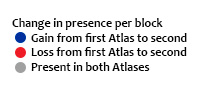
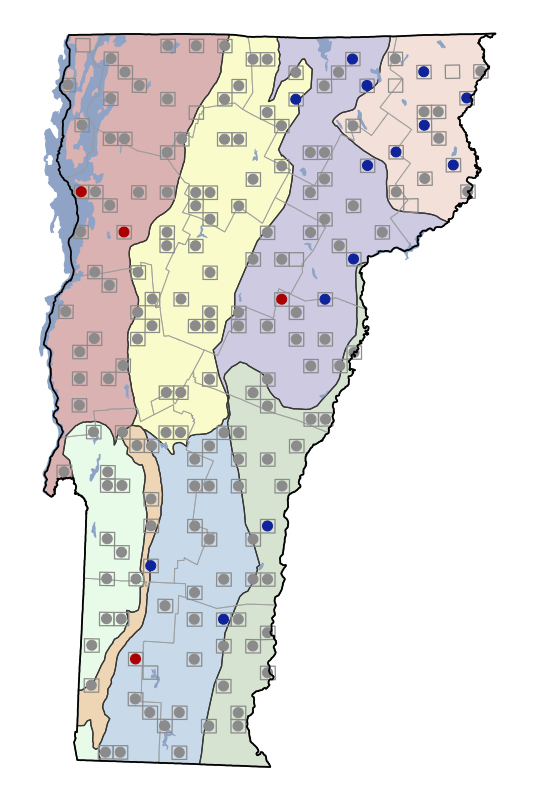
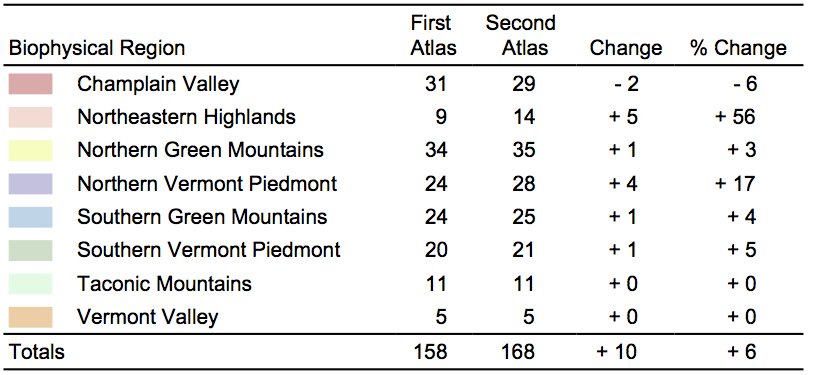
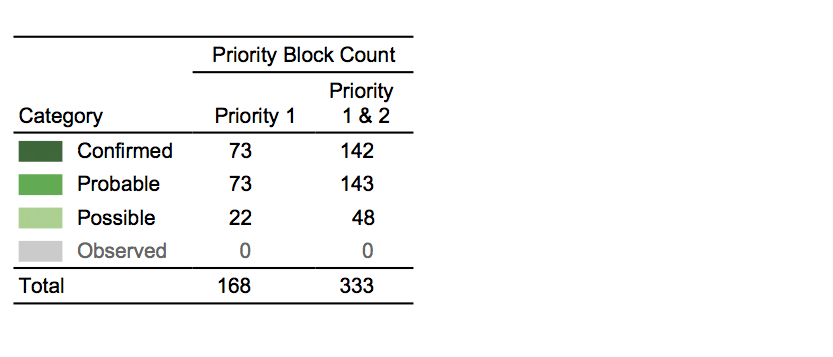
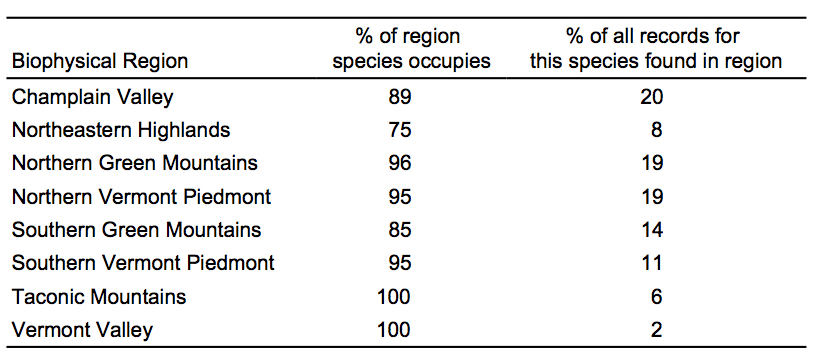
- Status in VT: Increased by 6% (158 to 168 blocks). Greatest increase in Northeastern Highlands.
- Data from other research: No additional data for VT.
- Conservation status: State rank S5B
- Other atlases: NY: -1%; PA: 4%; ON: no sig. change
- VT’s role in North American range: VT is within the core of the range.
- Causes of change since first Atlas: Increase in the northeastern portion of the state accurately mirrors predicted expansion in this species’ distribution due to climate change.
- Management/Monitoring recommendations: No current recommendations.
Population Trends
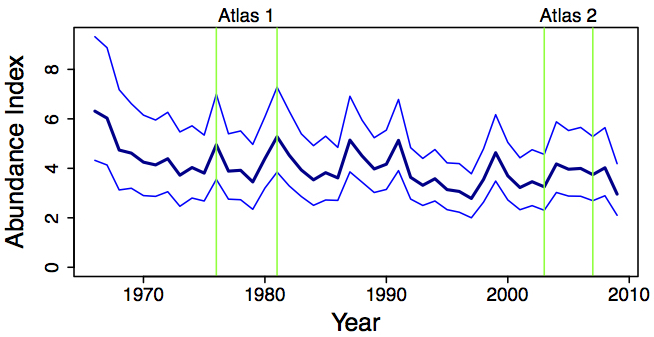
First Vermont Breeding Bird Atlas (1976-1981)
Second Vermont Breeding Bird Atlas (2003 – 2007)

Change in Distribution