Summary
- Natural history: Introduced from Europe in 1853 and reaching Vermont via St. Johnsbury in 1874, House Sparrows spread explosively wherever agriculture and human settlement created nesting opportunities, often displacing native cavity-nesters like Eastern Bluebirds and Tree Swallows. Vermont’s population has been declining alongside the state’s shrinking number of active farms, and urban birds here carry notably higher lead levels than rural ones.
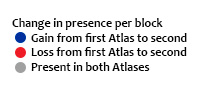
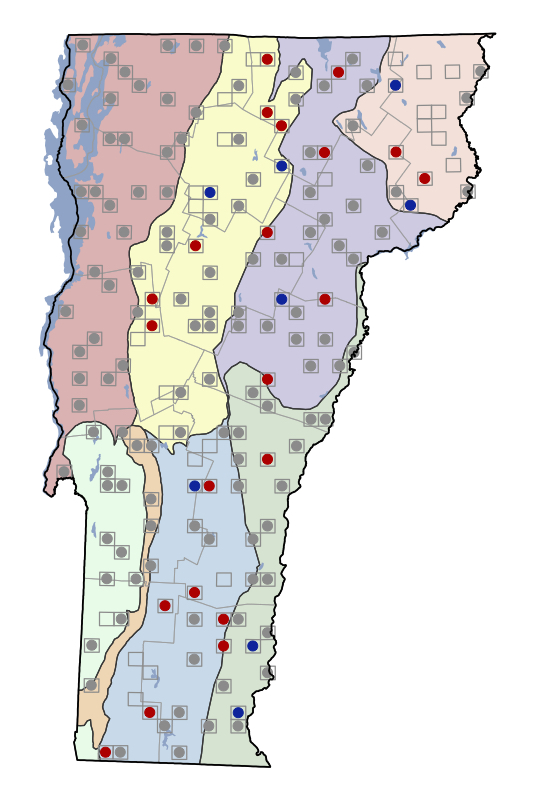
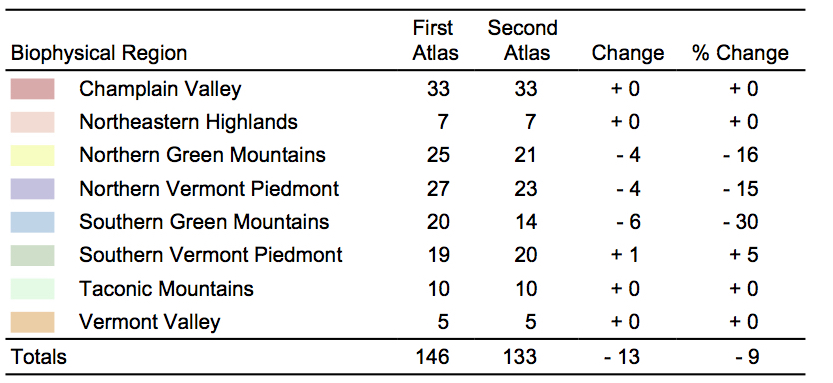
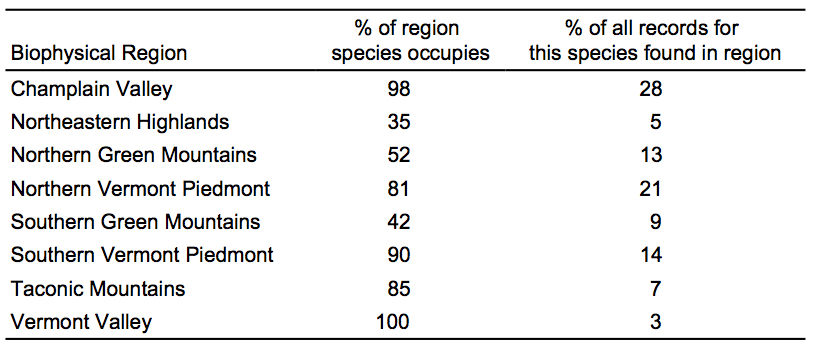
- Status in VT: Decreased by 9% (146 to 133 blocks). Greatest decrease in Southern Green Mountains.
- Data from other research: No additional data for VT.
- Conservation status: State rank SNA
- Other atlases: NY: -8%; PA: -2%; ON: -20%
- VT’s role in North American range: VT is within the core of the range.
- Causes of change since first Atlas: Decline in number of active farms (?); reforestations of agricultural lands (?).
- Management/Monitoring recommendations: No current recommendations.
Population Trends

First Vermont Breeding Bird Atlas (1976-1981)
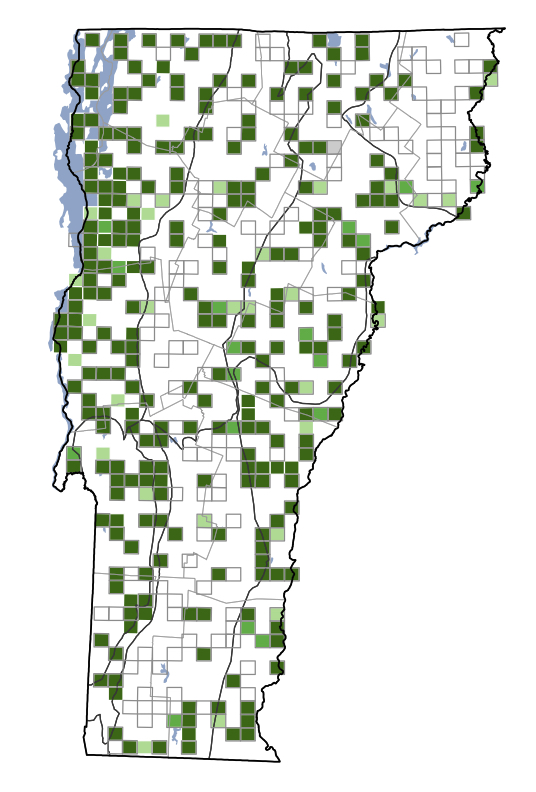
Second Vermont Breeding Bird Atlas (2003 – 2007)

Change in Distribution