Summary
- Natural history: Horned Larks are among Vermont’s earliest nesters, arriving on bare fields as early as mid-February and settling territorial spats with brief midair scuffles before dropping back to the ground to sing. The species thrives on the same open, heavily grazed or plowed ground that supports its relatives on short-grass prairie and tundra across its enormous global range, which is why Vermont’s population has always been tied to active farmland and has faded as Champlain Valley dairy and sheep farms have given way to development.
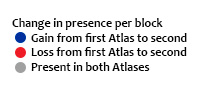
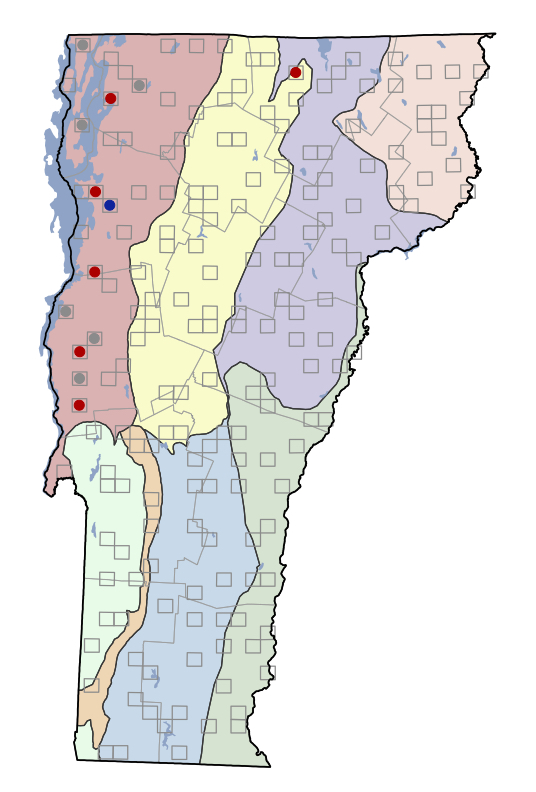
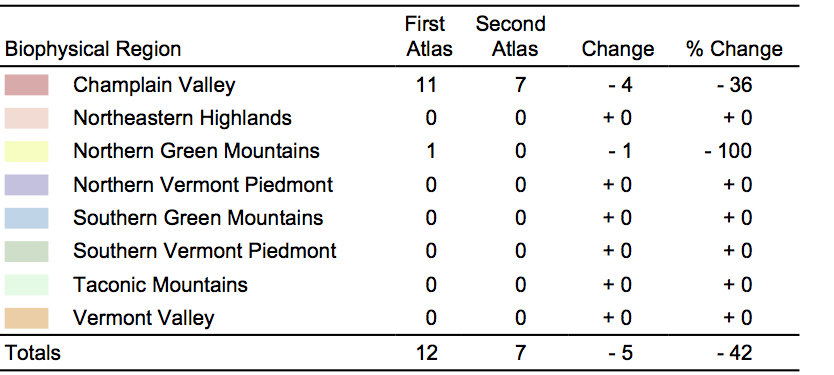
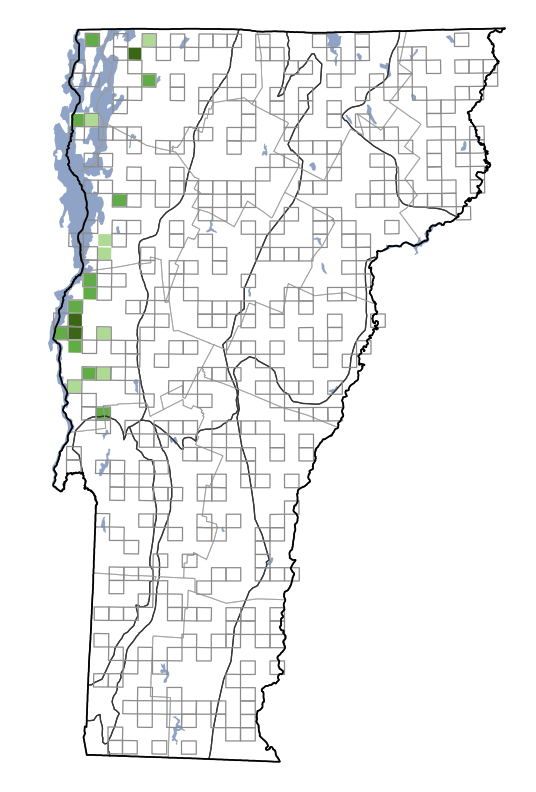
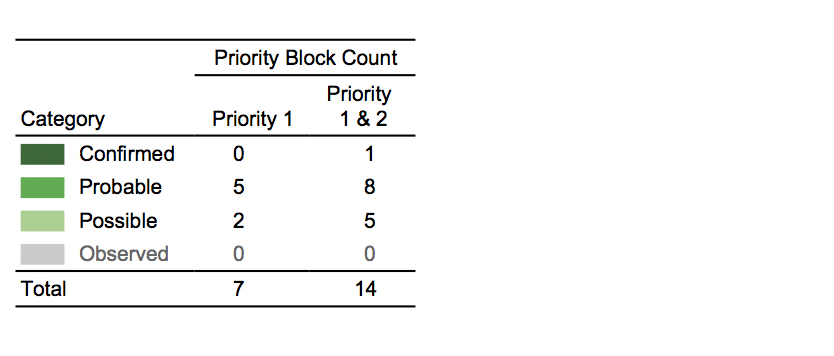
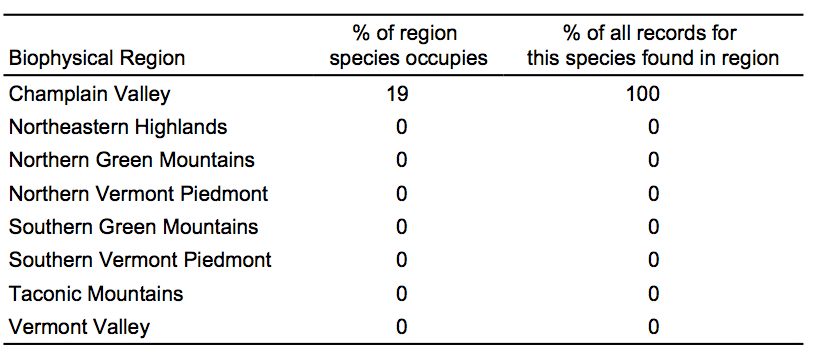
- Status in VT: Decreased by 42% (12 to 7 blocks). Decreases in Northern Green Mountains and Champlain Valley.
- Data from other research: No additional data for VT.
- Conservation status: State rank S2B; S5N
- Other atlases: NY: -37%; PA: 26%; MD: 5%; ON: significant decrease
- VT’s role in North American range: VT is south of the southern edge of the range.
- Causes of change since first Atlas: Loss of croplands and pasture due to farm abandonment and development.
- Management/Monitoring recommendations: No specific recommendations.
First Vermont Breeding Bird Atlas (1976-1981)
Second Vermont Breeding Bird Atlas (2003 – 2007)
Change in Distribution